We took a walking tour that looked at Berlin architecture from after WW I up to the present. The Bauhaus school started in Germany in 1919. The Modern style emphasized new materials like glass and steel and sought to provide comfortable space for ordinary people. The look is geometric and rational. This didn’t fit the Nazis’ ideals of traditional Germany society and a desire to emphasize power. The members of the Bauhaus school left Germany in the early 1930s, most going to the USA.
The last building erected before the Nazi era is the Shellhaus, built for the Shell Oil company: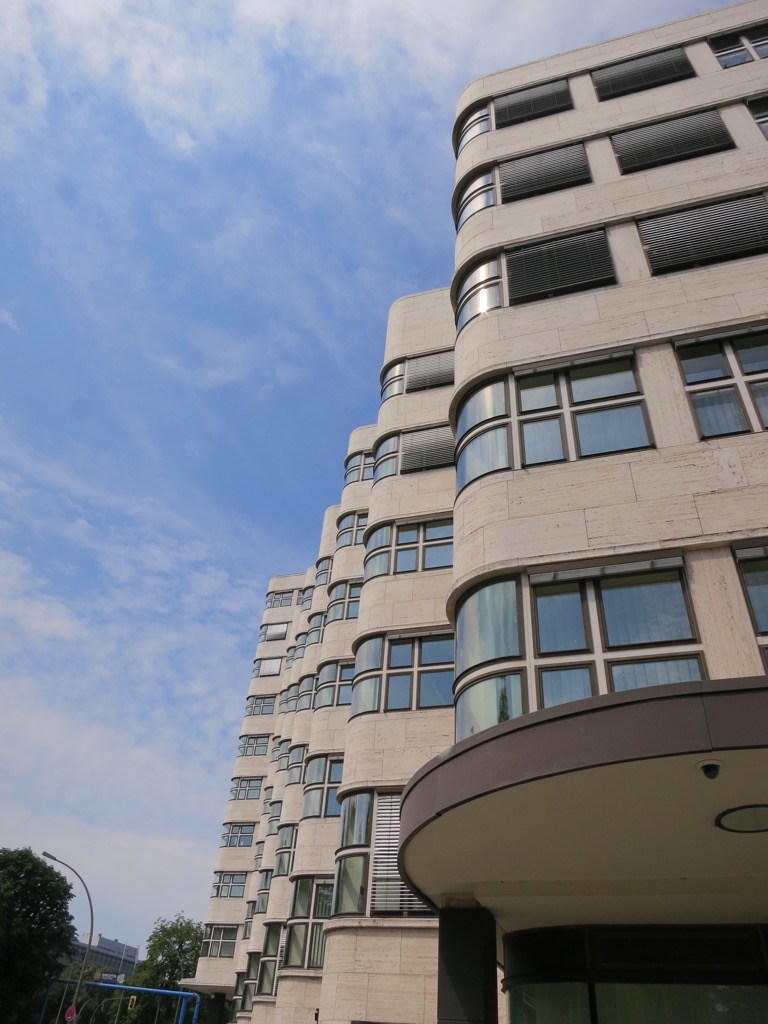
We looked at two buildings built during the Nazi era that survived the bombing of Berlin. Both reflect classic Ancient Greek architecture:


The buildings are now the Japanese and Italian Embassy buildings. They contrast with the Post-Modern styles of the Nordic Embassies:

And the combination of traditional and modern themes in the Saudi Arabian Embassy:
In the 1960s in West Berlin, a complex of buildings for culture purposes started to be built. The area is called Kultur Forum. The philharmonic and chamber music buildings: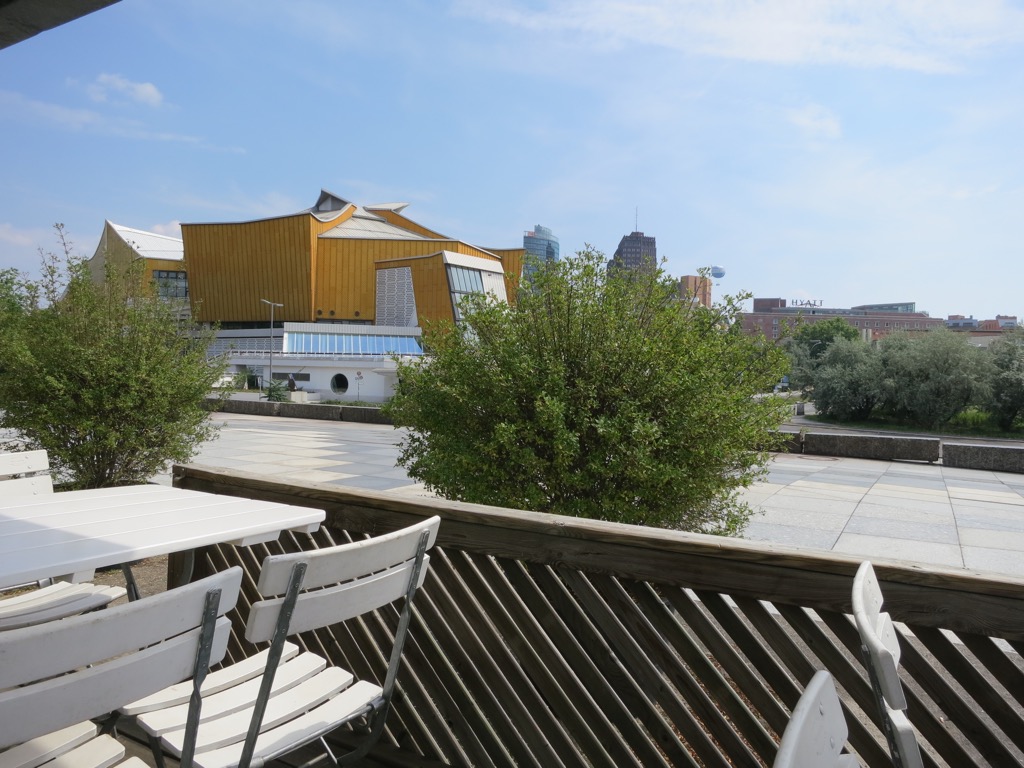
The Gemaldegalerie (art gallery) with the archives building on the left: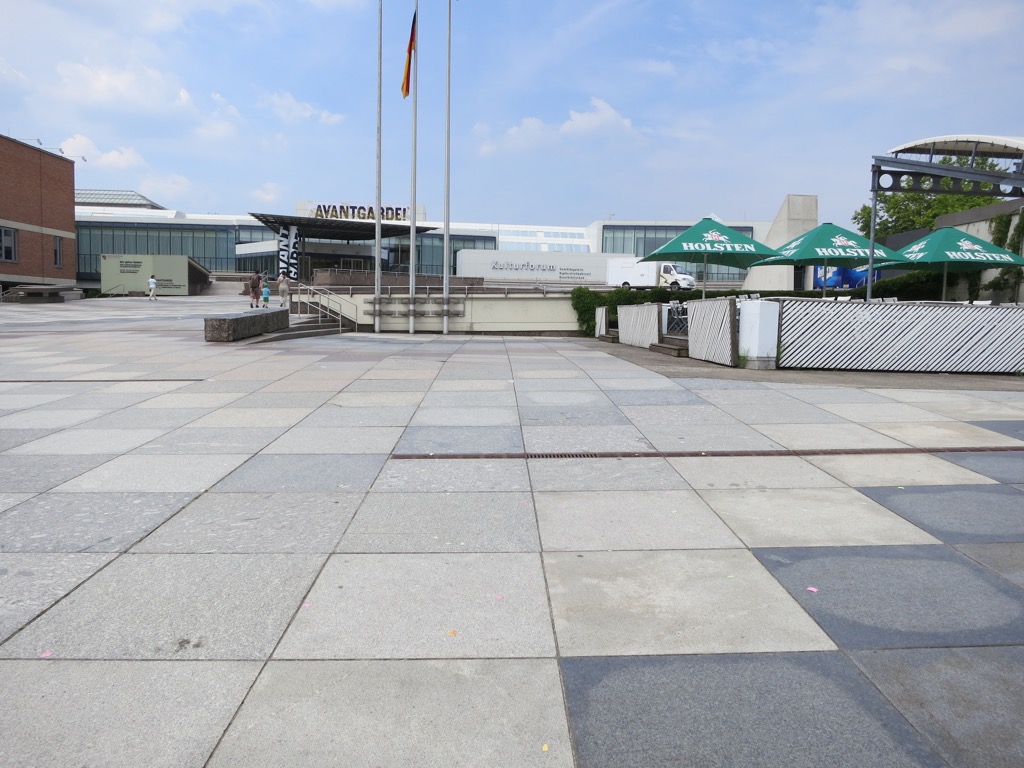
The project was never completed so the centre area has trees and bits of grass struggling to grow. The yellow building in the background is a library:
The Neue Gallery was built by Mies Van Der Rohe, the last president of the Bauhaus school. He was living in the US and was invited to design the building for contemporary art and exhibition space: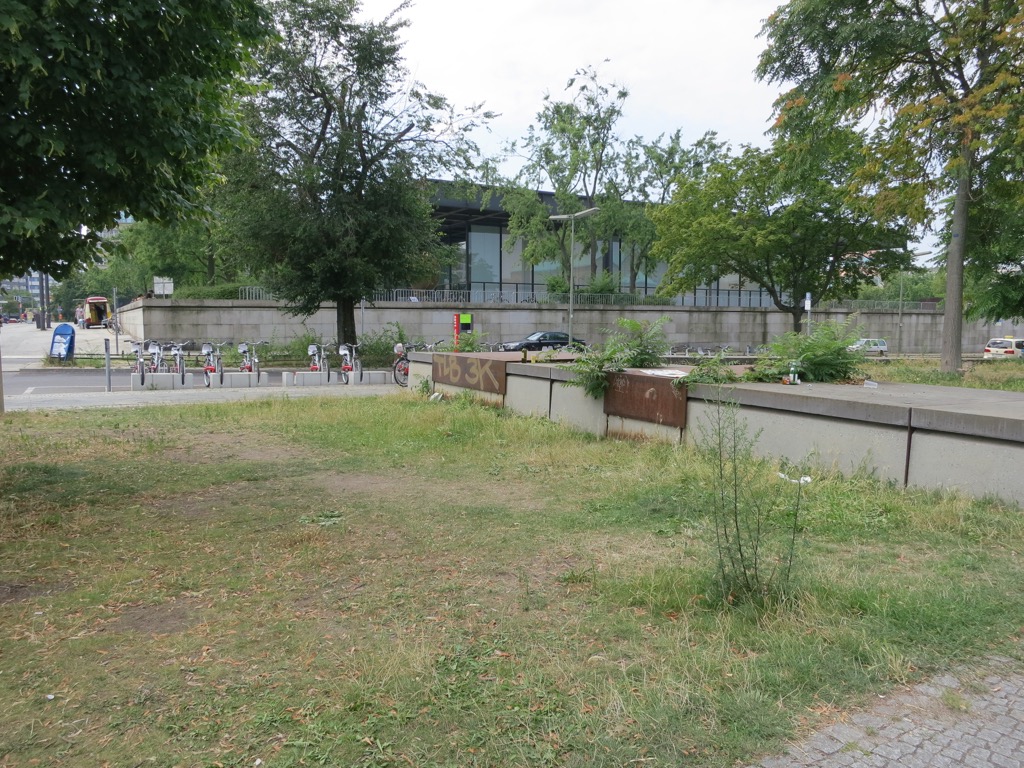
Since the fall of the Berlin Wall and reunifiction of Germany, the bombed out and empty land that lay next to the wall has been developed over the past 15 years. One part tries to reflect the look of the area before WW II that include commercial space combined with residential:
Some of the few skyscrapers in the centre of Berlin:
The other area was developed by the Sony company and includes an entertainment area as well as shops, restaurants, apartments and exhibition spaces all capped by a roof like structure:


After our tour, we had a bite of lunch and enjoyed a respite from the 34 degree heat. This restaurant had a mist blowing fan:
Part of the Berlin Wall: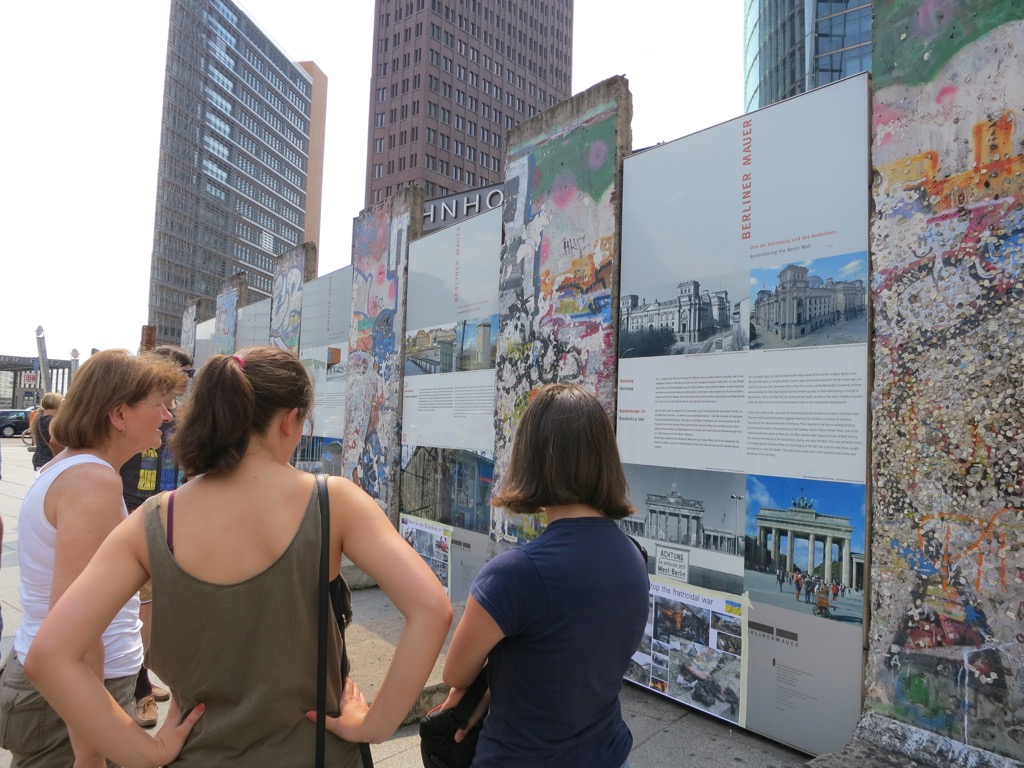
We looked at the Tiergarten just behind the Brandenburg Gate area, now free of the giant tv screen and all the food stalls for World Cup fans:
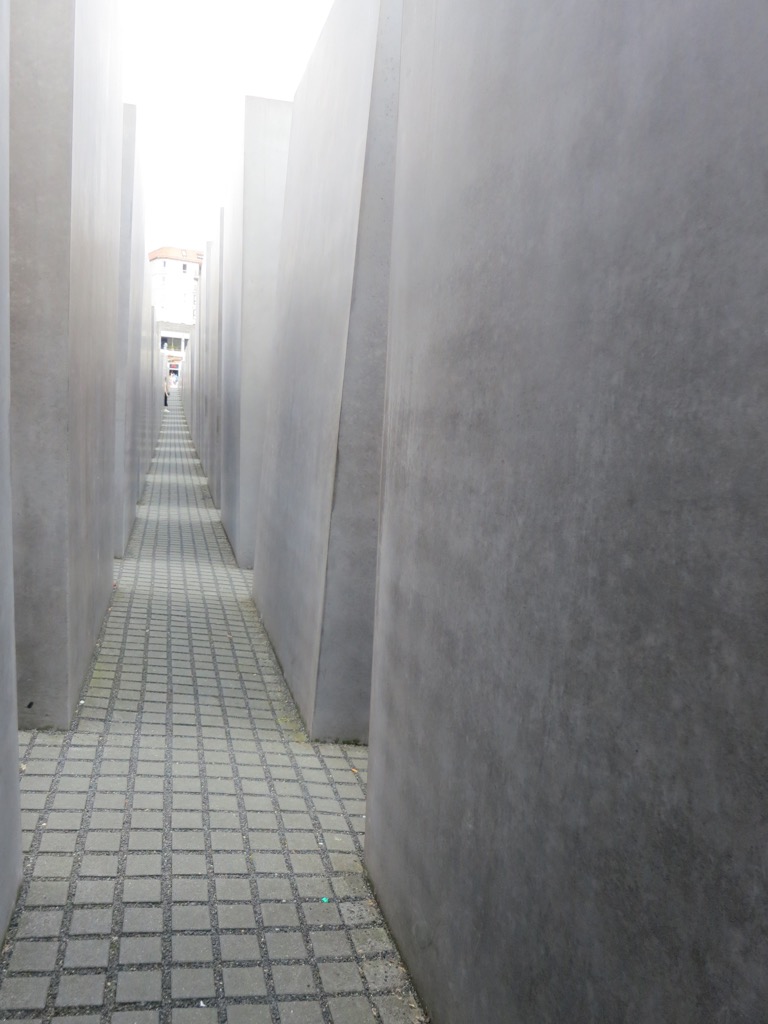
We went to the Holocaust Memorial that has an exhibition underground:


The ground undulates and the heights of the steles (pillars) vary.
It’s easy to lose track of someone: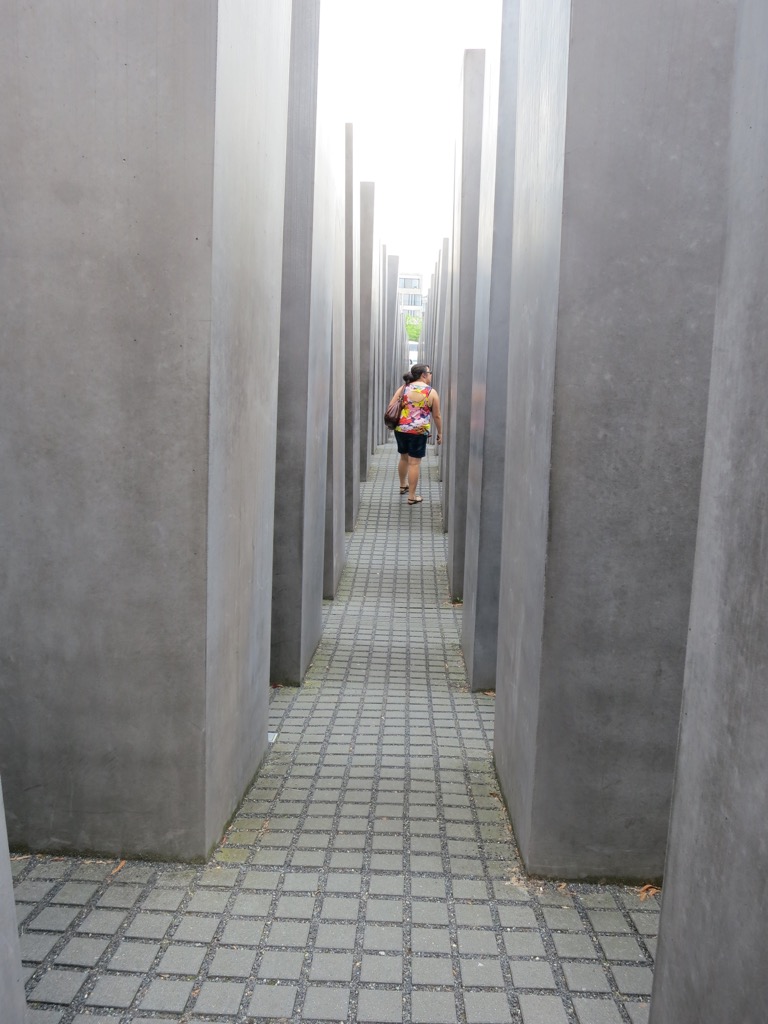
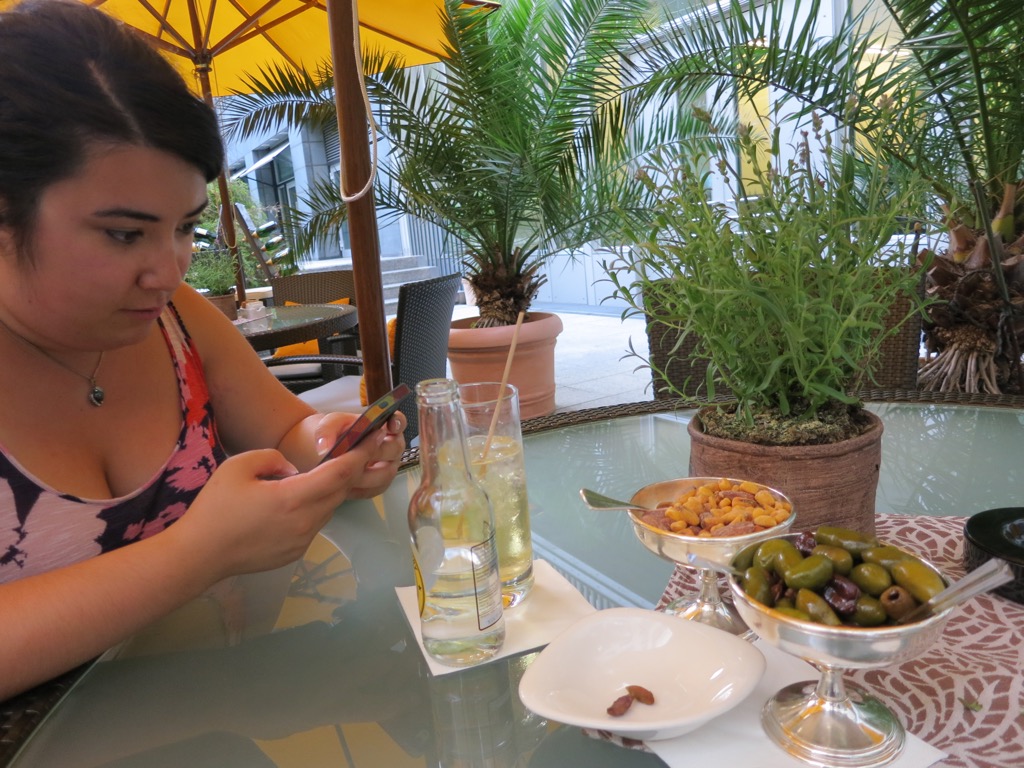
We moved to the Regent Berlin hotel which had a welcome outdoor bar and dining area.


 LHWatson's Travel Blog