We left Warsaw early for another travel day. We stopped at Czestochowa to see the pilgrimage church of Jasna Gora, a monastery with the icon Black Madonna, venerated as the Queen of Poland. Reproductions appear everywhere:


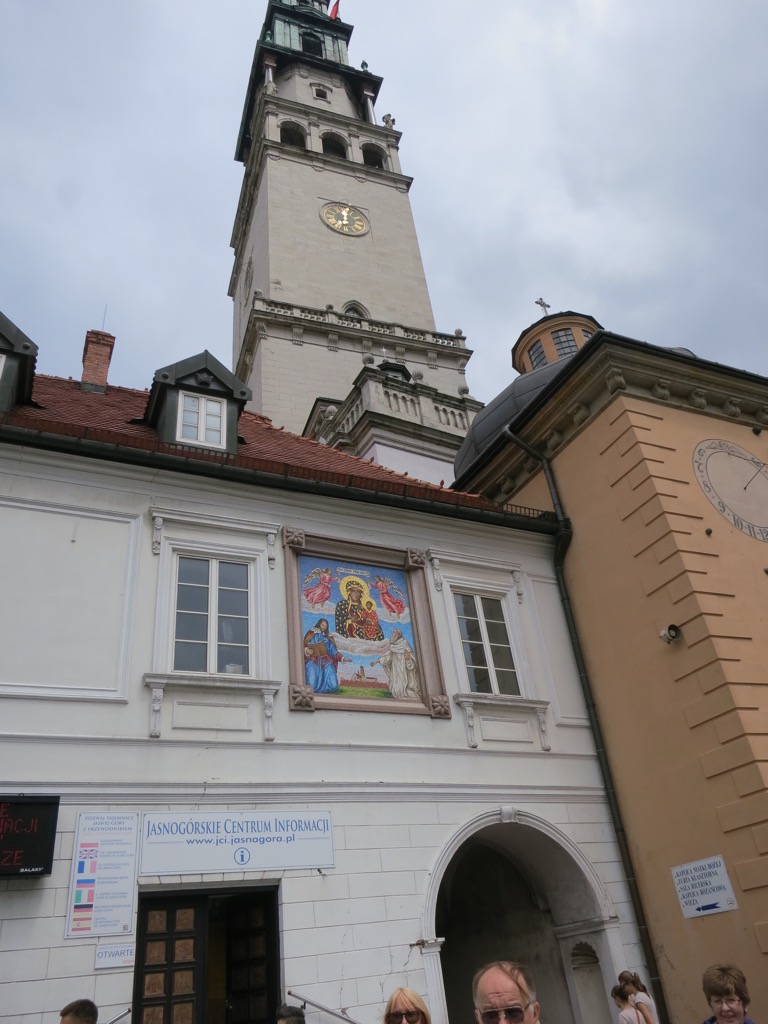
Chapel with the Black Madonna:
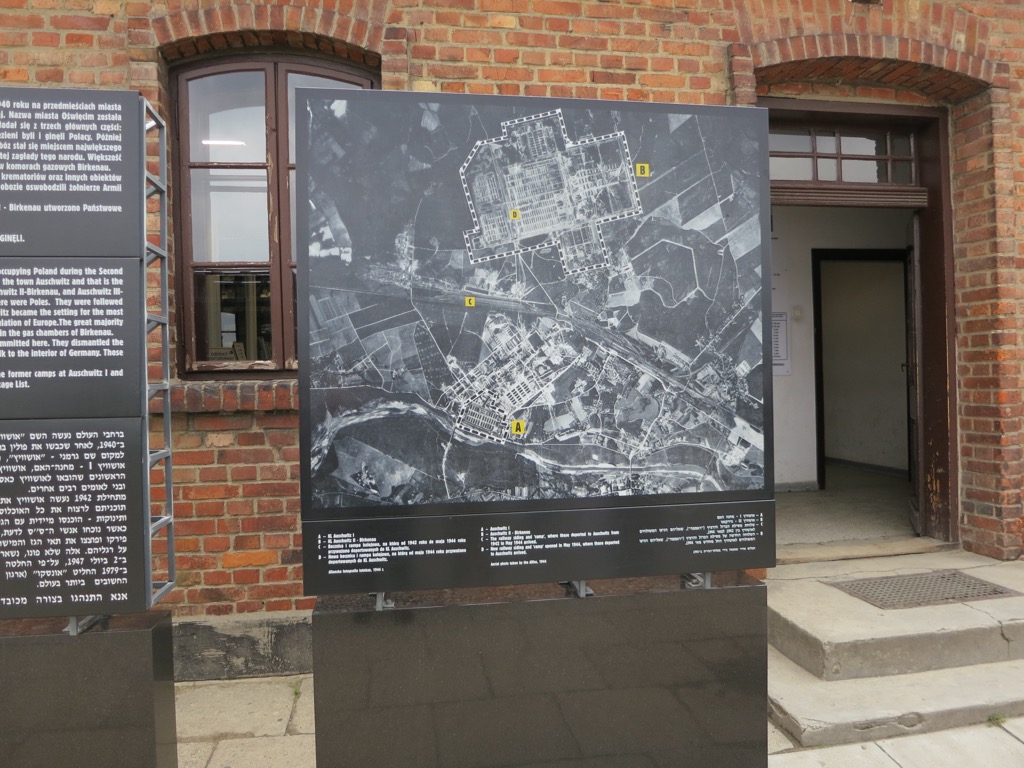
Starting in 1940, it was turned into a labour camp where Polish Jews, Polish intelligentsia and other “enemies” of the Nazi regime were brought. Healthy people worked, usually to death, while others were allowed to die mostly through starvation.
The infamous Arbeit Macht Frei, work makes you free, sign:
Auschwitz soon shifted to a concentration camp where Jews, homosexuals, gypsies or Roma, and political opponents from all over Europe were brought. The original space became too crowded and the need to speed up killing and getting rid of bodies lead to the first makeshift gas chamber and crematorium:

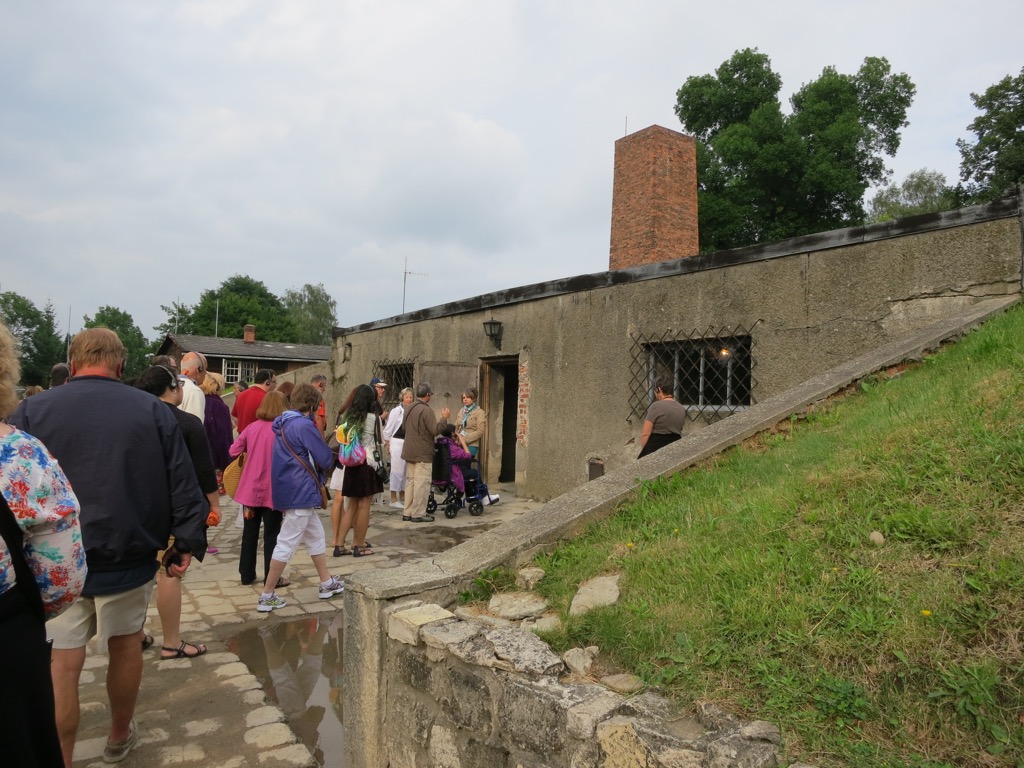
A second camp Birkenau or Auschwitz II was built by the prisoners a few kilometres away as a death camp with four gas chambers and crematoriums.
Most of the camp was destroyed shortly after WWII but you can still see many of the bunk houses and how large the camp was to hold so many people: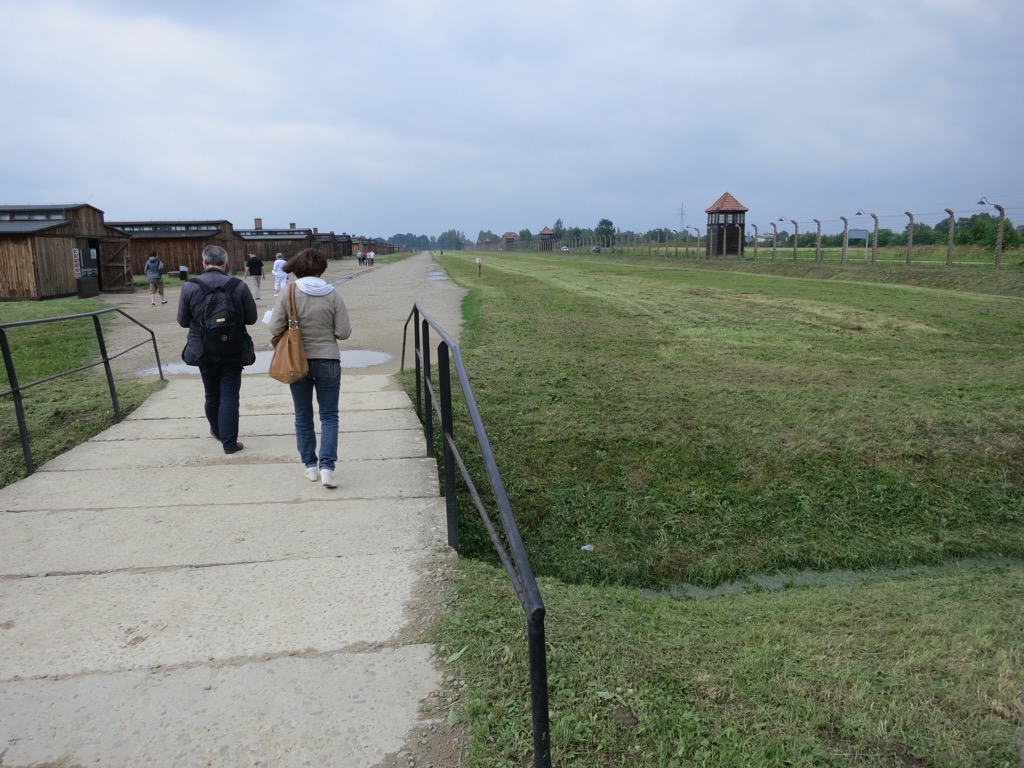
We learned there were two areas of the camp called Canada I and Canada II where they stored all the belongings of the prisoners. Called Canada because it was a large area of wealth. Never heard this before. There are displays of belongings that range from hair brushes, luggage, eye glasses, crutches, prosthetic limbs to shoes. Particularly disturbing were the collections of human hair and baby clothing.
From Auschwitz, we travelled to Krakow, former capital of Poland and relatively undamaged by WWII because it was Nazi headquarters for Poland, which also meant the historic centre was mostly untouched during the Cold War era that lasted from after the war until 1990.
We arrived late and are in a new hotel near the Wawel Castle:

We’re looking forward to catching up on some sleep tonight and tomorrow exploring the relatively small city (under 700,000).
 LHWatson's Travel Blog