We are in a new classroom that has a painted ceiling. Never been in a classroom with putti looking down on me.
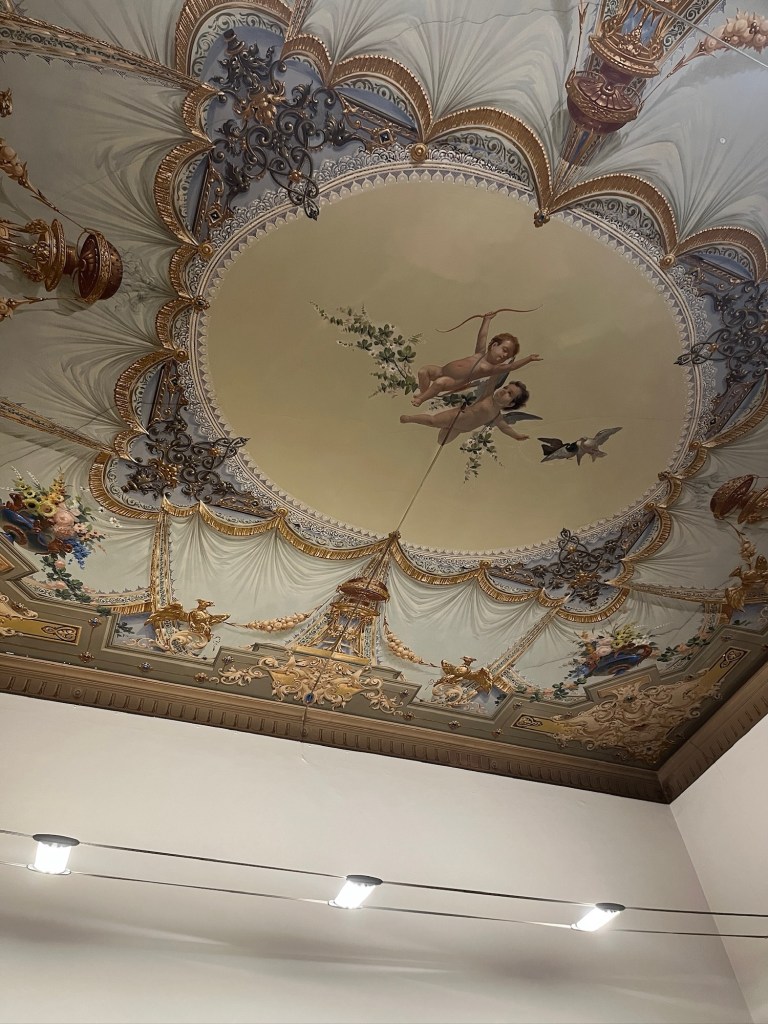
We lost the two Dutch women and have a young woman from Svizzera (Switzerland) and an older woman from Parigi (Paris). I think she’s finding the class too easy.
After class I booked myself a pedi and next week, a haircut. The hair salon is in the building at the top of this post.
I then went to the Uffizi and saw the longest lines I has seen so far.
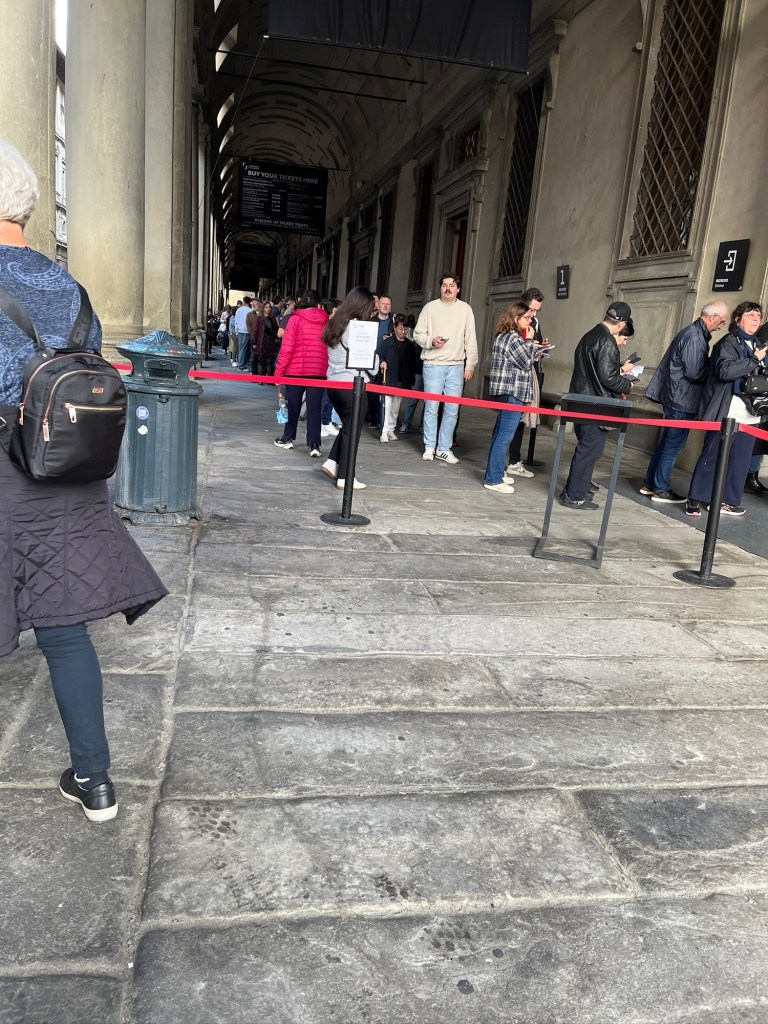
Tuesdays are bad because the Uffizi is closed Monday and cruise ships come into Florence on Mondays and Tuesdays, I’m told. But I thought by 3:30, the cruise ships crowds would be gone. It seems the tourist season is still going strong. I went to the Loggia di Lanzi to sketch and hoped the queue would dwindle.
Giambologna’s statue that gets called the Rape of the Sabine Women, or Abduction of the Sabines, was not his name for the work. He wanted to show off his technique by making a serpentine, twisting, Mannerist work and did not really care about narrative. He considered Pluto and Persephone as a title but the third figure, a male, would not have made sense for that tale. An Italian writer and monk, Vincenzo Borghini gave it its name. Some art historians have commented even that story is not well illustrated by this statue. Does the title affect the appreciation of the technique?

I forgot one of the instructions from my art classes, a month ago: hold your work up to compare it with what you are looking at. If I had, I would have seen that I drew the woman’s hand way too large.
By 4:15, the Uffizi queue was much shorter so I went in. I found a room I had not noticed before called Contini Bonacossi Collection, it is up a short staircase just before you enter the self-portraits collection at the bottom of the staircase descending from the second (third) floor where they make you start. The highlight is a Gian Lorenzo Bernini statue of San Lorenzo (Saint Lawrence) who was martyred by being burned on a grill.


There were also altarpieces from late Medieval and early Renaissance artists but were in very poor and some in damaged condition. There was a good Giovanni Bellini.

An El Greco

An early Zurbarán

There was also a small Uccello painting, which is a rare thing as he tended to do large scale paintings. (The lighting was terrible for taking photos and even for close viewing.)

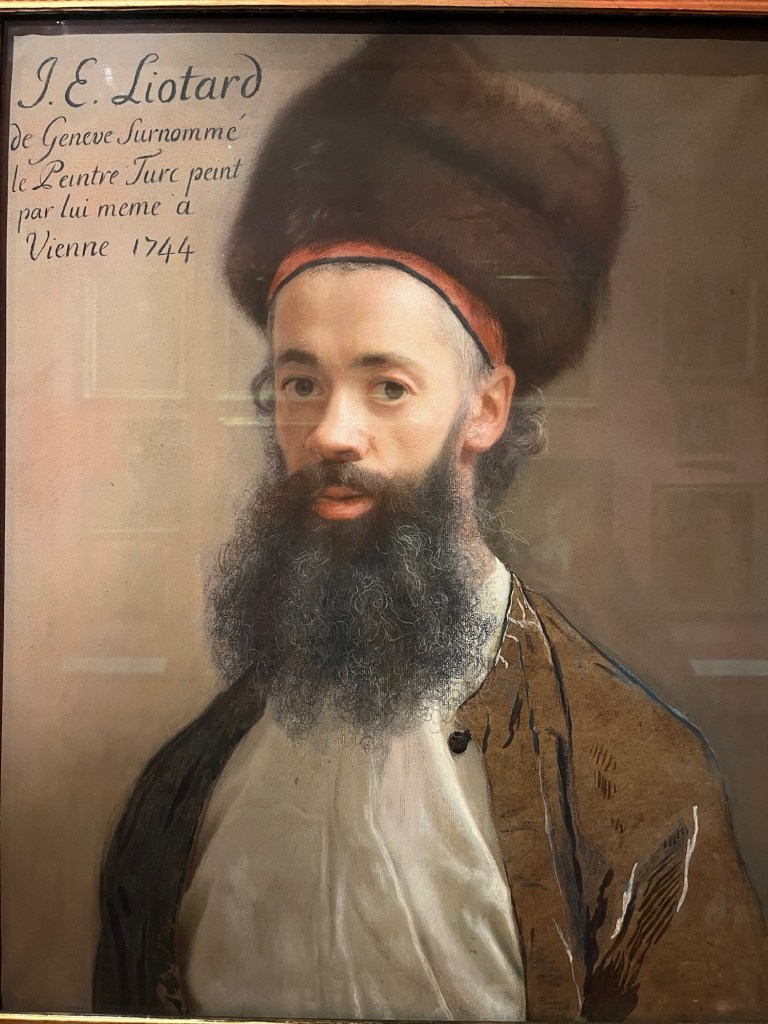
Among the self-portraits which I have not included in a past post is this one by Jean Ètienne Liotard, a Geneva painter, who was particularly noted for his pastels. His self-portrait is pastel on paper. His mark-making is exquisite.
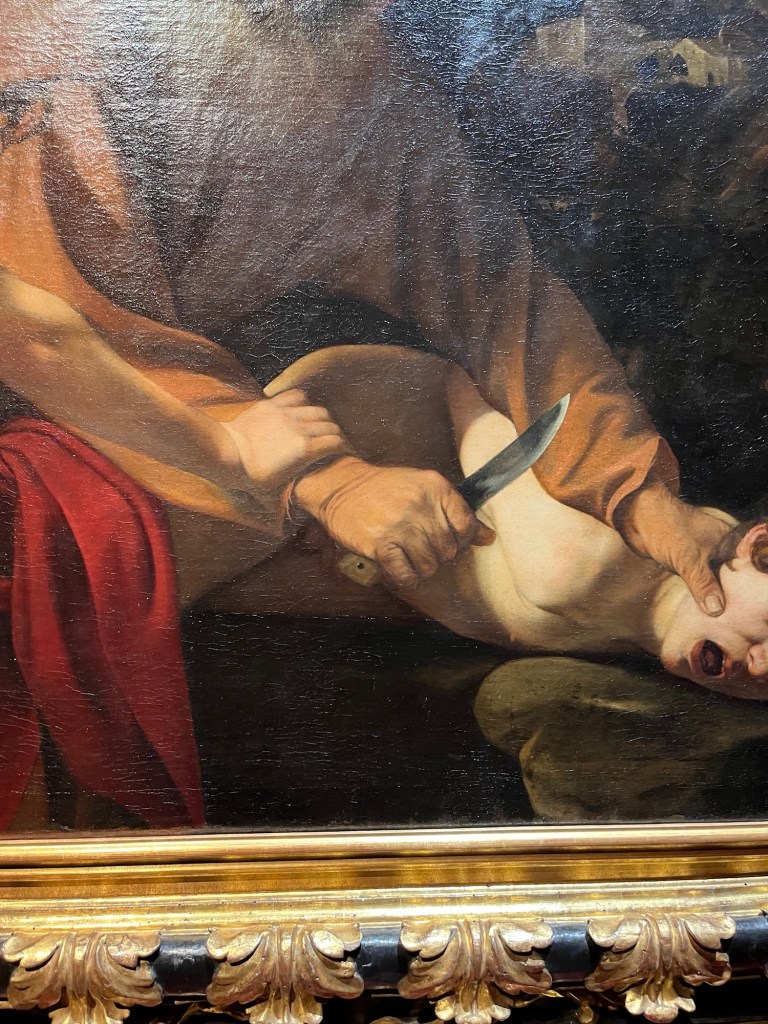
I looked at Caravaggio’s Sacrifice of Isaac and noticed the area by Isaac’s arm, under the sleeve of Abraham and above the angel’s hand, is unclear. What was I looking at? Isaac’s back? His clothes?
I got out of the crowds and sketched part of a Pontormo sketch, that I forgot to take a photo of.
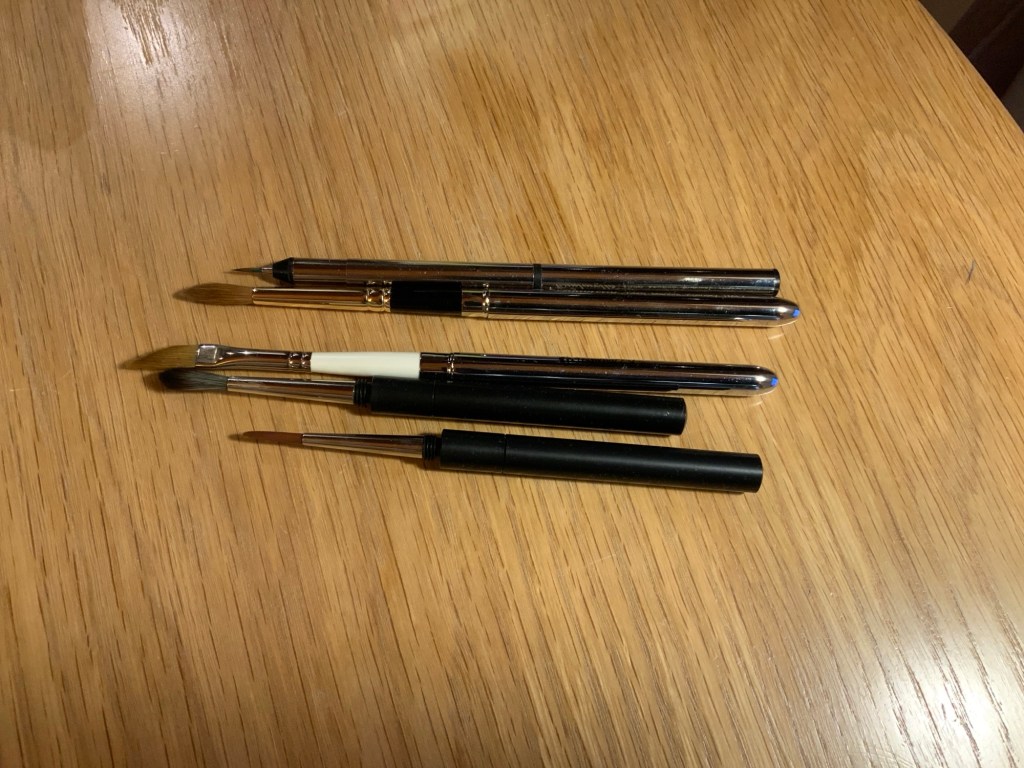
I want to do some painting. I haven’t pulled out my paints since October 5. I brought the bottom three paint brushes but bought the top two here. I need to test drive them.
 LHWatson's Travel Blog