Some additional information about some of the art of Siena. In the Museo dell’Opere del Duomo is the Madonna icon called the Madonna degli Occhi Grossi or Madonna of the Big Eyes which is on the top floor of the museum.

In 1260 Siena was about to go to war with Florence. In the medieval period a war was almost invariably won by the side with more fighters. The Florentine side had a massive army and defeat looked certain for Siena. But Siena prepared for battle by conducting a ceremony before this icon by marrying itself to the Virgin Mary. (There are pictures where the icon has sprouted arms and reaches for the keys of the city.) The battle called Monteperti was miraculously won by the Sienese in which every city inhabitant including housewives with cooking utensils beat up the Florentines. It’s considered the greatest upset of the middle ages.
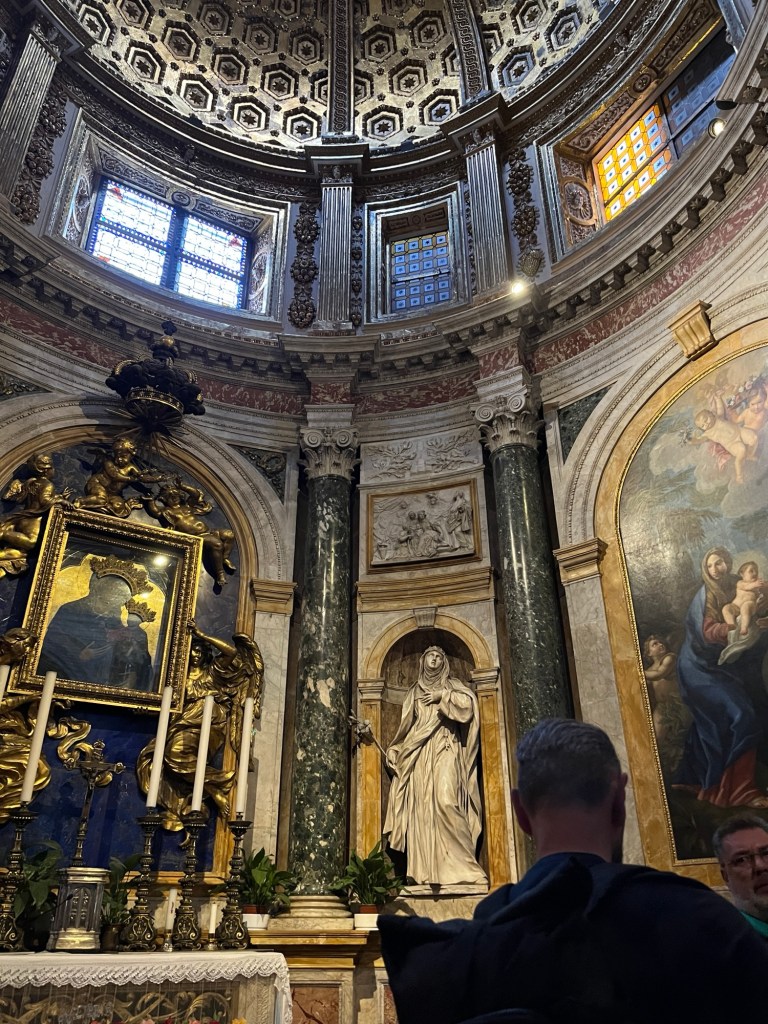
The ceremony of Siena marrying the Virgin Mary has been repeated. One of those renewals was before the Madonna del Voto:
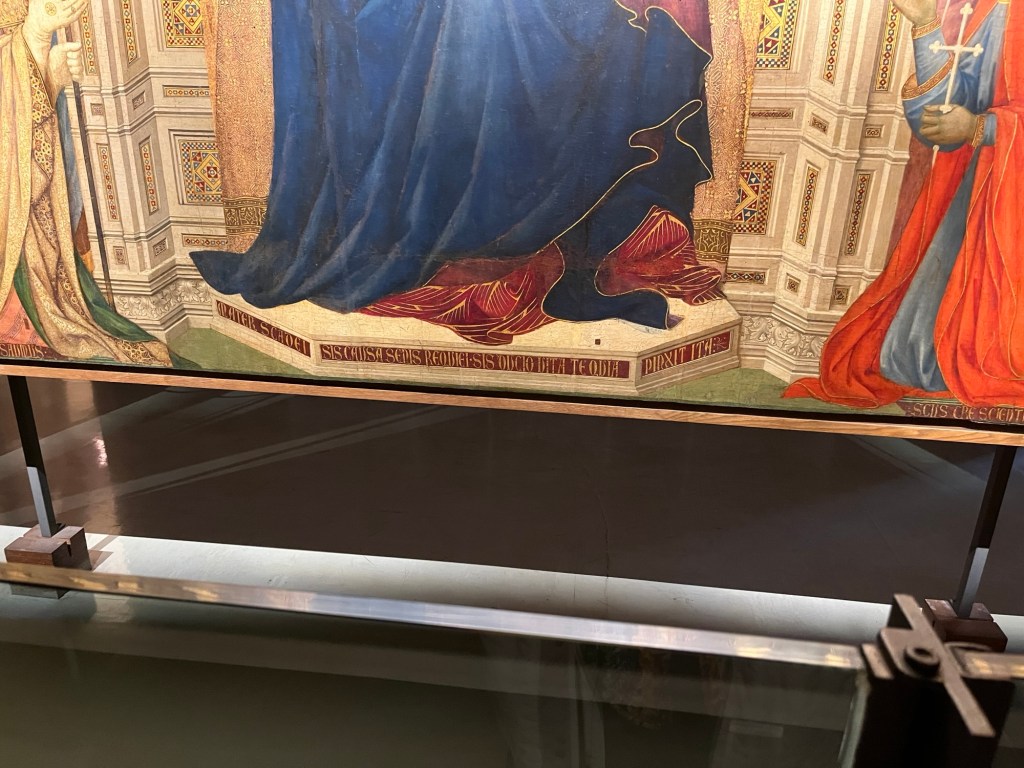
Another renewal of vows ceremony was before Duccio’s Maestà:

The Duccio painting was done for the ceremony and considered so important Duccio signed the painting, a very rare thing in medieval art. The painting itself is treated with such reverence in the museum that you feel like you have walked into a church ceremony.
Back to the narrative of my blog: It was raining today and instead of doing more walking around I did some needed grocery shopping, laundry and homework. That does not generate good photos.
Then I returned to the school for a trip with Giulia to the Crypt, Baptistery and Museo of the Duomo. Again, I found going with a guide is so profitable.
If it weren’t for this excursion, I would have avoided the Crypt because I thought it would be some creepy underground catacombs with skeletons but it turned out not so.
An area under part of the Duomo was excavated only about 20 years ago. The underground part is, I’m guessing, the reason for the name, but what was discovered were early foundations of the church which contained a fresco cycle with some well preserved scenes from the life of Christ. The frescoes date to the early 1200s and must have inspired Duccio’s cycle of the life of Christ.
Duccio’s Maestà was once a much larger work which included, on the back side to the Maestà, a series of paintings about the life of the Virgin Mary and Christ. Many peices have been dispersed to other parts of the world. Once pointed out, you can see the similar design between the early work and Duccio’s.

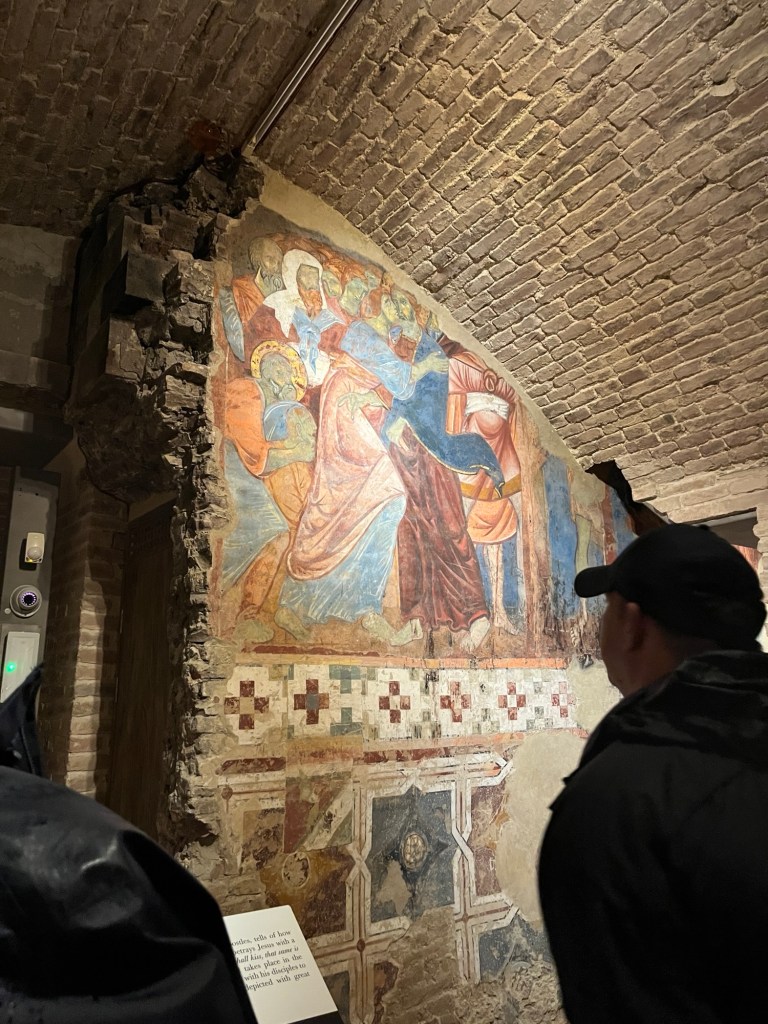
Above, the crypt.
Below Duccio.

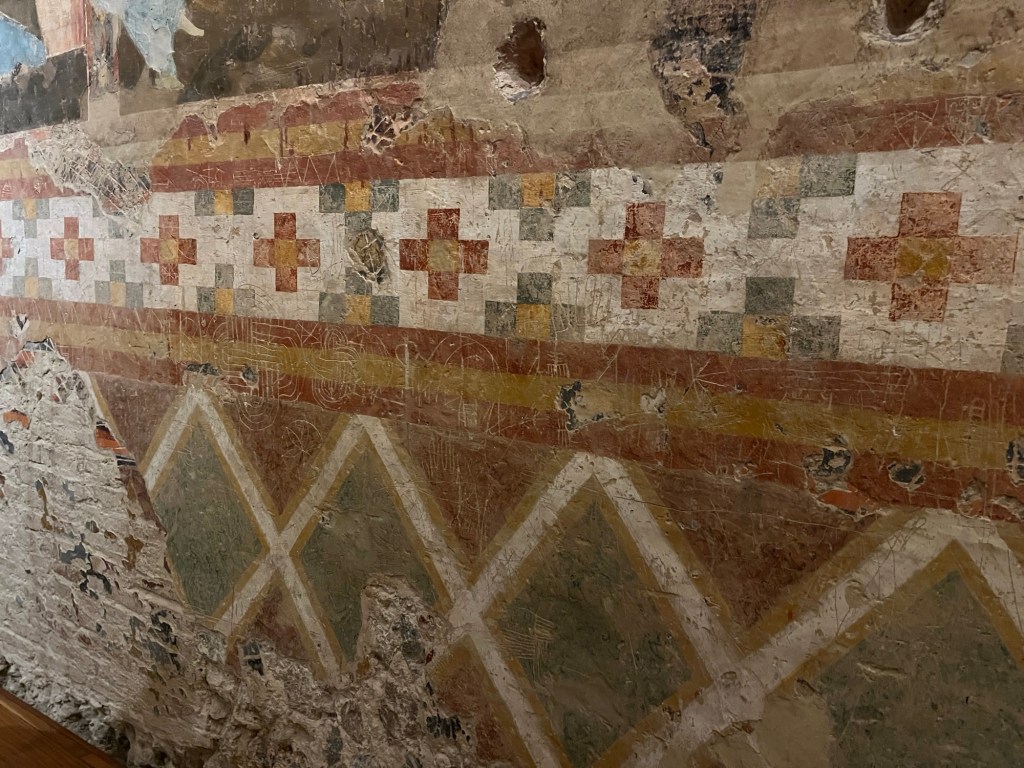
An interesting sight was graffito on the works in the crypt. Graffito means scratching in Italian. No one knows whether these were a deliberate part of the work or like today’s graffiti, a bit of vandalism or to express the markings more positively, street art additions.
A return to the Museo meant I could see a tondo, round art piece, that may or may not have been by Donatello. It certainly has early Renaissance elements in its more realistic depiction of human bodies, although Mary’s eyes look a bit off for a Donatello. The innovative design with the perspectival edge of the tondo which makes it look like the setting is under a barrel vaulted coffered ceiling creating a sense of depth looks like Donatello, especially if it is as old as claimed. Donatello’s range of talent and innovation is much under appreciated.

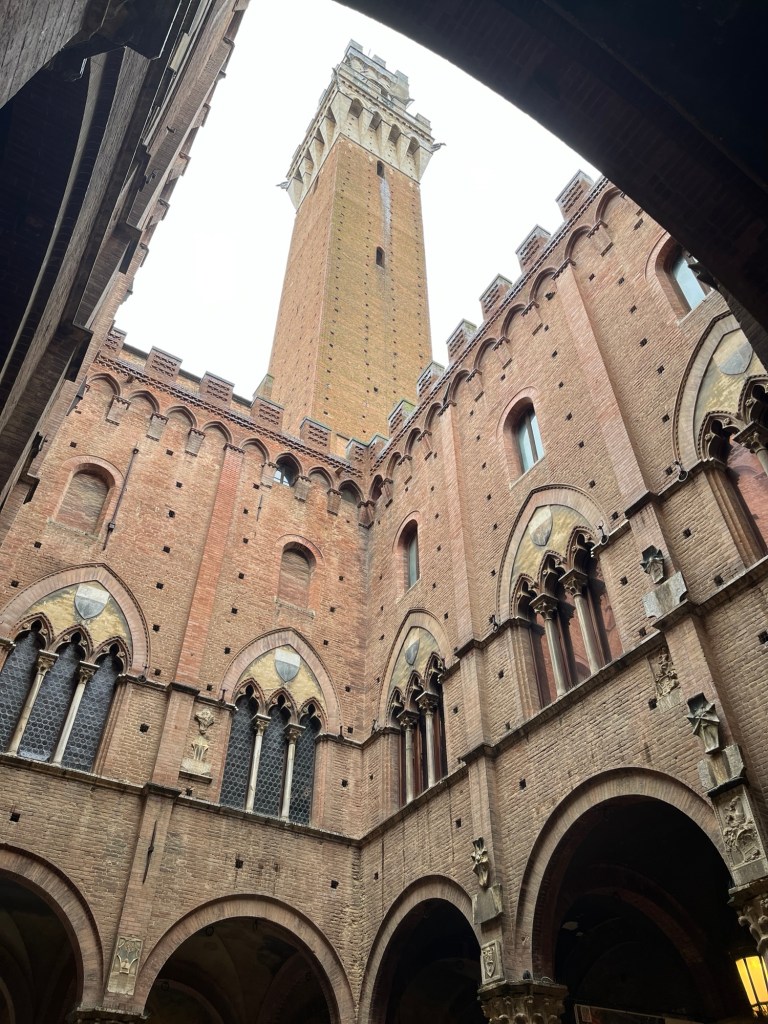
After the tour, I had a wine tasting activity but 90 minutes in between. I headed to the Palazzo Pubblico and the Museo Civico or city hall museum. I mainly wanted to see Ambrogio Lorenzetti’s Allegory of Good and Bad Government but the work was under restoration and unavailable.
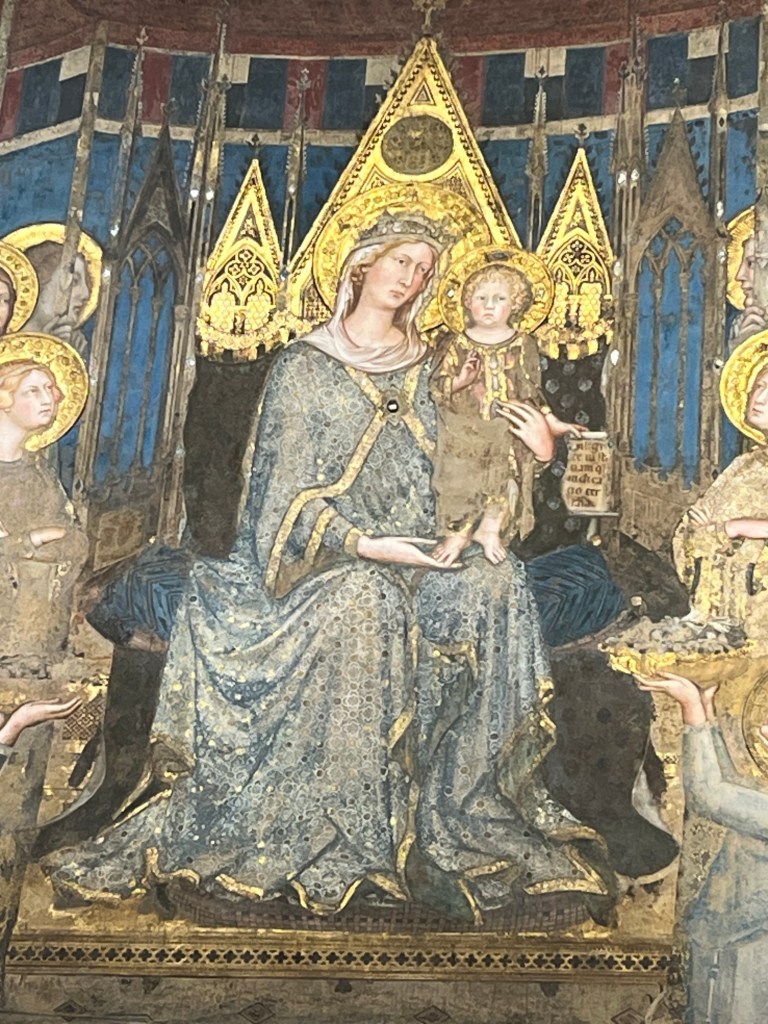
I did look at Simone Martini’s Madonna Maestà. I never noticed the sparkly bits around Mary in depictions I had seen. They look like white blobs in the photo but seemed to be glass or something clear and reflective.

Also saw where the Frescobaldi wine gets one of its label designs.

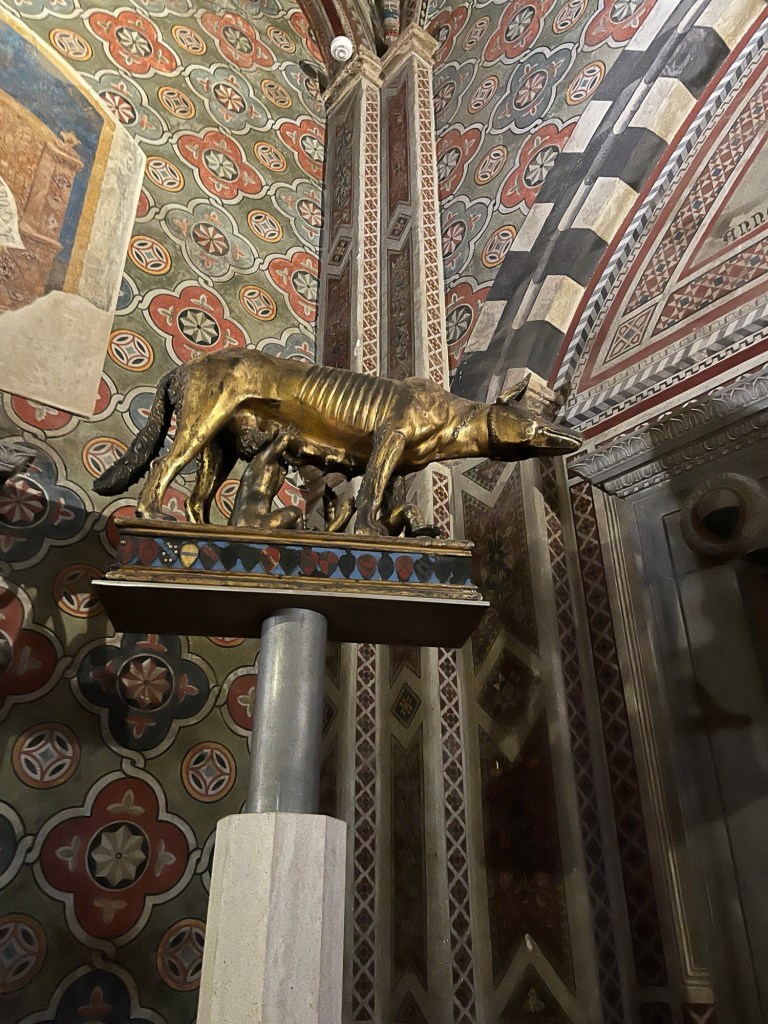
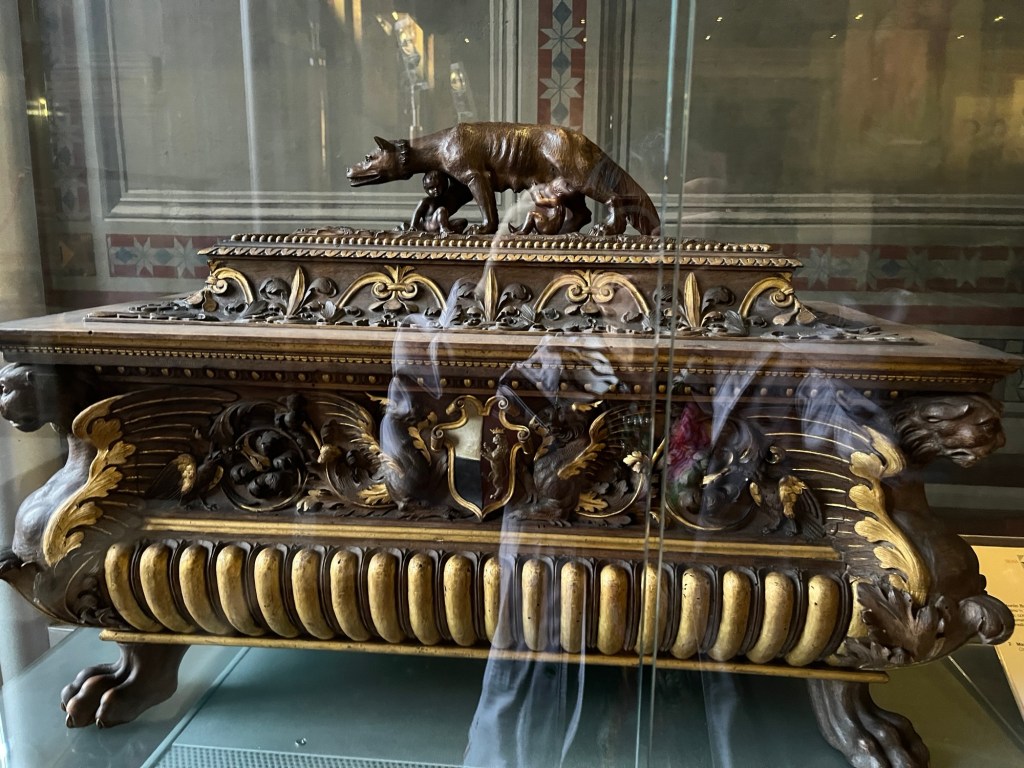
And since this is the museum about Siena’s city government, there’s lots of depictions about the founding myth symbol, the she-wolf with Romulus and Remus.


After five days of looking at the art in Siena, I think the medieval and a bit of the early Renaissance period were the best for Sienese artists or maybe I should say art in Siena because Donatello and the Pisano sculptors weren’t Sienese artists.
The Piazza del Campo was as empty as I have seen..

The Torre del Mangia was closed because of the weather. Sadly, there was a tourist yelling (in English) at the ticket seller because she couldn’t go up the tower.
The wine tasting was of three Sangiovese based red wines, a Chianti Classico, Rosso di Montalcino and a third that I forgot but was 100% Sangiovese—not a Brunello but the best of the three so you think I would remember. The pours for each tasting were fairly small so I hadn’t drunk that much. The wine was accompanied by bread, cheese and salumi.

The evening ended early, especially for Italy, so it was a good opportunity to get some rest although there was a free concert near by and a performance of various opera arias was also not far away. But this portion of my travels was mainly about get adjusted to the time zone so I did not want to get too tired this early in the trip.
 LHWatson's Travel Blog