We took a day trip by train to Rouen. We left from Gare St-Lazare where we had to figure out which machines sold train tickets and which sold public transportation cards for the Paris area. My biggest problem was working the machine when my hands were freezing. It was barely above zero Celsius and breezy, even inside the station.

Rouen is in the northwest of France in Normandy. I had never been in the area before and Scott only travelled through the area over 45 years ago. Trains depart around every half hour and take about 1.5 hours depending on the route.

The train station, Rouen Rive Droit, is small and given the weather, was quite chilly.
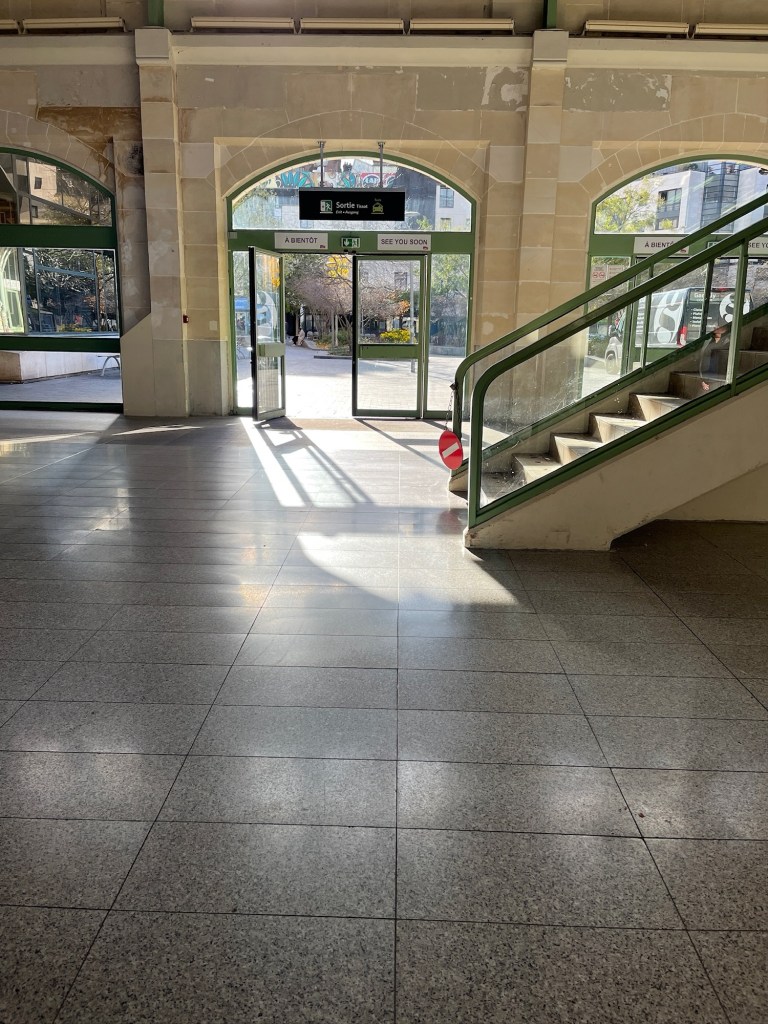

We walked the kilometre and a half to the Cathedral, Notre-Dame de Rouen.

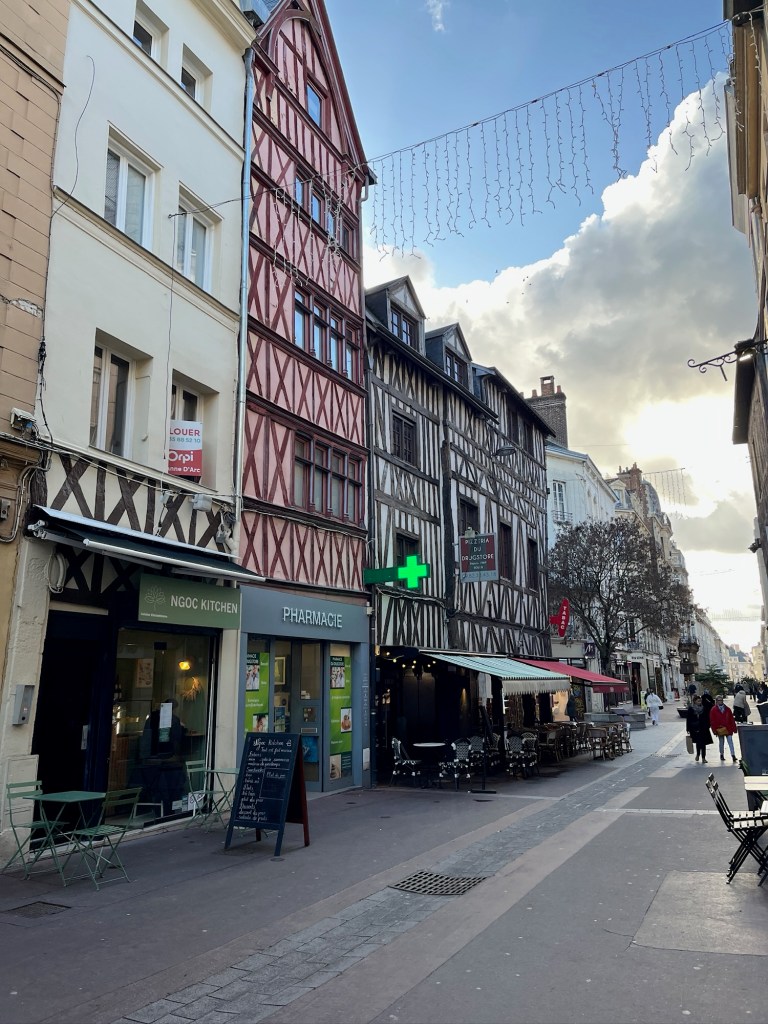
Many of the city streets are wide and mostly straight.

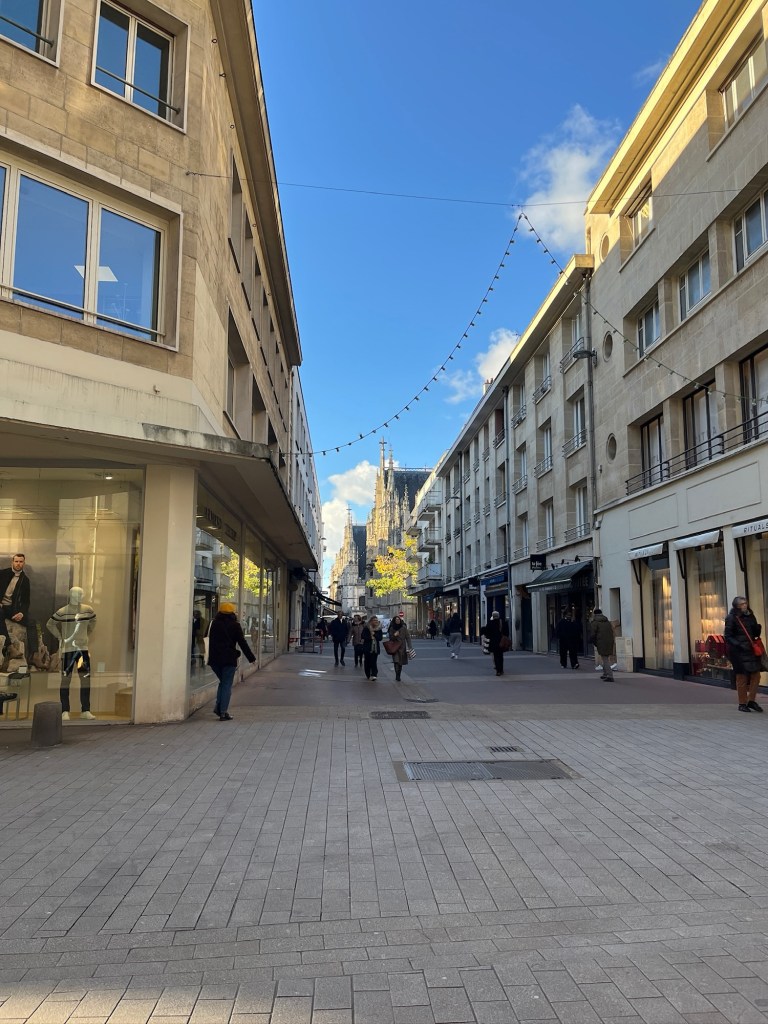
A long pedestrian street lead to the Cathedral.
Some of the buildings look northern European. Definitely didn’t feel like I was in Italy.
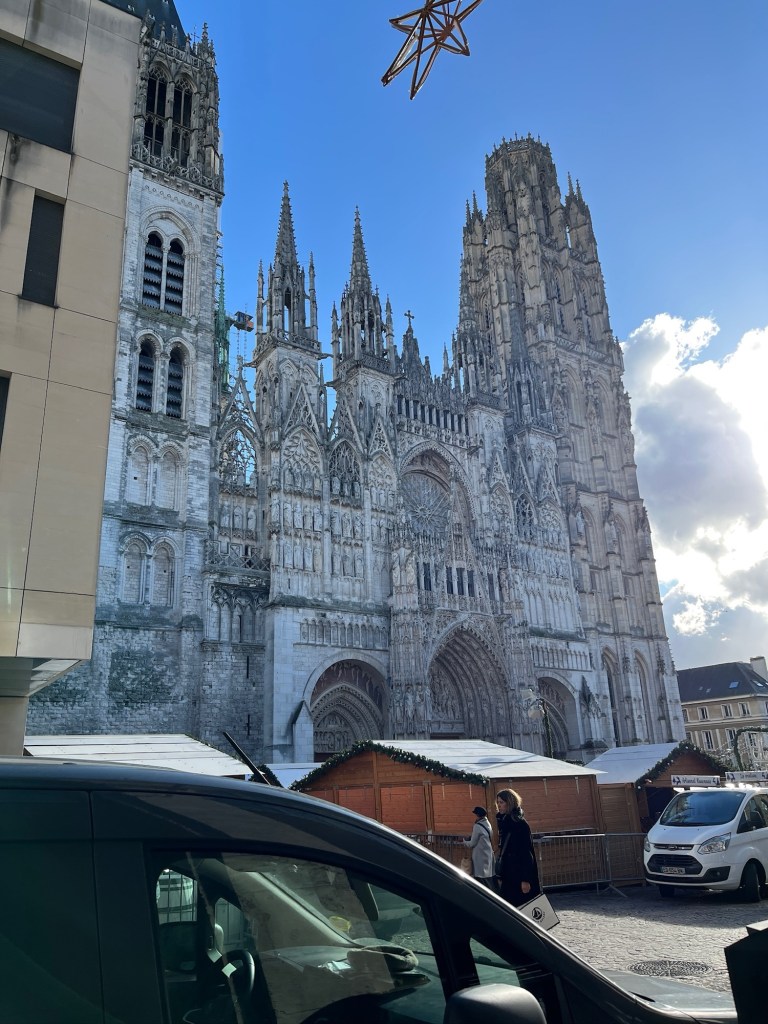
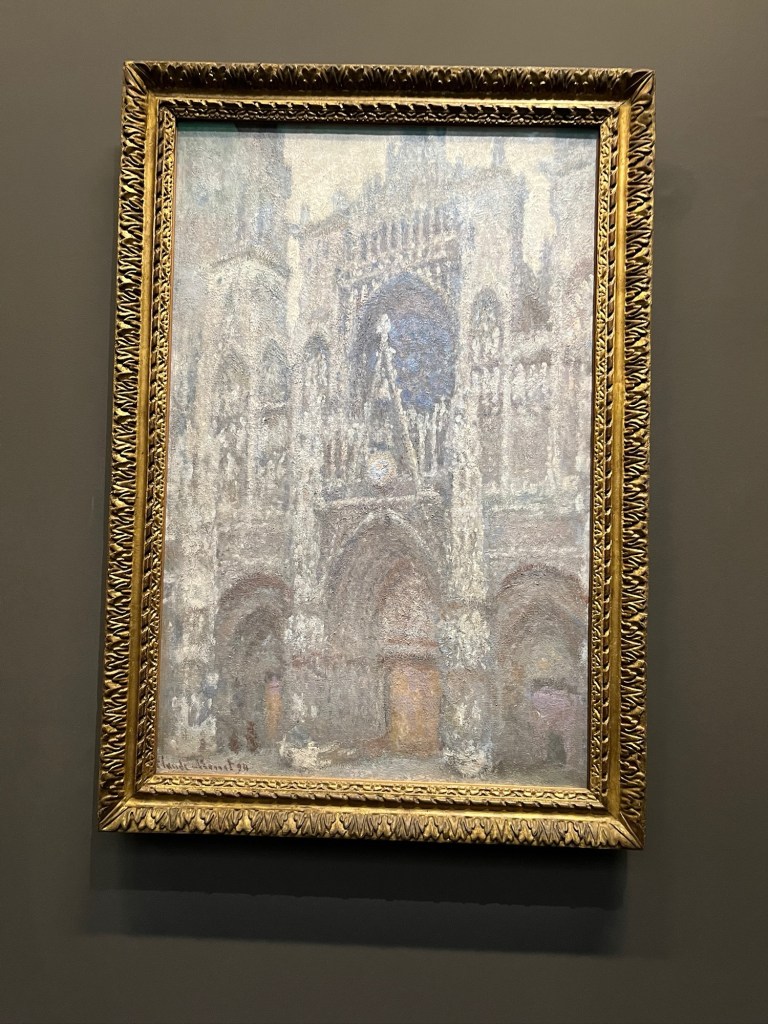
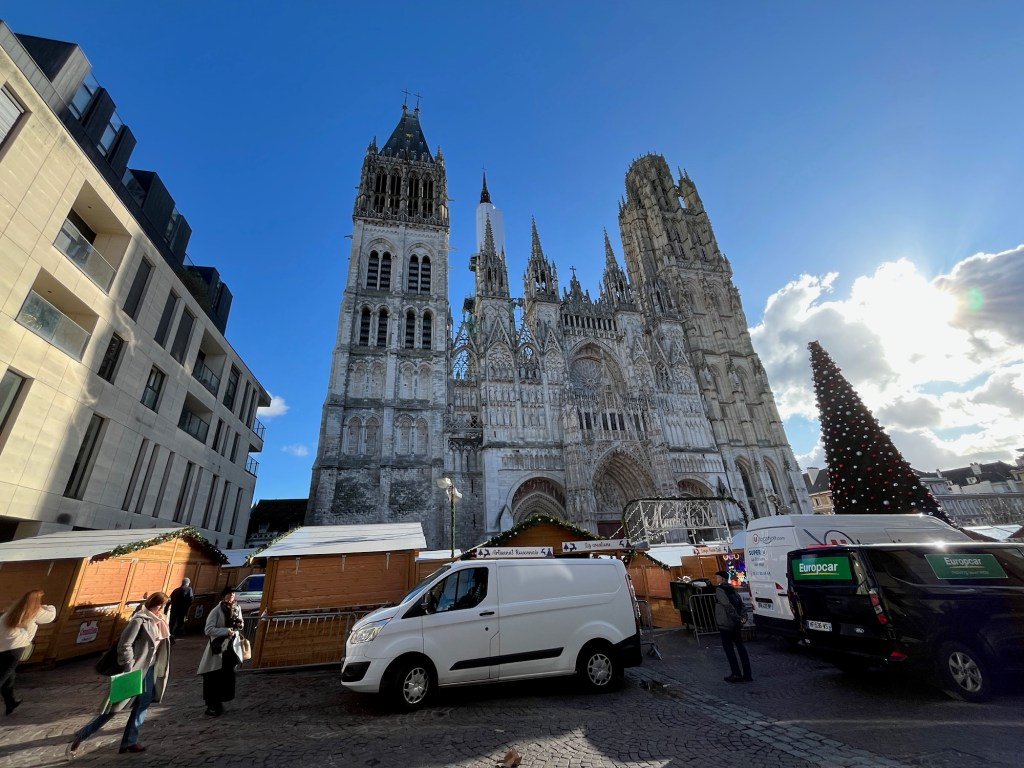
The facade of Rouen Cathedral has been made famous by Claude Monet who painted it at least 20 times at different times of the day as he studied the effects of light.
We had seen some of those paintings at Musée d’Orsay.
A Christmas market was being set up.
We went to a nearby restaurant which was filled with locals who were visiting among the various tables.

We had a regional lunch. My frites were described as made from Normandy potatoes and the sauce with the chicken made from Normandy cidre.
We also had a Normandy apple sorbet with Calvados, a liqueur made in Normandy from apples.
After lunch, we went inside the Cathedral.
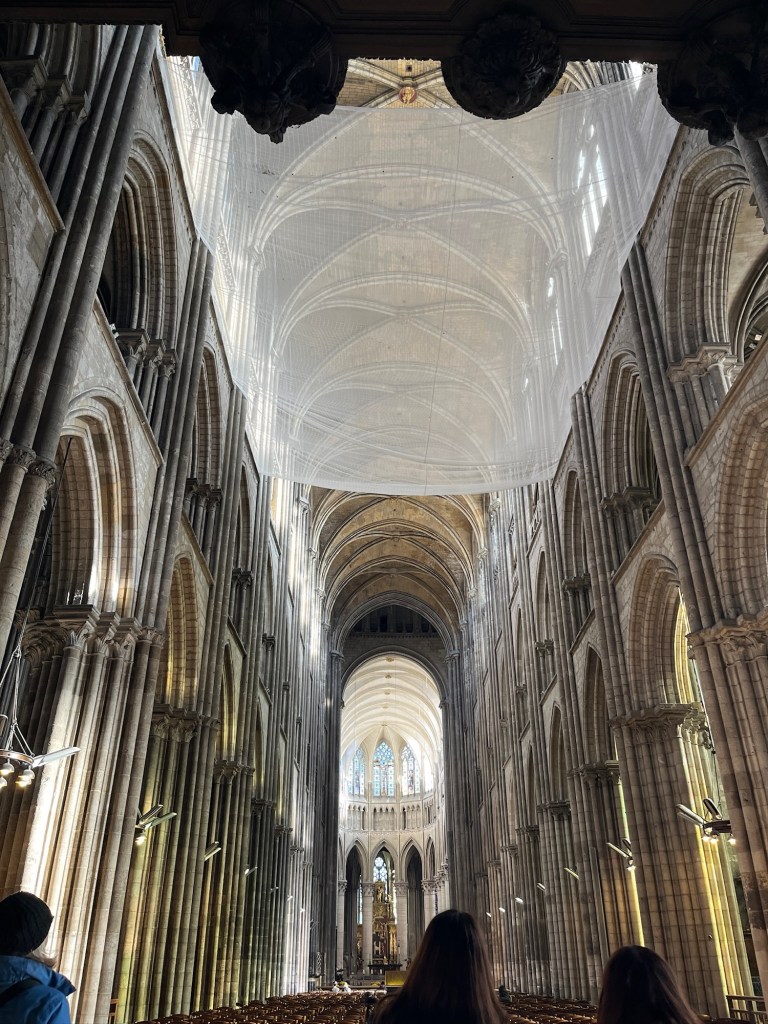
It is long but not as tall and wide as some of the Gothic churches such as in Reims and Chartres.

Some original stained glass windows.
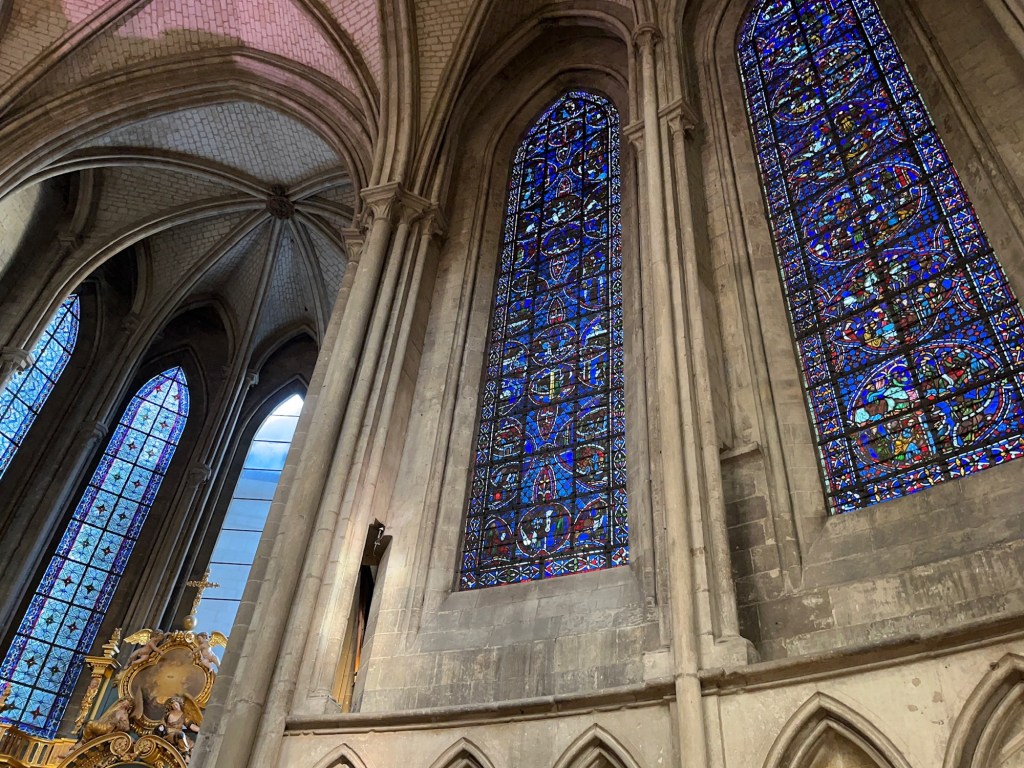
Some windows have no stained glass which we guessed were damaged in WWII.

We walked back towards the train station. At the end of this street is the church of Sainte Jeanne d’Arc or Joan of Arc. Joan of Arc is the patron saint of France who during the Hundred Years War with England helped defeat the English and supported the crowning of the king of France. When she was captured by the English, she was put on trial in Rouen and burnt at the stake as a heretic.
We went to the Musée des Beaux Arts, which has free admission.

It’s in the former Palais de Justice.
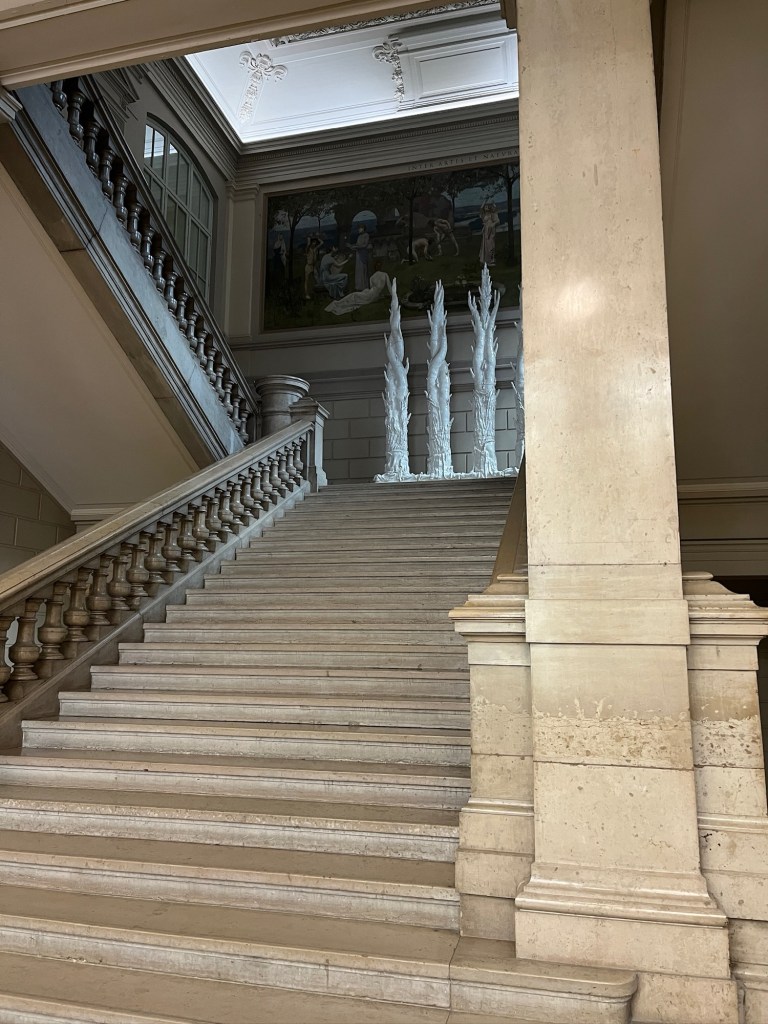
Security was very relaxed.
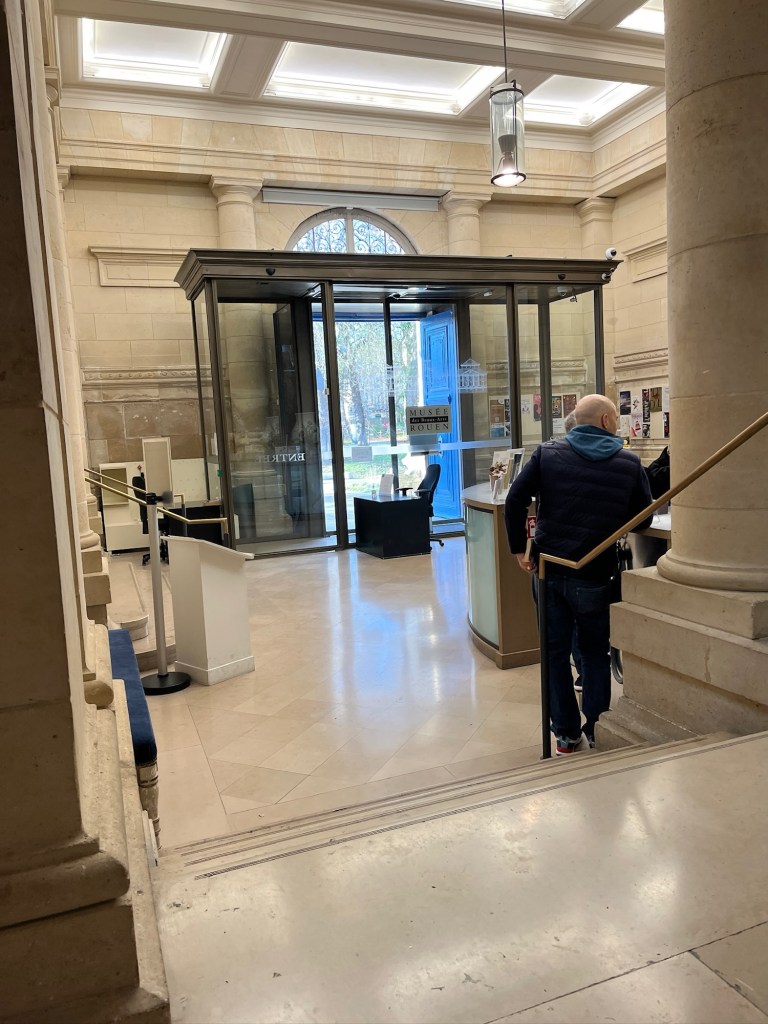
The collection is on two floors with many rooms closed as they are redoing the rooms. The collection is fairly modest. There is a praedella by Perugino but not the main altarpiece.

There are some largish Veronese paintings.

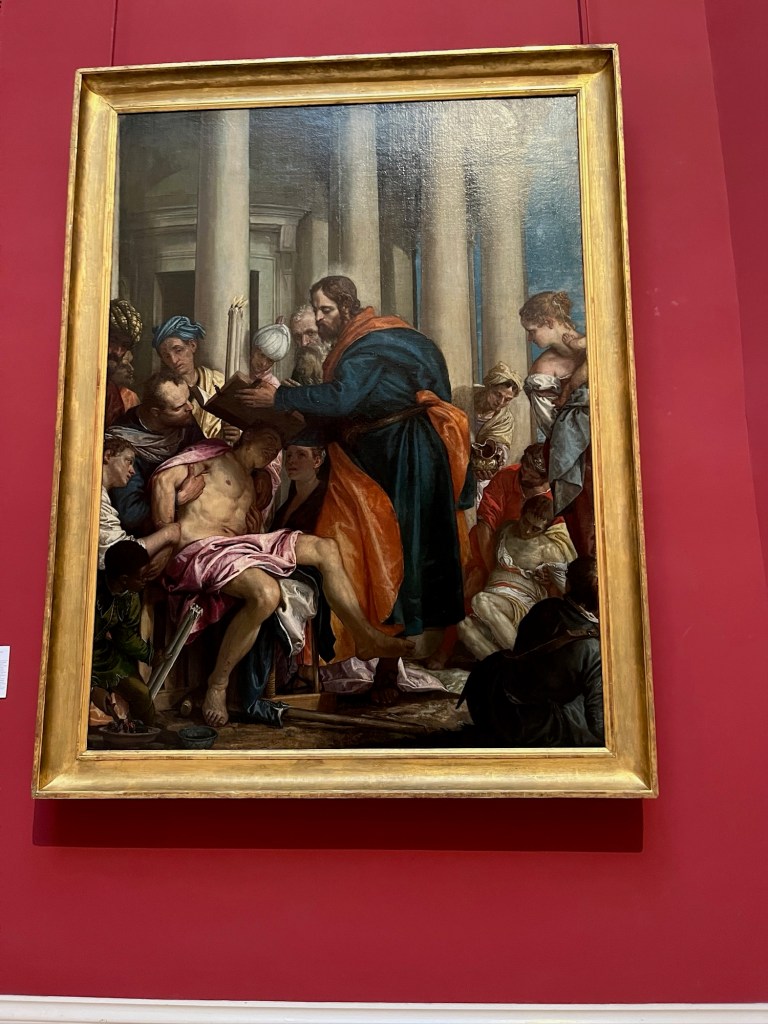
Also a Velazquez which did not strike me as a particularly good work.

There is also a Ruebens.

But my main reason for coming to Rouen was to see the Caravaggio painting, The Flagellation of Christ at the Column, which I had not seen in person.
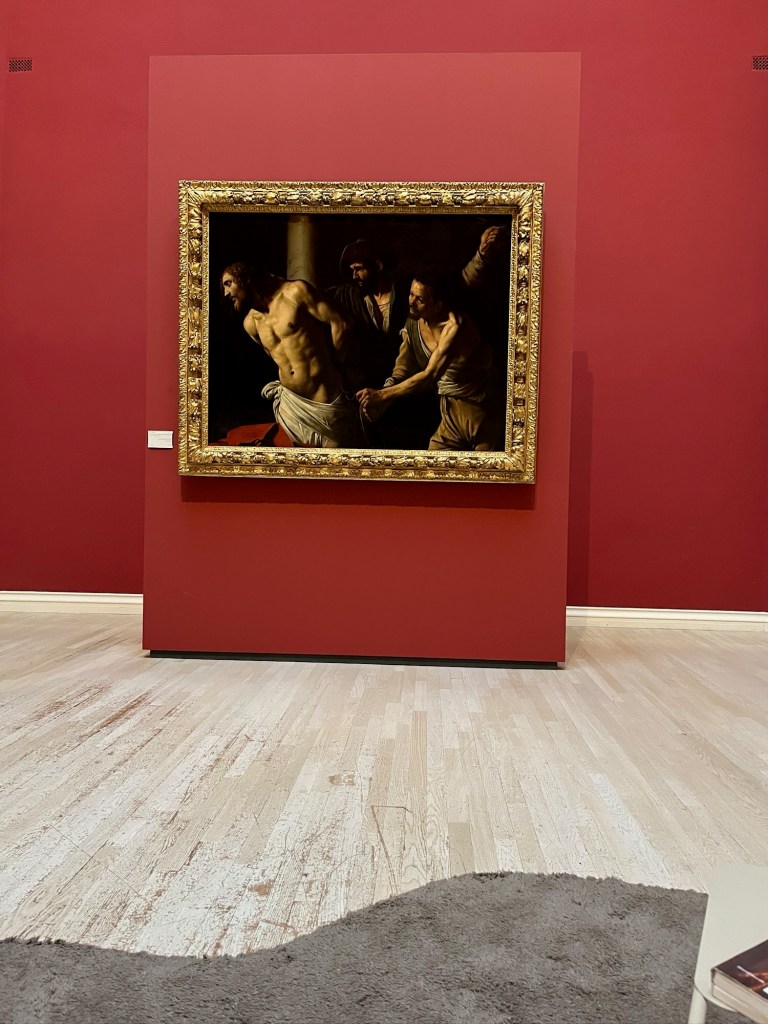
This is generally agreed to be by Caravaggio but it, like the Prato painting, lacks a secure provenance. There are at least two references to flagellation paintings which may be this one. The additional support for this as a Caravaggio are paintings by other painters in Naples around 1607, when Caravaggio was living and working there, that look to have been influenced by this painting as well as another flagellation painted for the church of San Domenico. Most scholars believe it is a Caravaggio despite the unclear provenance.

Caravaggio was under a death sentence in Rome when he was working in Naples so many of his works during that period and later lack documentation. One of the figures looks like a model he used in Naples.

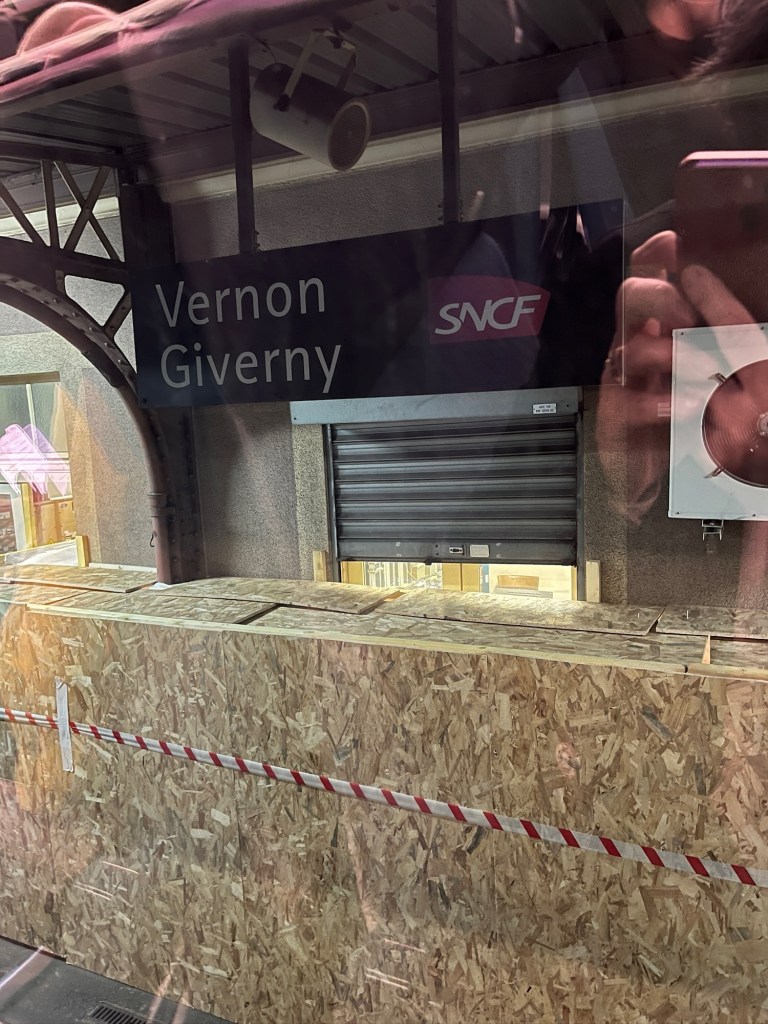
We returned to Paris by a different route that stopped at Giverny, where Monet’s lily pond and Japanese bridge can still be visited. A good reason to return.
The taxi ride from the station was slow near the Opera area as traffic was gridlocked. Traffic lights were ignored.

For a change of pace, we had pho.

Fun fact: our hotel is on Rue Molière and at the end of the street is a statue of Molière, a writer (mostly plays and poems) who is to the French language what Shakespeare is to English.

 LHWatson's Travel Blog