I went to see two art works in places that are open for limited hours. They are near each other but open only in the morning and not every morning. I can’t get there after class before they close. The only day I could get there when both are supposed to be open was Saturday. I hoped because it was a holiday, they would not be closed.
I left the apartamento at 8:30. Few people were walking about.


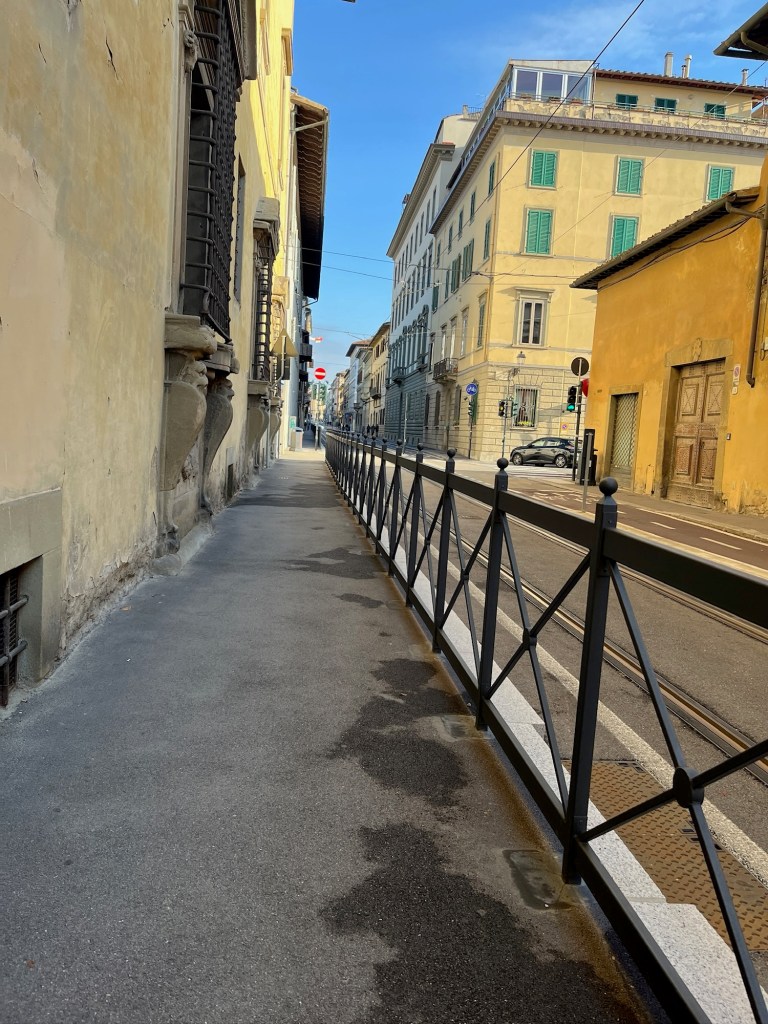
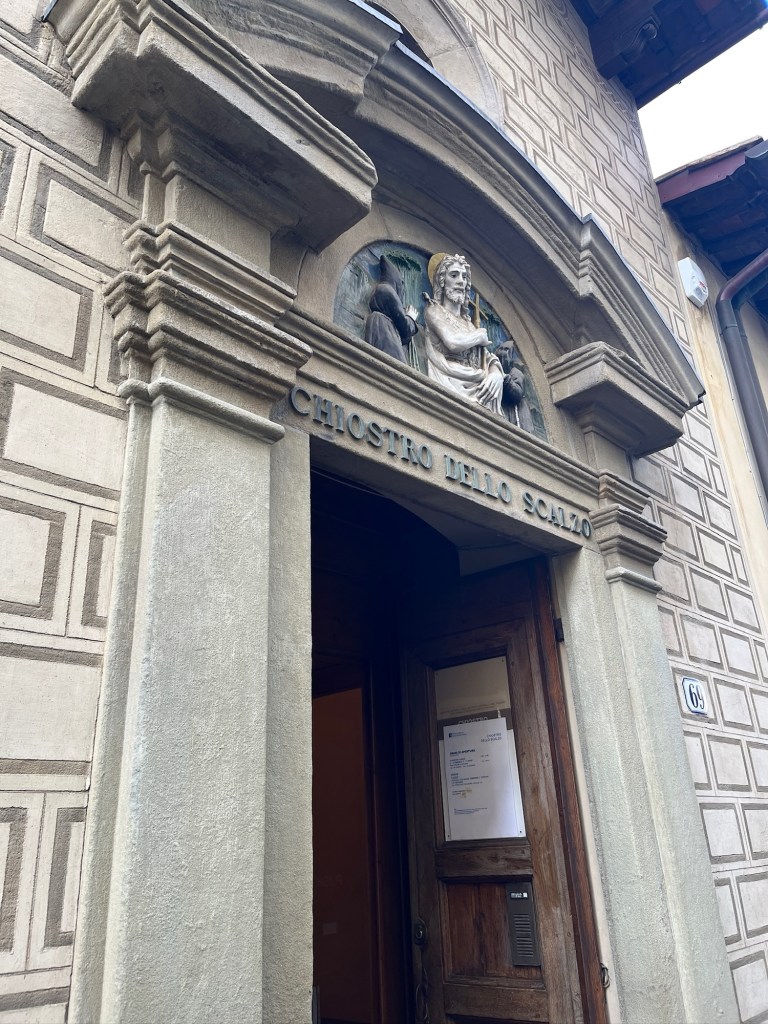
The first place was the Chiostro dello Scalzo. The chiostro (cloister) of the “compagnia del disciplinati di San Giovanni Battista” called Scalzo because they processed barefooted. A “compagnia” or company was a group of laymen who contributed to the defence of Roman Catholicism; ie it was a men’s club. The chiostro is near San Marco on this street next to the tram line which doesn’t appear promising for museum going.
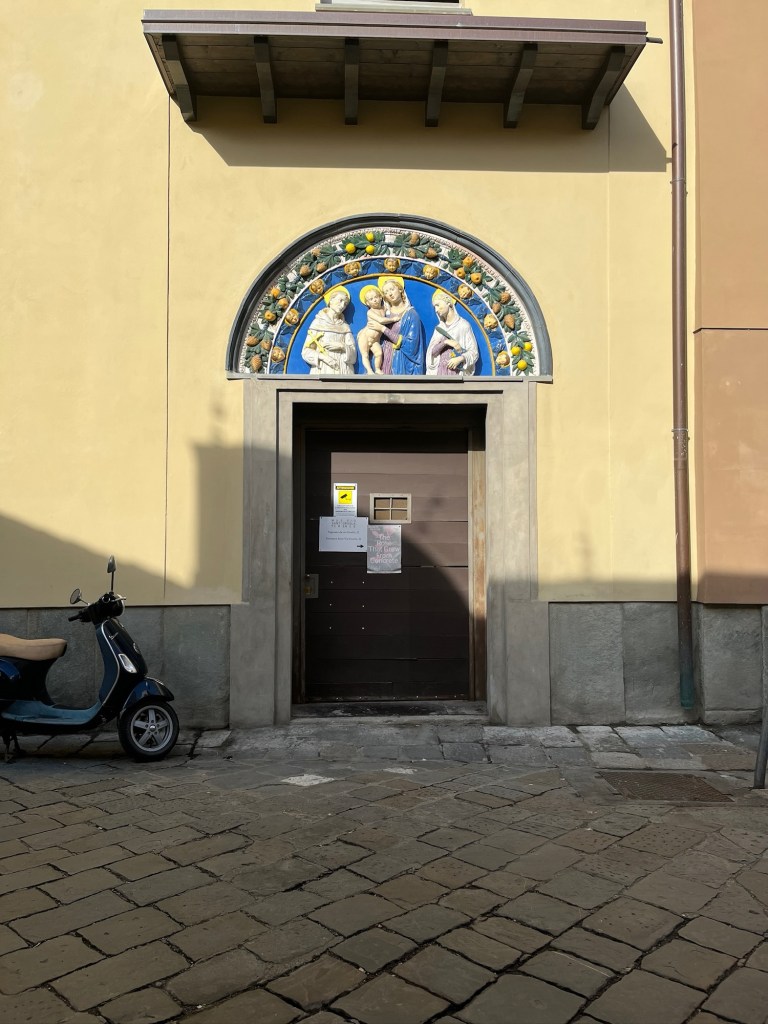
But suddenly you come to the door.
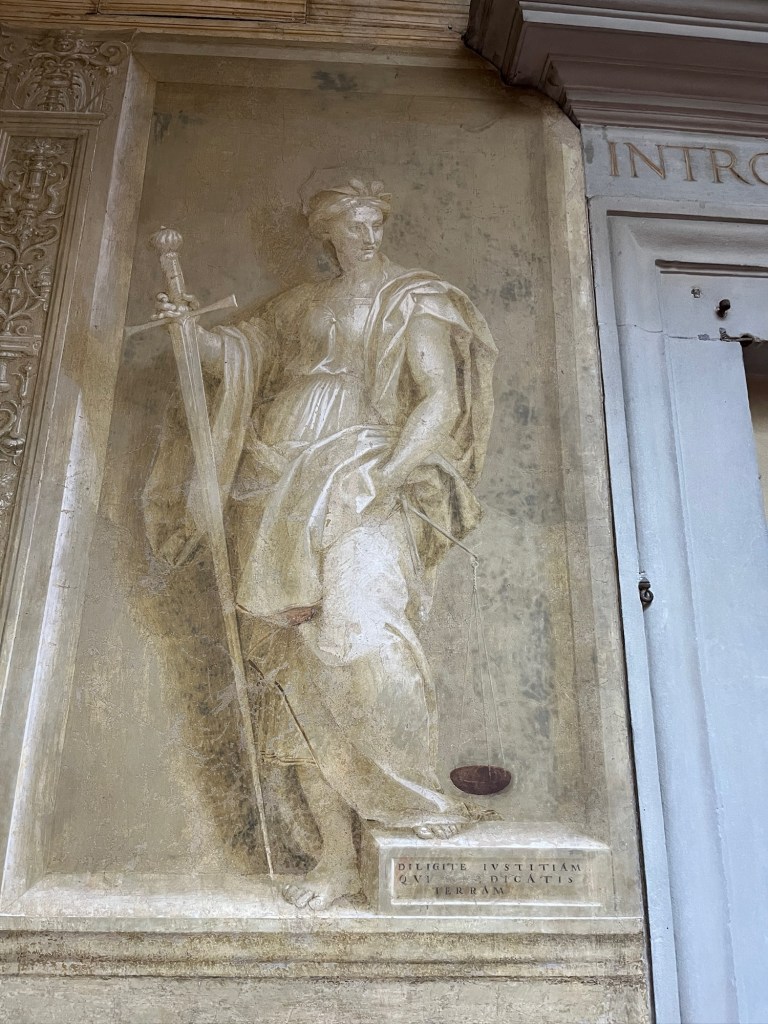
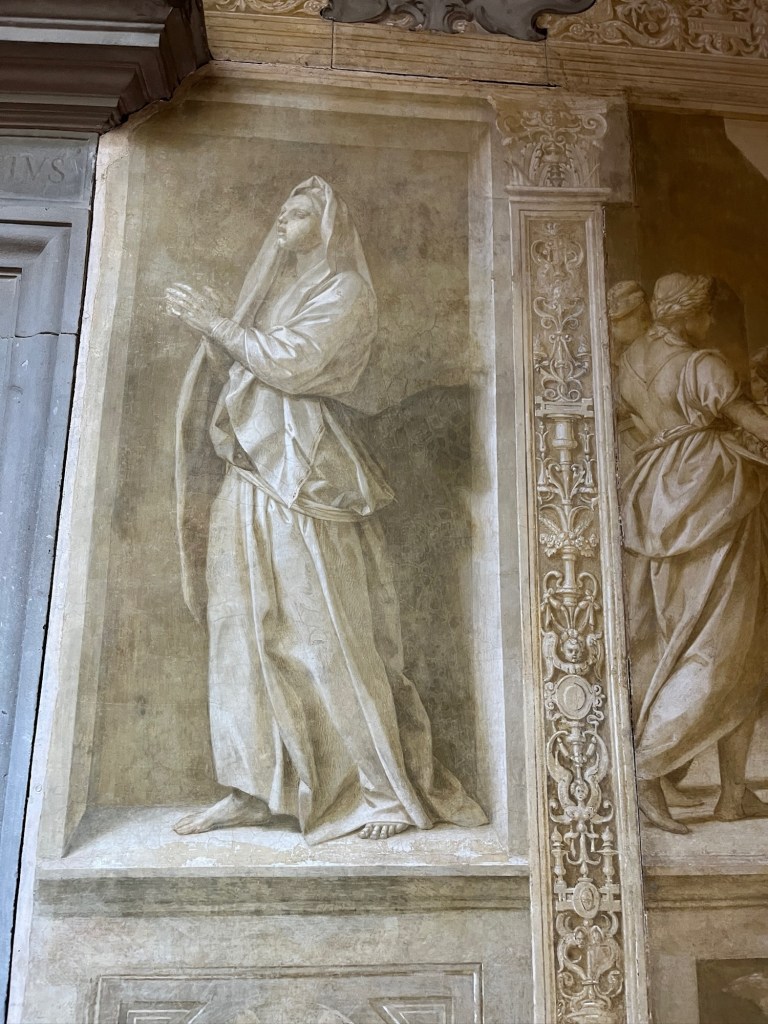
Only the cloister remains. The rest of the church was destroyed in the late 18th century. The cloister was preserved because Andrea del Sarto, who was a member of the Compagnia, painted the walls with scenes from the life of Saint John the Baptist. He painted them over three periods from 1509 to 1526. Thus they reflect the development of his style which starts as Renaissance then shows the influence of Michelangelo and mannerism. They are in grisaille, monochrome grey, which was often used to look like statues or carved marble.

The columns were added later in the 18th century.
His earliest panel, the baptism of Christ, looks a lot like Verrocchio’s early Renaissance painting.

John gets more muscular in the later painted scenes and more movement is depicted.
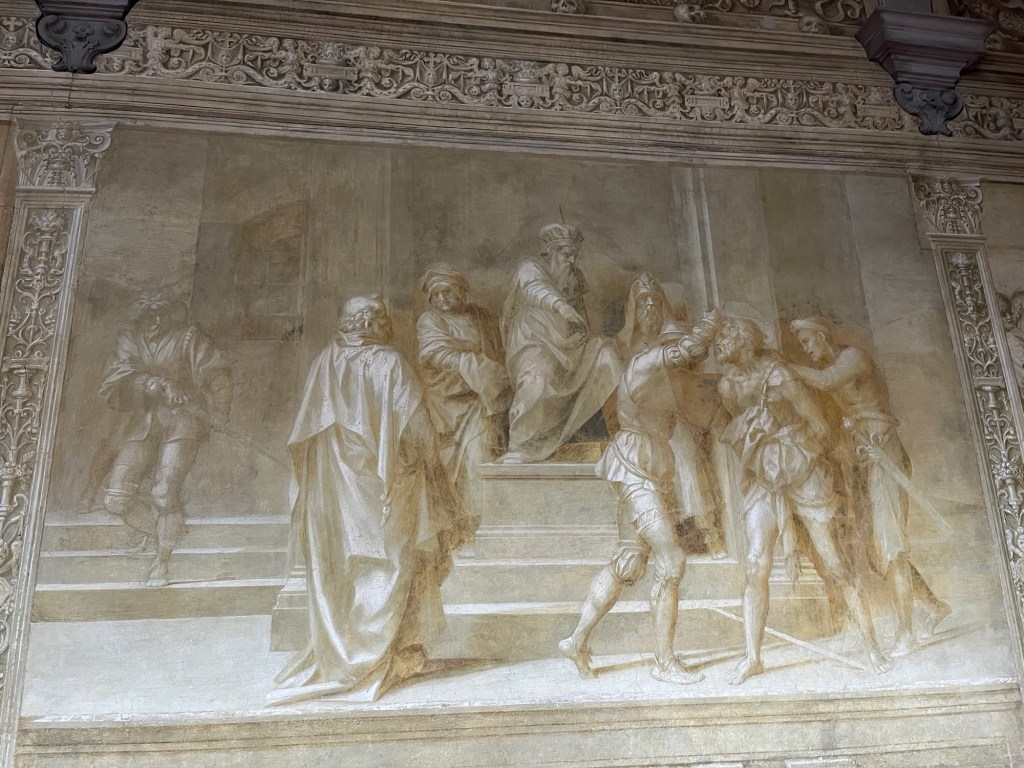
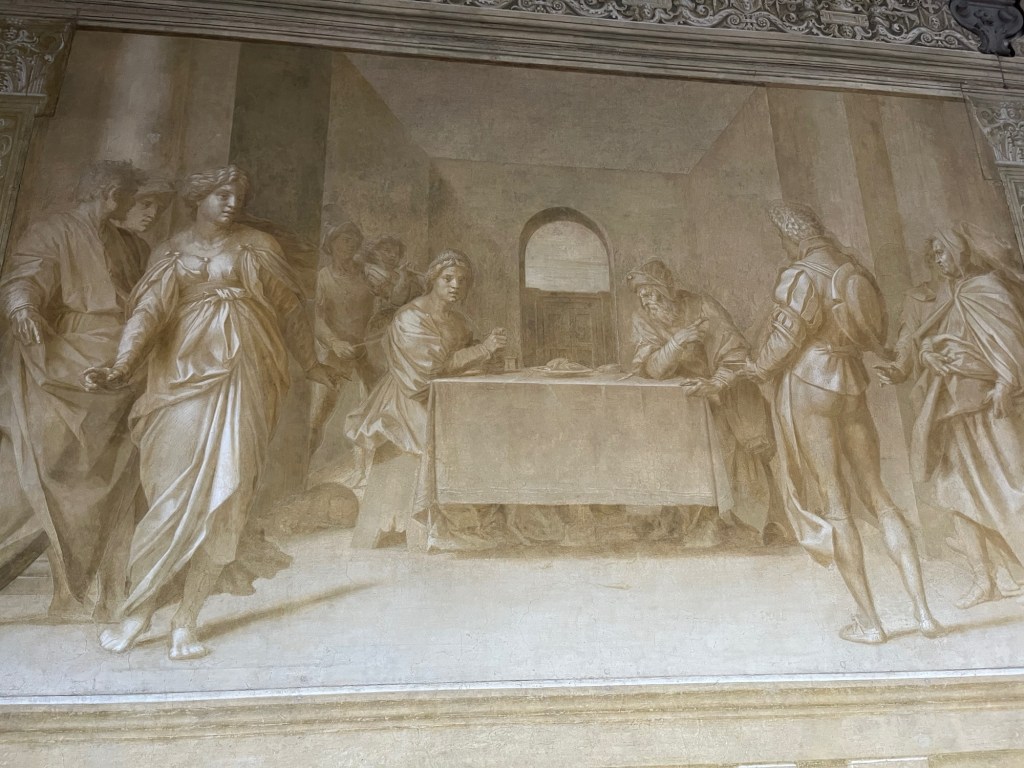
Two scenes were painted by Francesco di Cristofano, known as Franciabigio, who worked with del Sarto in their workshop. Del Sarto had been called to work in Rome and it was uncertain if he would return.
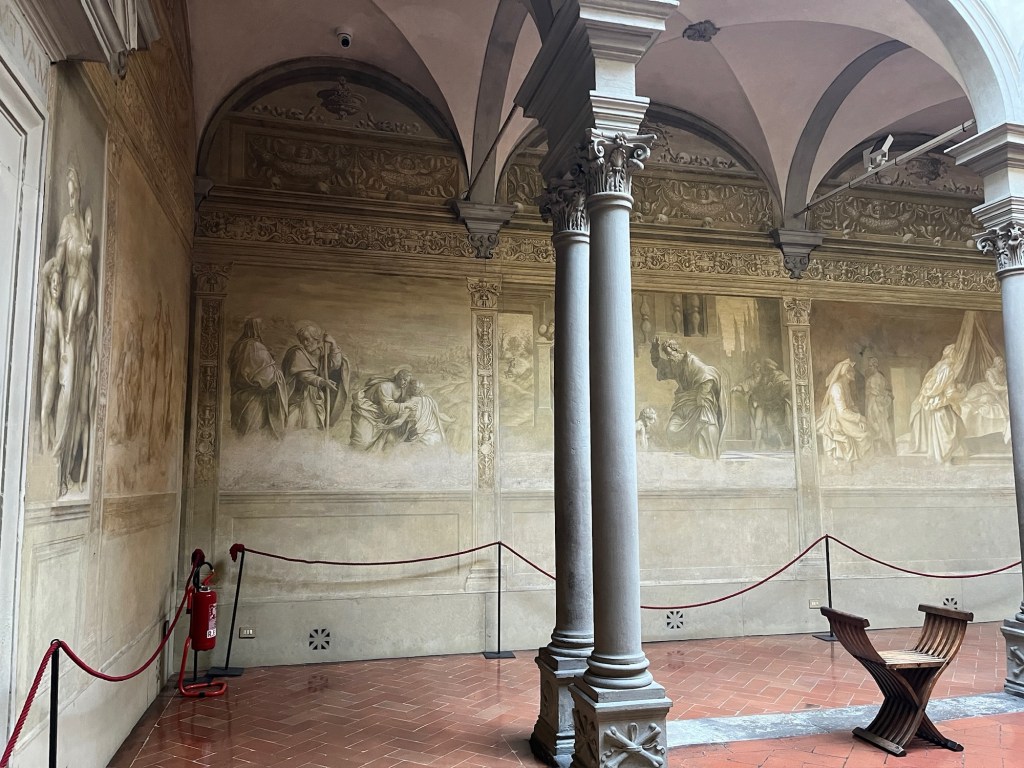
But del Sarto returned and completed the work.


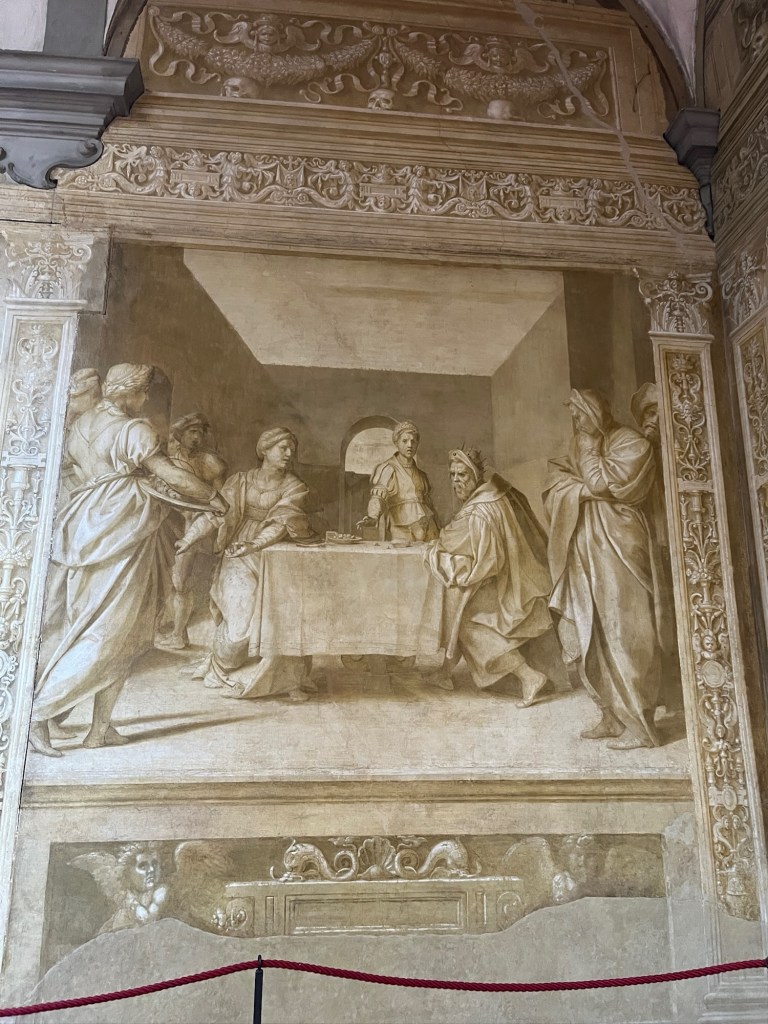
In addition to the scenes, the virtues of faith, hope, charity and justice are also depicted.


A few blocks away is what remains of the church of Sant’Apollonia.
Going there, I passed what used to be the Court of Appeal (now government offices). The building was originally a Medici villa or casino, which is not for gambling but a “little” casa (house). Of course, the Medici idea of little house is my idea of a mansion.

Across the street from Sant’Apollonia is Santa Reparata campus, part of an arts school (I think).

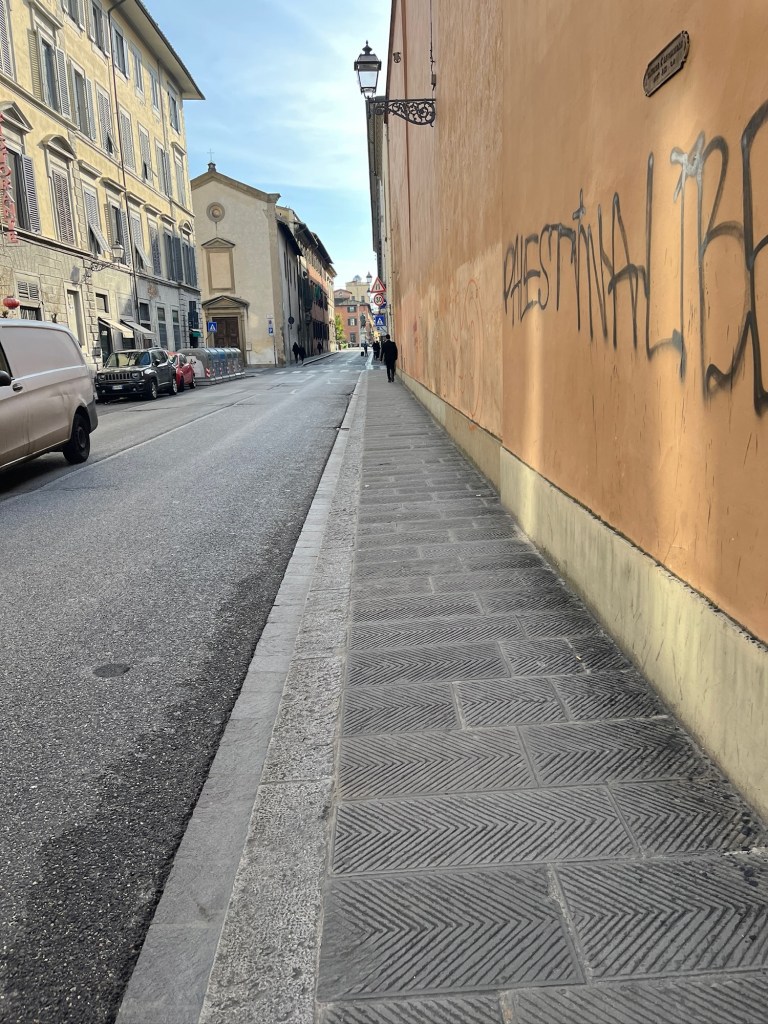
Sant’Apollonia is on another unassuming street which doesn’t look like it will have a museum.
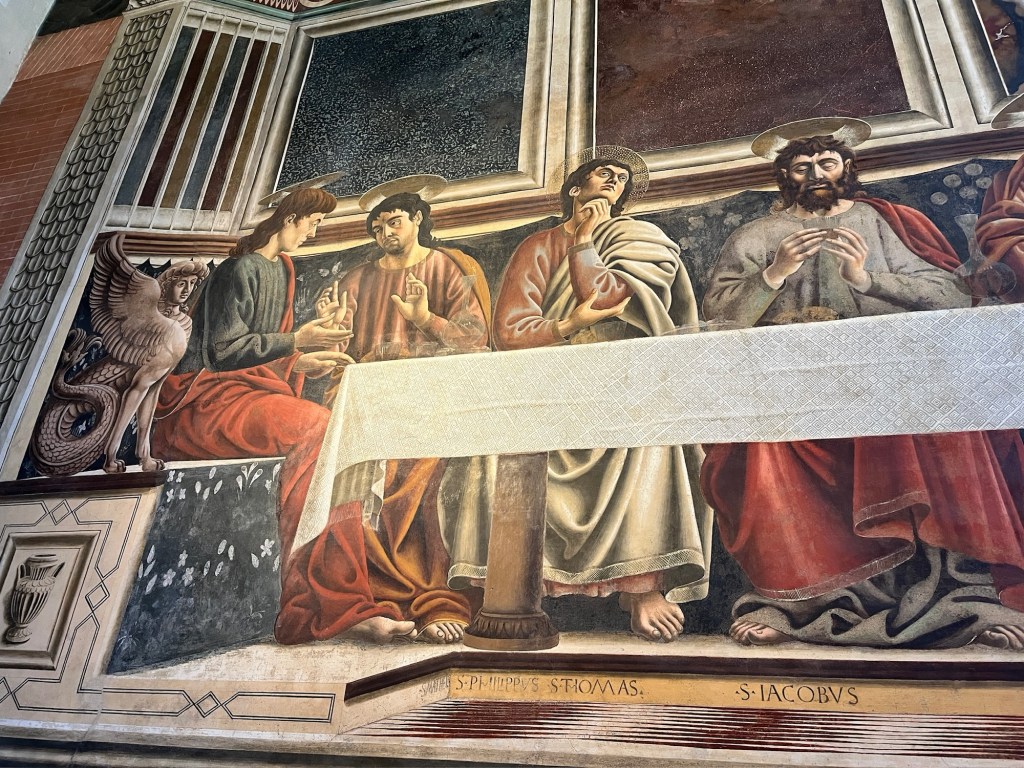
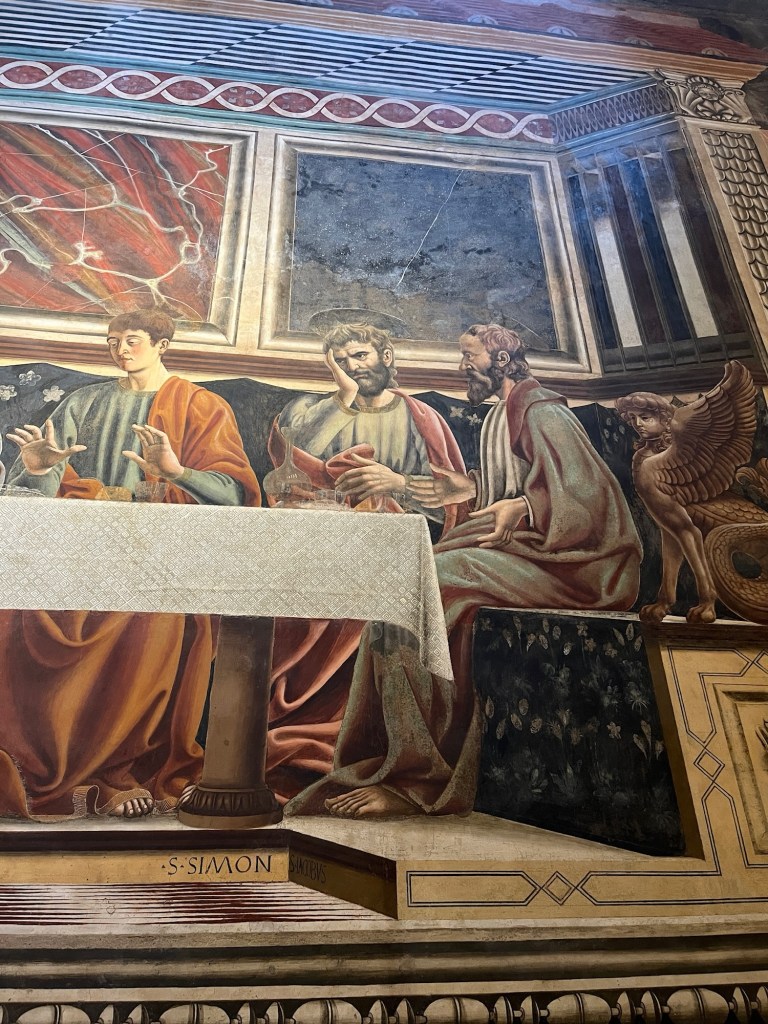
The only remains of the Church of Sant’Apollonia is its former refectory which is now a museum for Andrea del Castagno’s Cenacolo (Last Supper).


The fresco was done about 1447 when Florence last supper paintings had developed traditions and iconography to which Castagno innovated. (Leonardo’s innovative last supper was 1495-1498.)
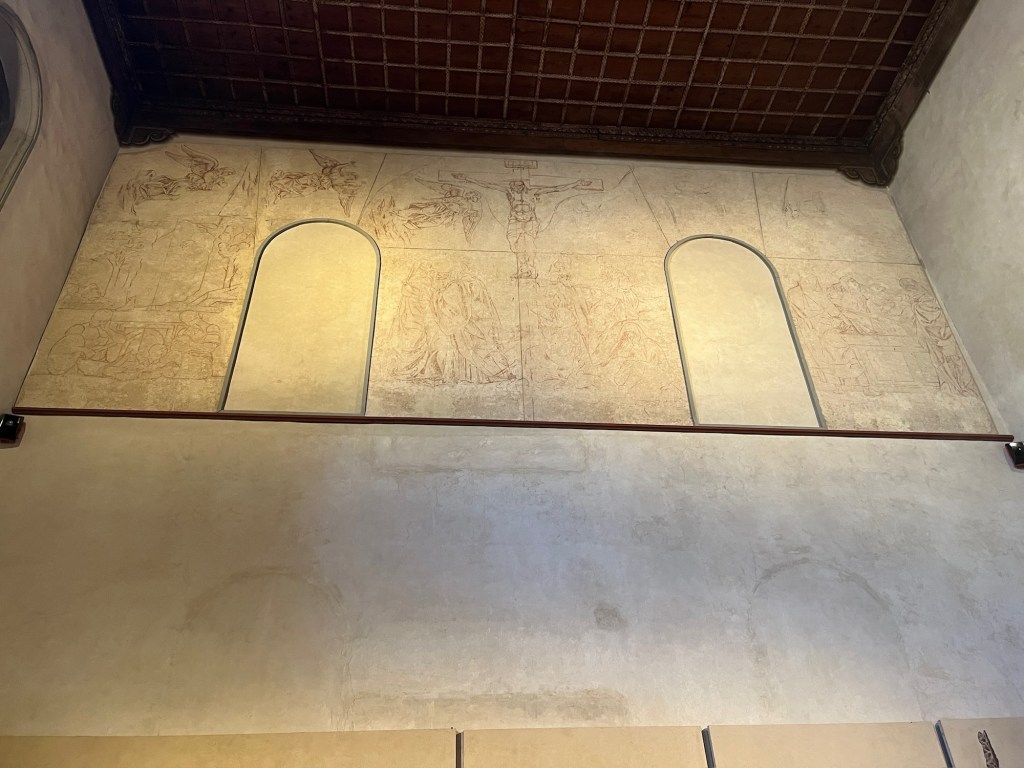
The usual last supper was under a larger predominant crucifixion but Castagno made his the same size. The upper crucifixion also includes a deposition and ressurection. It is in poor condition and hard to see. The work was painted for an order of cloistered nuns and like some other last suppers for cloistered orders, was not publicly seen for centuries.
The work has many naturalistic details.

The fresco had been removed from the wall for conservation and the sinopia (the under painting which outlines the work) for the upper part of the fresco is now shown separately on the opposite wall.
The refectory is quite large and has fragments of other frescoes, mostly by Castagna.

I walked to nearby Mercato Centrale. The lower market was not too busy

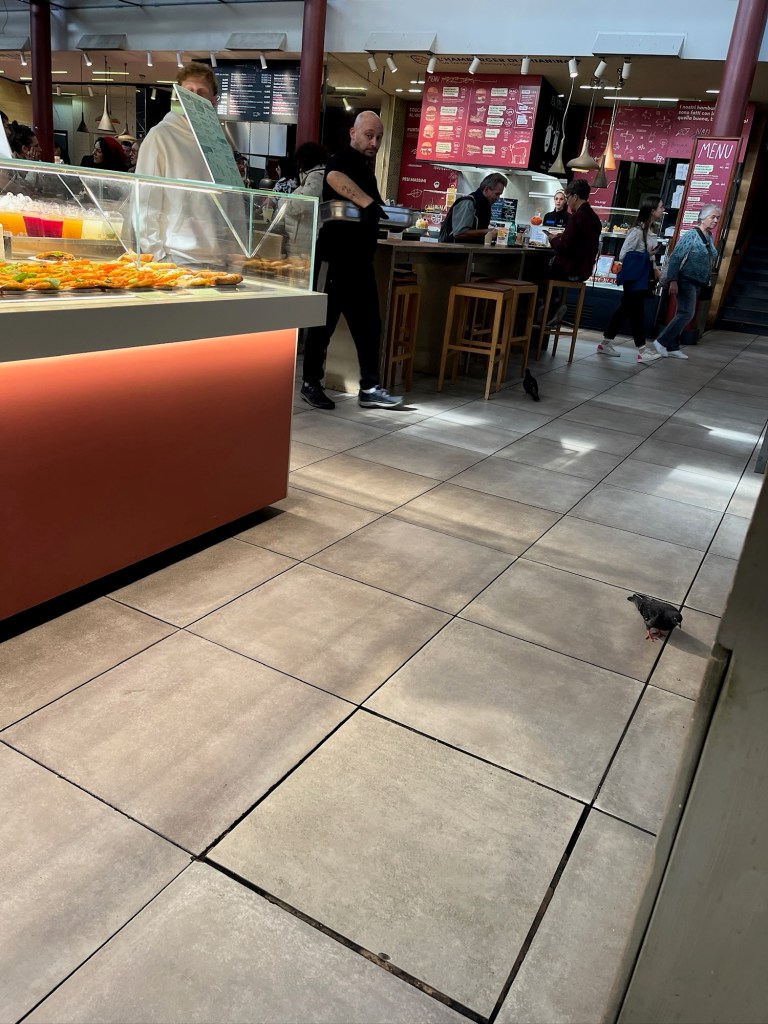
But the upper level, which is more like a food court, was busy as even pigeons were starting to look for lunch.
I decided to test my navigational skills and walked to Sant’Ambrogio’s market without using a map. You pass interesting random sights along the way.
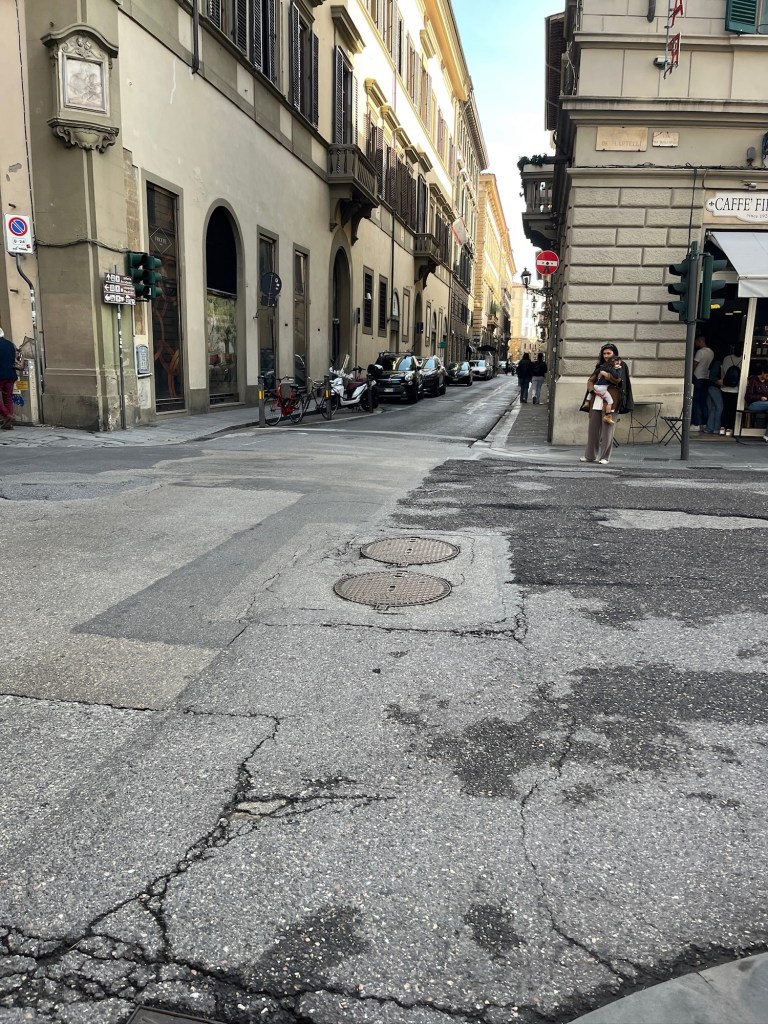

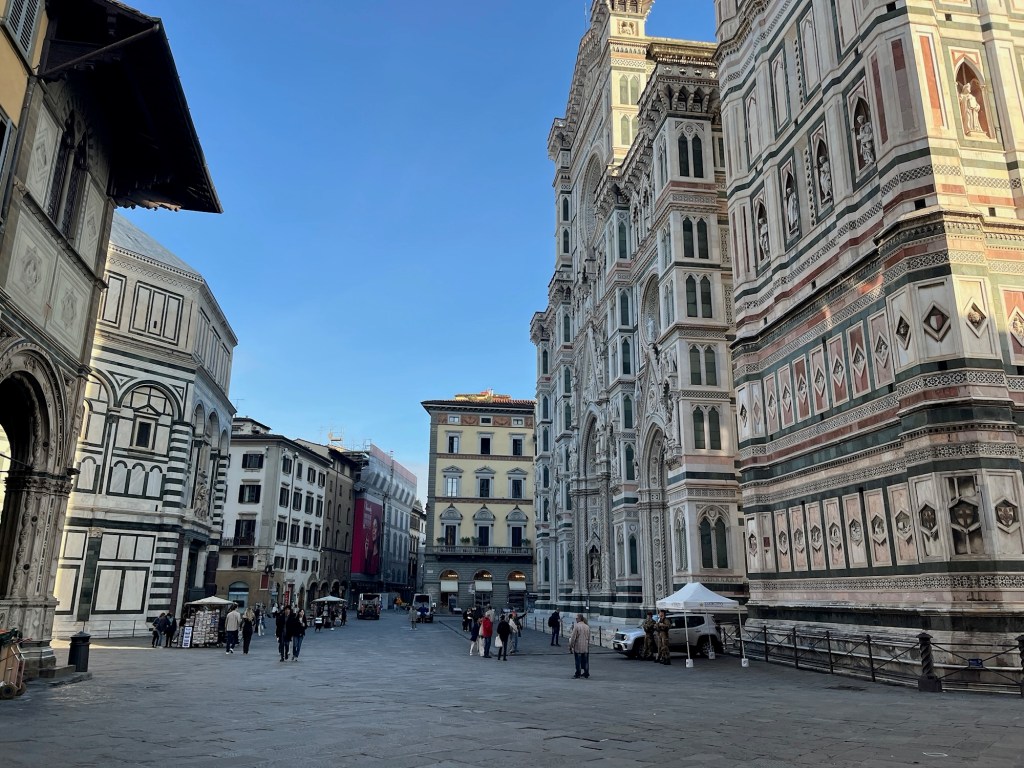
Looking the opposite direction from Sant’Ambrogio, you can see the dome of the Duomo.

I was only going to buy fruit but ended up buying vegetables as well.
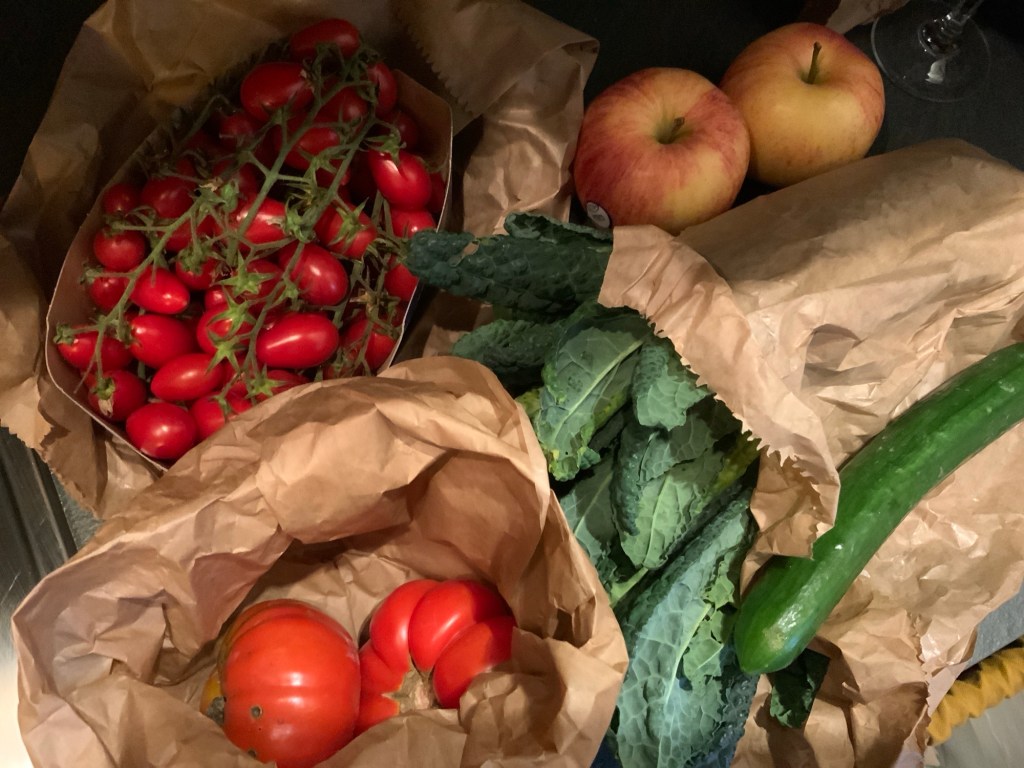
They were heavy so I had to drop them off at the apartmento and then went out for lunch.
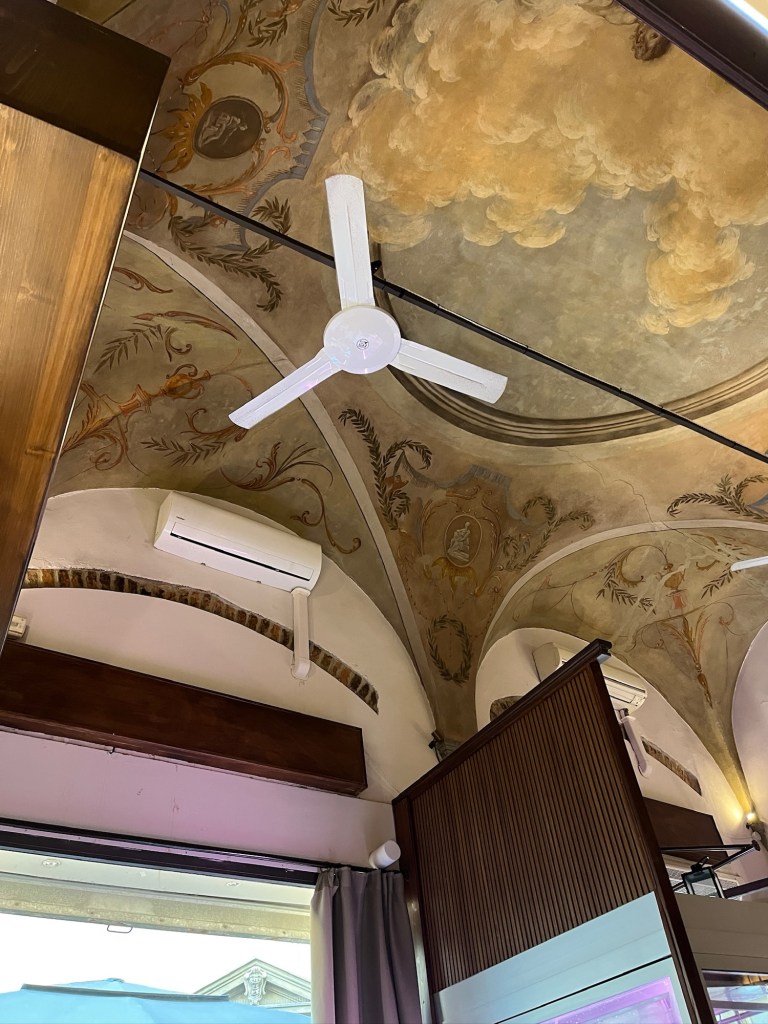
Ristorante dei Rossi has an interesting ceiling.
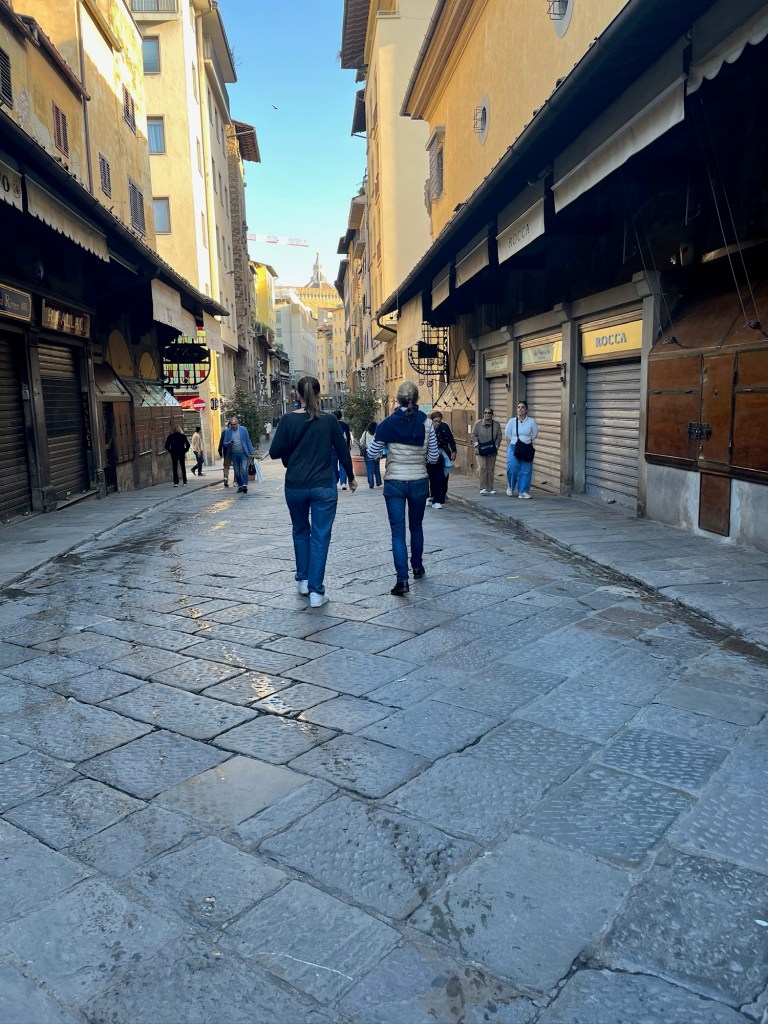
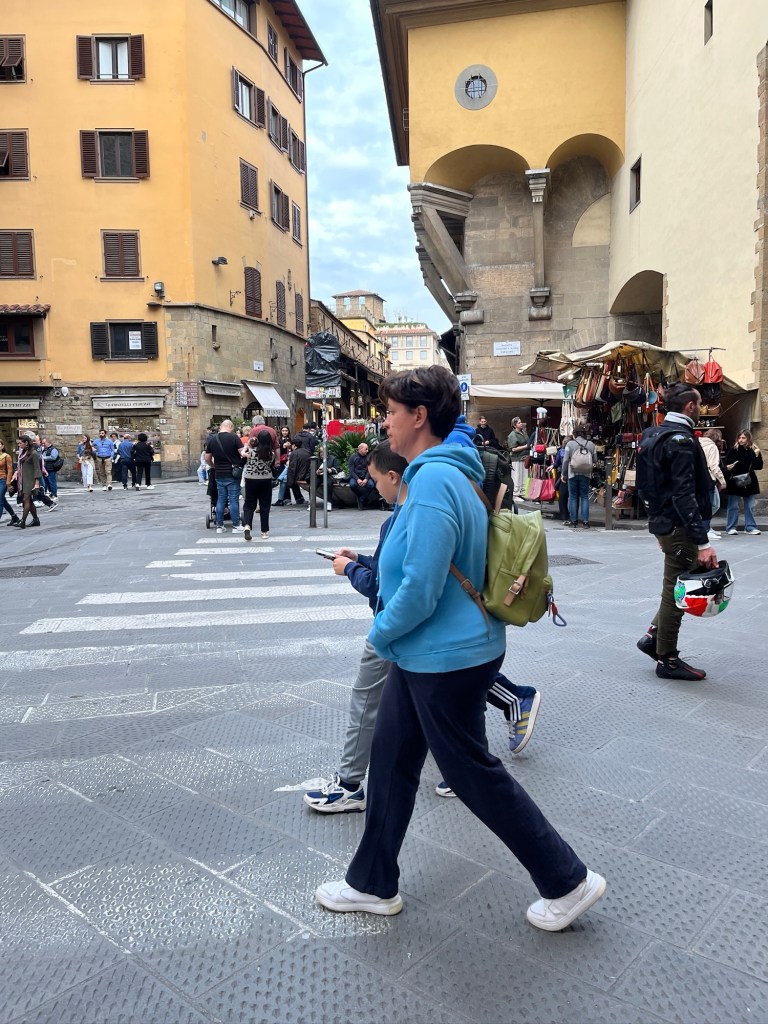
I forgot to take any photos of the pasta I had. On the return to the apartamento, the street near Ponte Vecchio definitely was busier.
 LHWatson's Travel Blog