We went on a guided walk around Volterra.
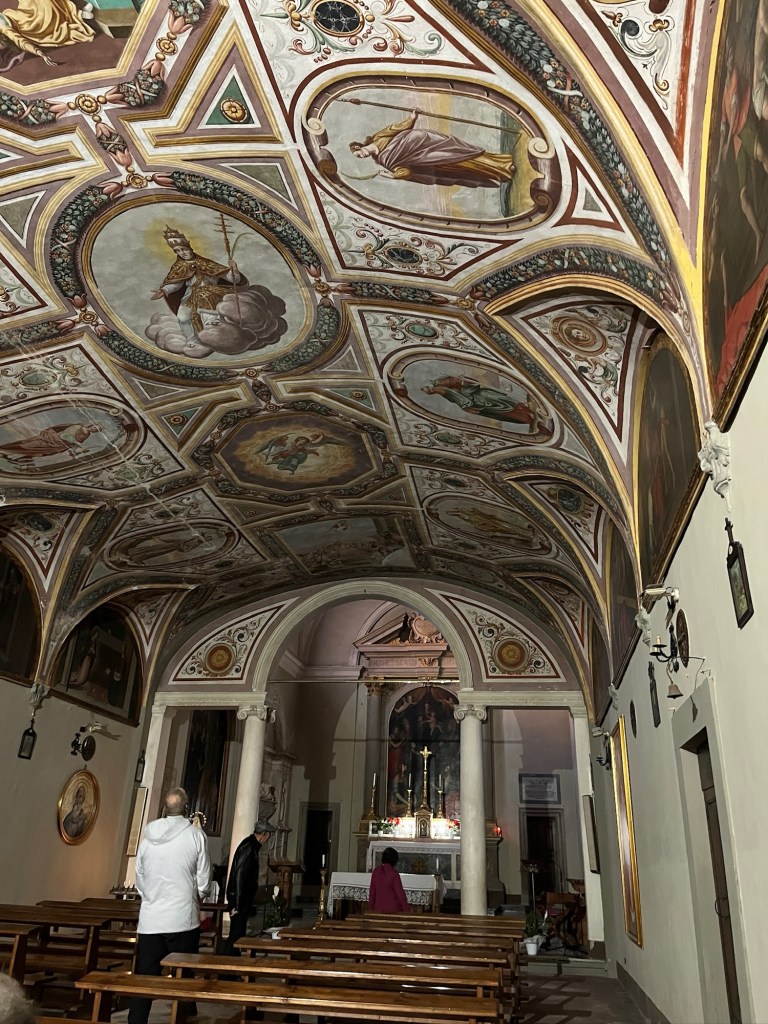
We looked into the church of San Lino, a saint from Volterra and the second pope after St Peter.

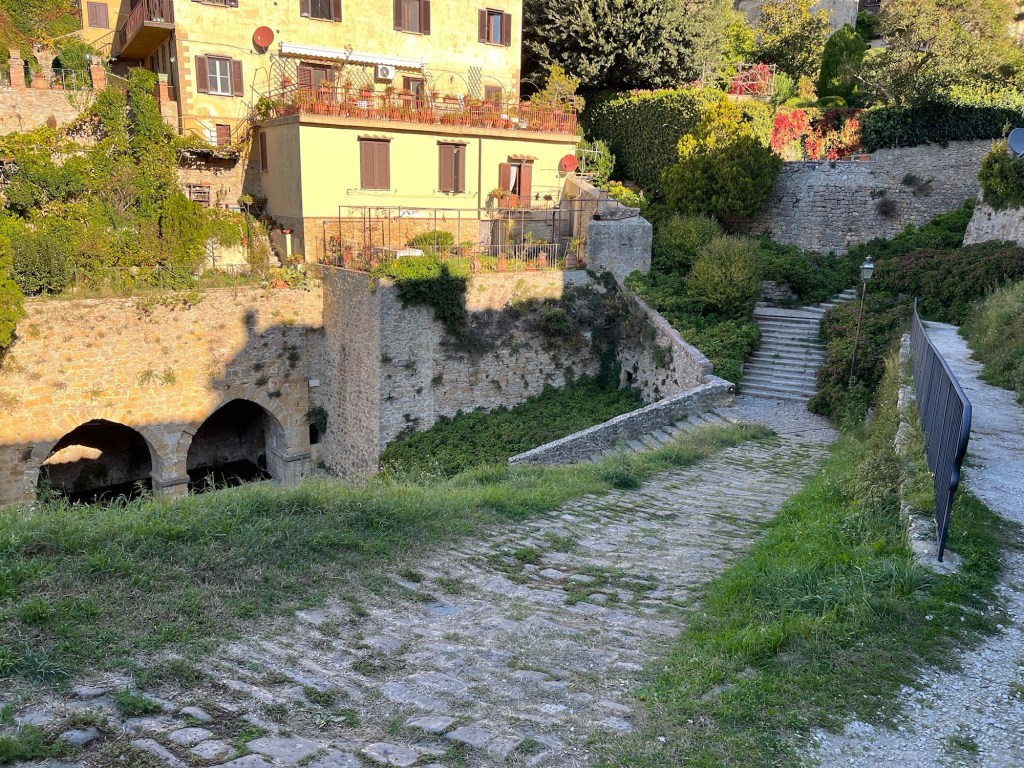
Some of the medieval wells where women would wash the clothes, then have to haul it up the hills—wet and heavier.
A medieval church

Alabaster is mined nearby and is one of the main artisan crafts of the city. We watched a demonstration of turning alabaster.

Ancient Roman ruins—a theatre, then later constructed baths.

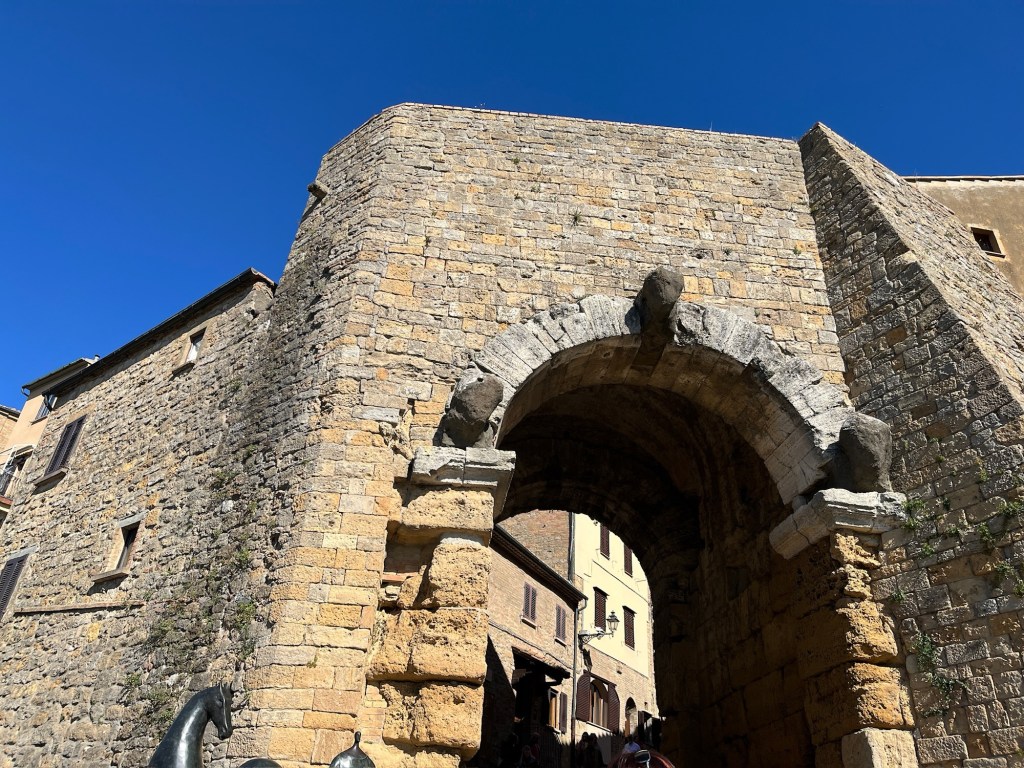
An Etruscan gate built into the medieval walls

Panoramic view looking towards Pisa

Cathedral of Volterra

It has been leaning after an earthquake

Many of the local stones used for building material have fossils

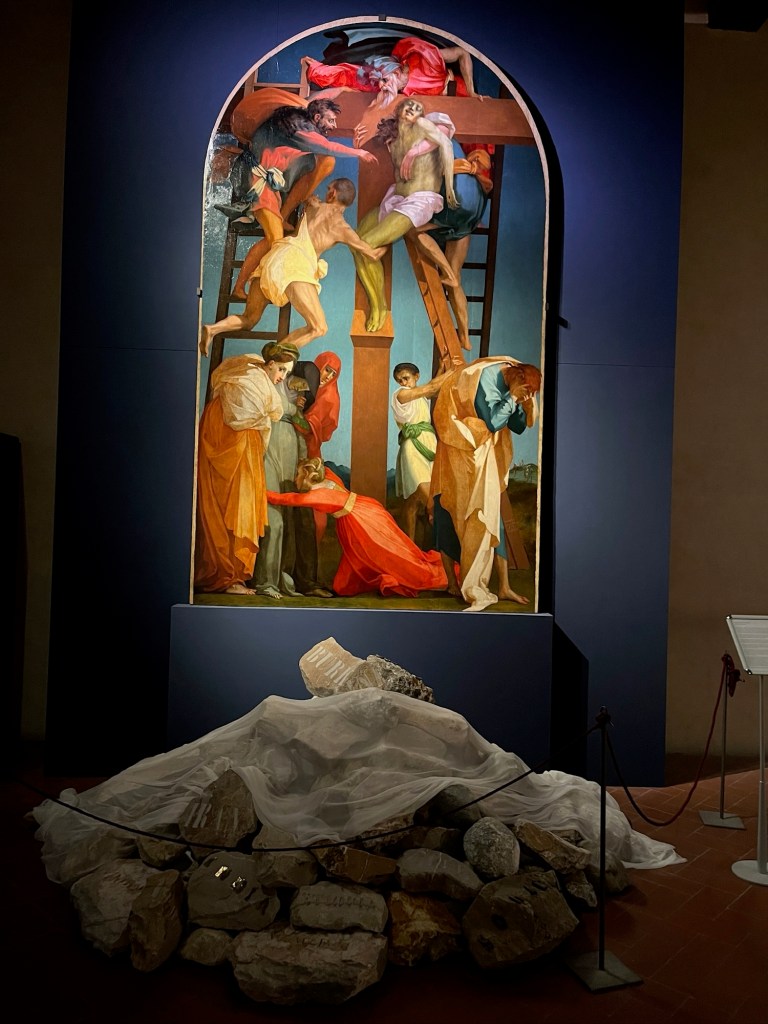
I went to the Pinacoteca. Its highlight is the Deposizione by Rosso Fiorentino, the nickname of Giovanni Battista di Jacopo, a Renaissance/Mannerist painter from Florence, as his nickname indicates. Rosso means he probably had red hair.
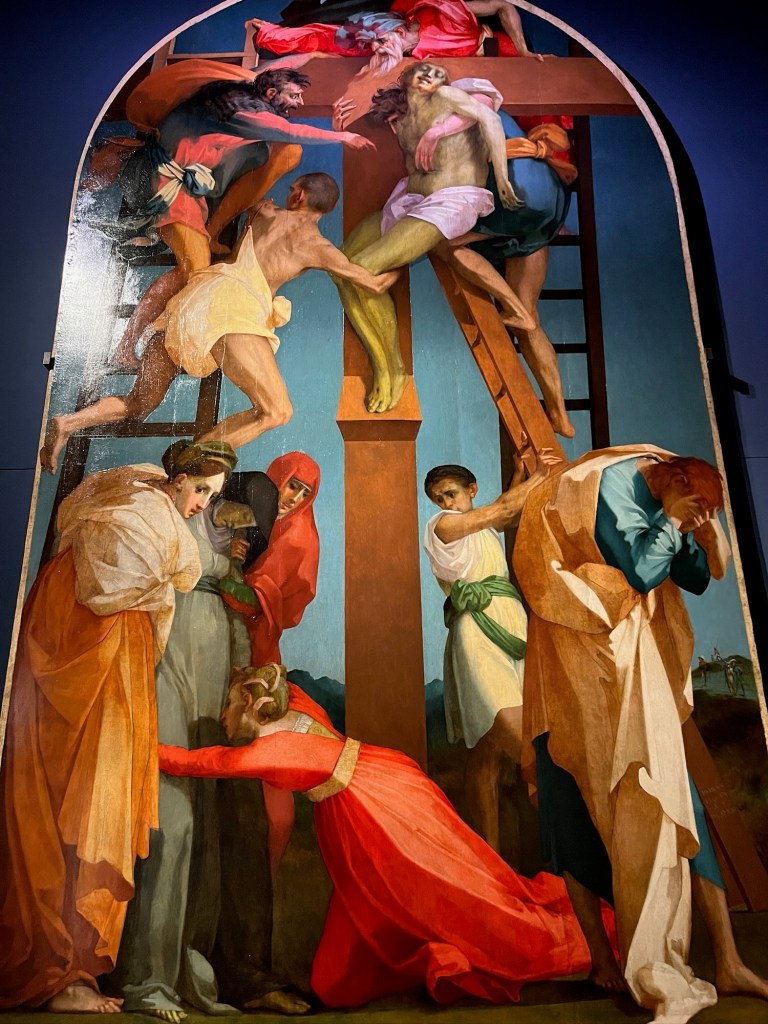
The painting underwent restoration in 2017. It is considered one of the early Mannerist masterpieces because of the unnaturally vibrant colours, elongated bodies and illogical space.
The Pinacoteca also has modern pieces referring to the Deposizione.
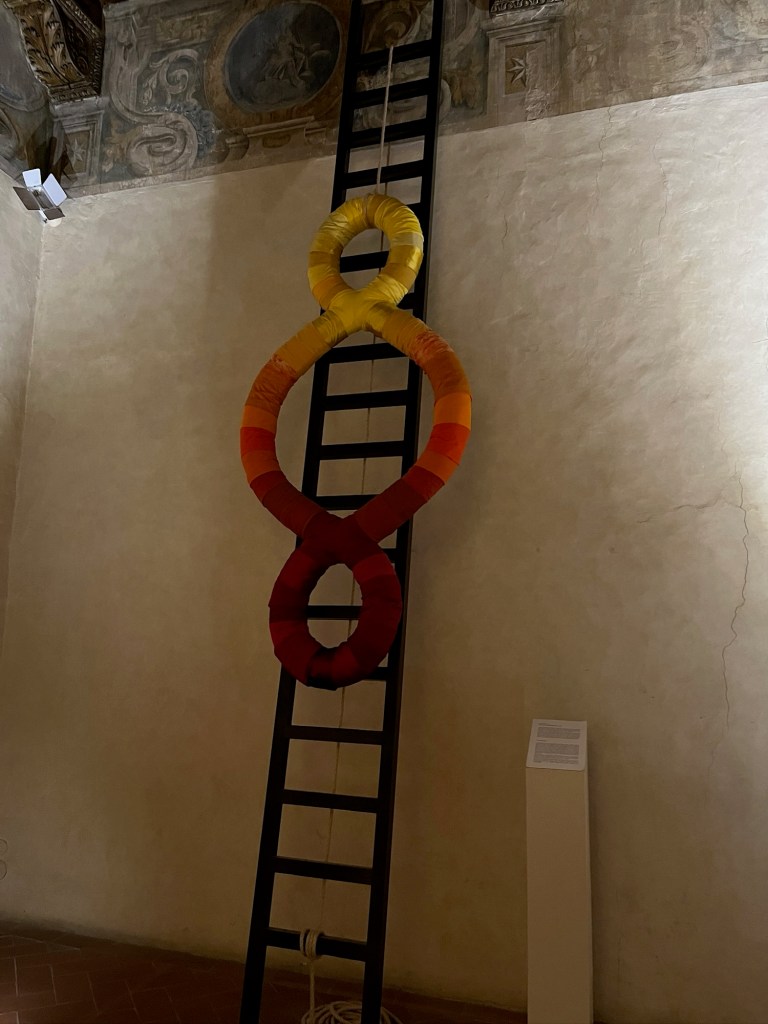
The loggia area includes works by contemporary sculptor Mauro Staccioli, who died in 2007.

 LHWatson's Travel Blog