My classroom changed this week to one with a view onto the Arno.

It’s a bit chilly by the window. Italy has energy conservation laws about when you can turn on heat or air conditioning. Although it is getting into the single digits (celsius) in the early morning, no heat is allowed until November unless the weather is really cold. But it is supposed to get to the mid 20s for highs this week, so it’s not likely that heating will be allowed.
Instead, I put on an extra layer so I can sit by the window. As the Italians say “è vale la pena”; it’s worth the pain.
I’ve moved up a language competence level from A2.2 to B1.1

Did not have a graduation ceremony for this achievement. ¯\_(ツ)_/¯

I made myself a salad for lunch then had a gelato on my way to a talk at the school about la storia della lingua italiana (history of the Italian language).
When it finished at 4:45, I headed to Galleria Uffizi to look at late medieval and early Renaissance paintings that are relevant to Beato Angelico, Fra Angelico as he is usually referred to in English or Fra Giovanni Beato as the Uffizi describes him. His birth name was Guido di Pietro.
The Italians have called him Beato Angelico for ages. Beato is a title for the first step to becoming a saint. If you can satisfy the Catholic Church that enough miracles are associated with a beato, they become a saint. Fra Angelico wasn’t officially beatified until more recently in 1982 by John Paul II. But that means if there are enough miracles, he will eventually become Sant’Angelico.
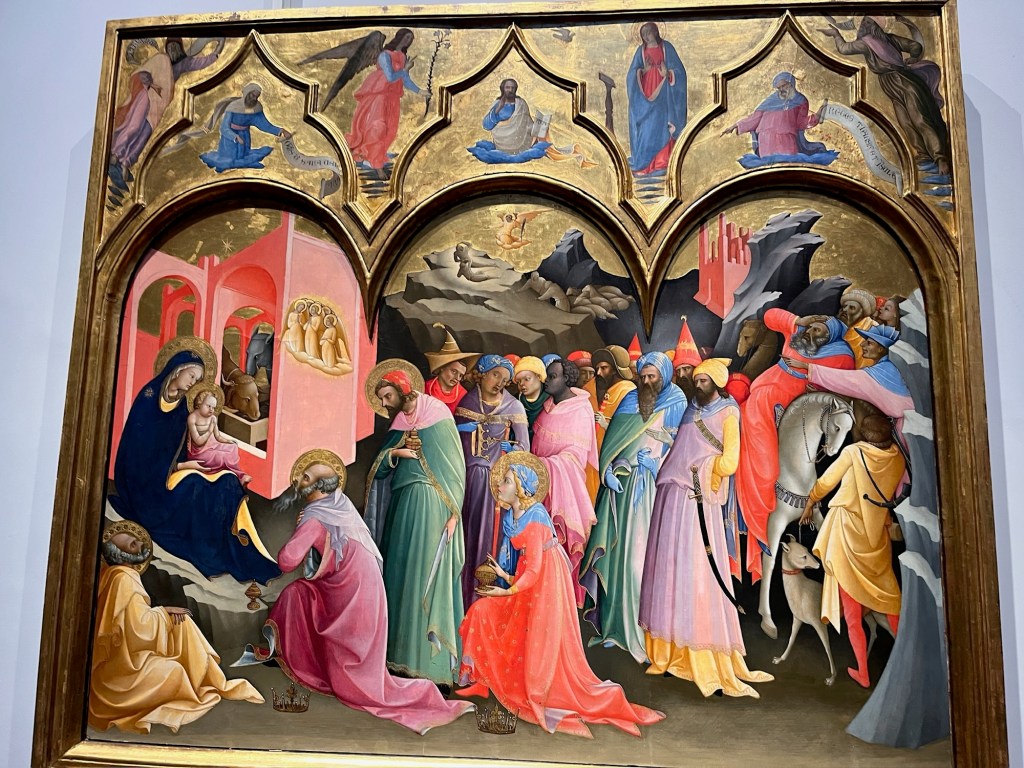
One of his teachers may have been Lorenzo Monaco. The Uffizi has two of his paintings.

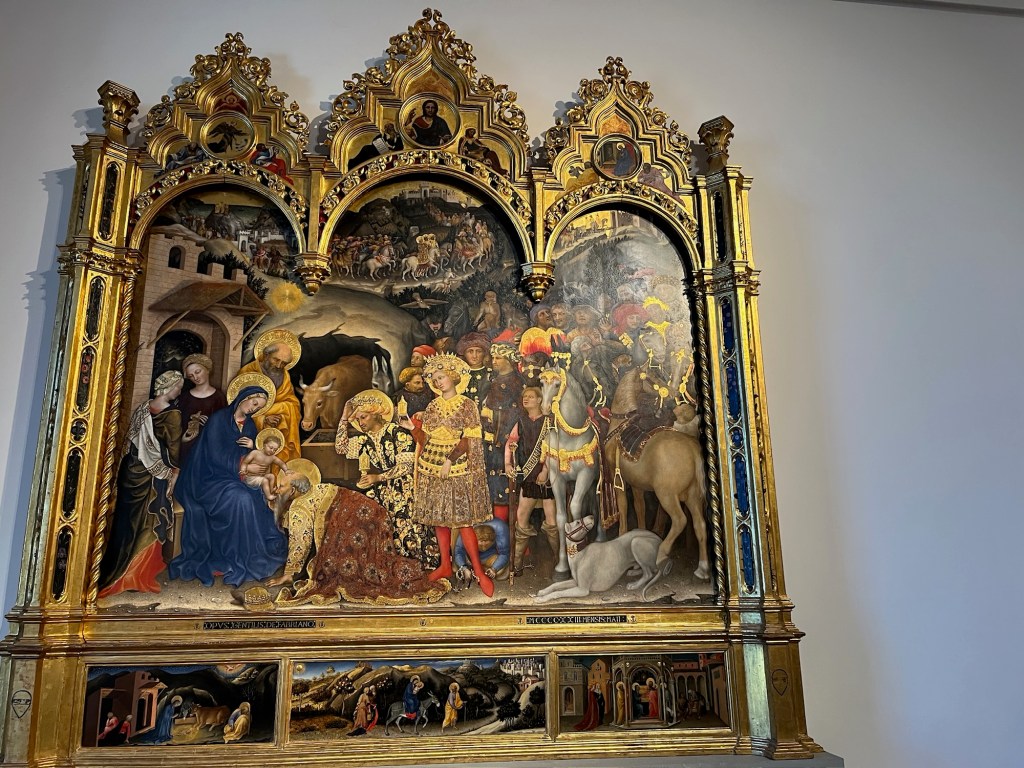
An influence also would have been Gentile Fabriano
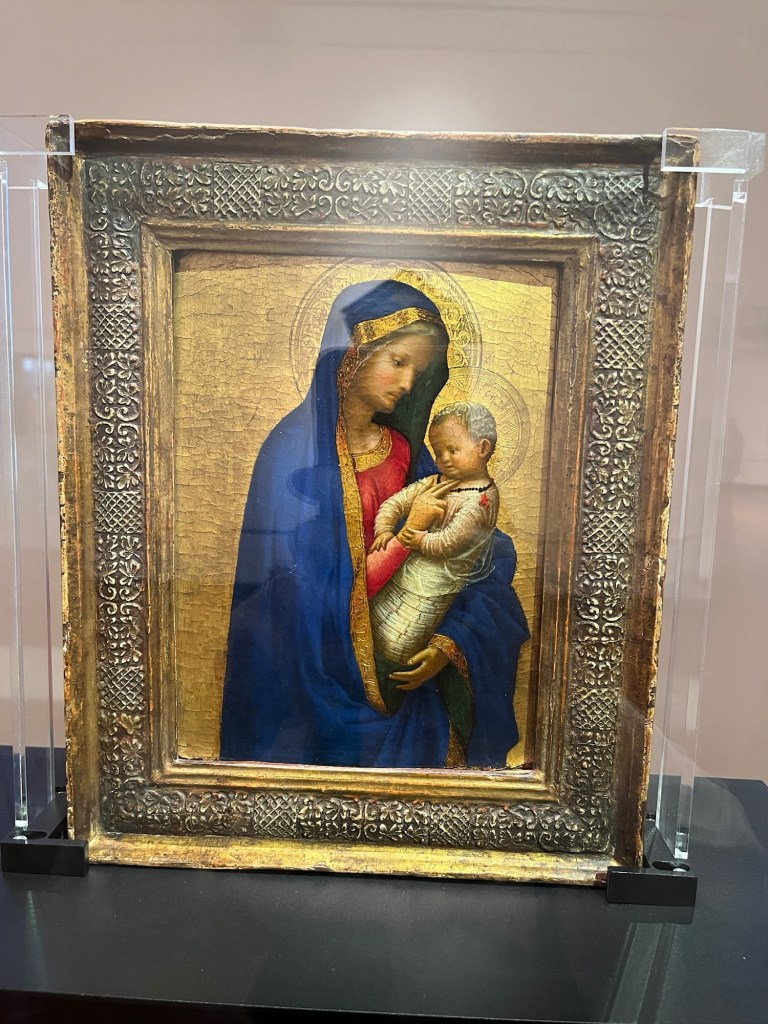
Fra Angelico would have seen the works of the artist Massacio who painted the earliest surviving works demonstrating linear perspective.

An important fact about Fra Angelico was that he was a member of the Dominican order but a friar, not a monk, which gave him more freedom.
Another important fact is that the Dominican order saw eradicating heresy as their main mission. They emphasized learning in order to know what was or was not heresy, and were devoted to the Virgin Mary.
An amusing description about Domenicans is that in Italian, their name can be broken down to Dome ne cane, which translates as the “hounds of God”.
Fra Angelico work still at the Uffizi:

One of his altarpieces is absent. I’m guessing it is part of the exhibition.
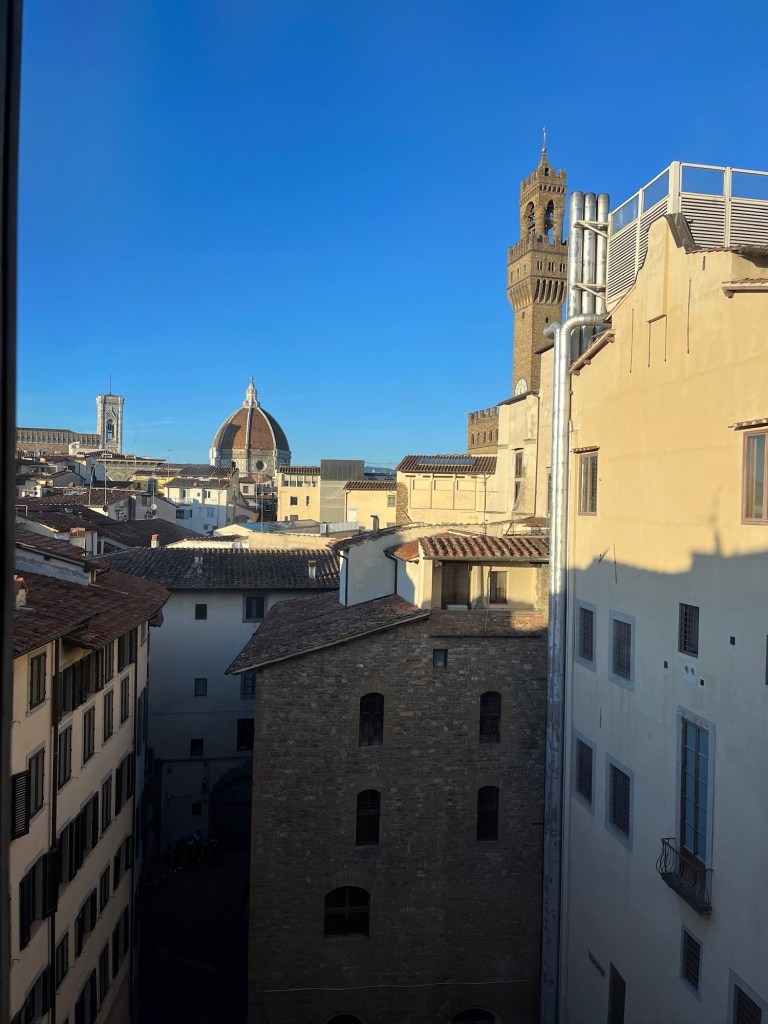
Uffizi closes at 6:30 pm most days. Going in at 5 seemed to be a fairly good time to avoid huge crowds. Good views out the window this day.
 LHWatson's Travel Blog