We left Castello to go to Monterchi (population less than 2,000) in the Tiber valley, The name Monterchi or Mons Herculis – “Mount of Hercules” originates from a legend that the half-god Hercules founded Monterchi after beating the Hydra, a mythological monster with several heads. The history is still depicted in the coat of arms of the city’s banner. Earthquakes in 1352 and 1917 damaged much of the town, which still has some remnants of medieval walls.

Monterchi has very little claim to fame (other than Tuscan beauty and it sits atop an impressive hill), Home to Madonna del Parto painted around 1460 is probably the most famous thing about the town.

The subject of this painting, the Madonna in a state of pregnancy, is rather unusual. The painting was originally located in chapel of Santa Maria di Momentana (Saint Mary of Momentana), also called Santa Maria in Silvis (Saint Mary in the Woods), on the hillside of Montione (which comes from Latin Mons Iunonis, Juno’s Hill), a site known since ancient times, as it was linked to the pagan cults of fertility. The church was destroyed by an earthquake in 1735. The fresco, now damaged and with parts of it lost, was detached and placed over the altar in a new chapel built in 1785, where she stayed until 1992. Then she was moved to her present home, a specially built gallery housing only her (and a gift shop and interpretive movie) on the edge of Monterchi. The design is replete with geometric shapes.

We strolled around looking at the town and the typical Tuscan landscape.

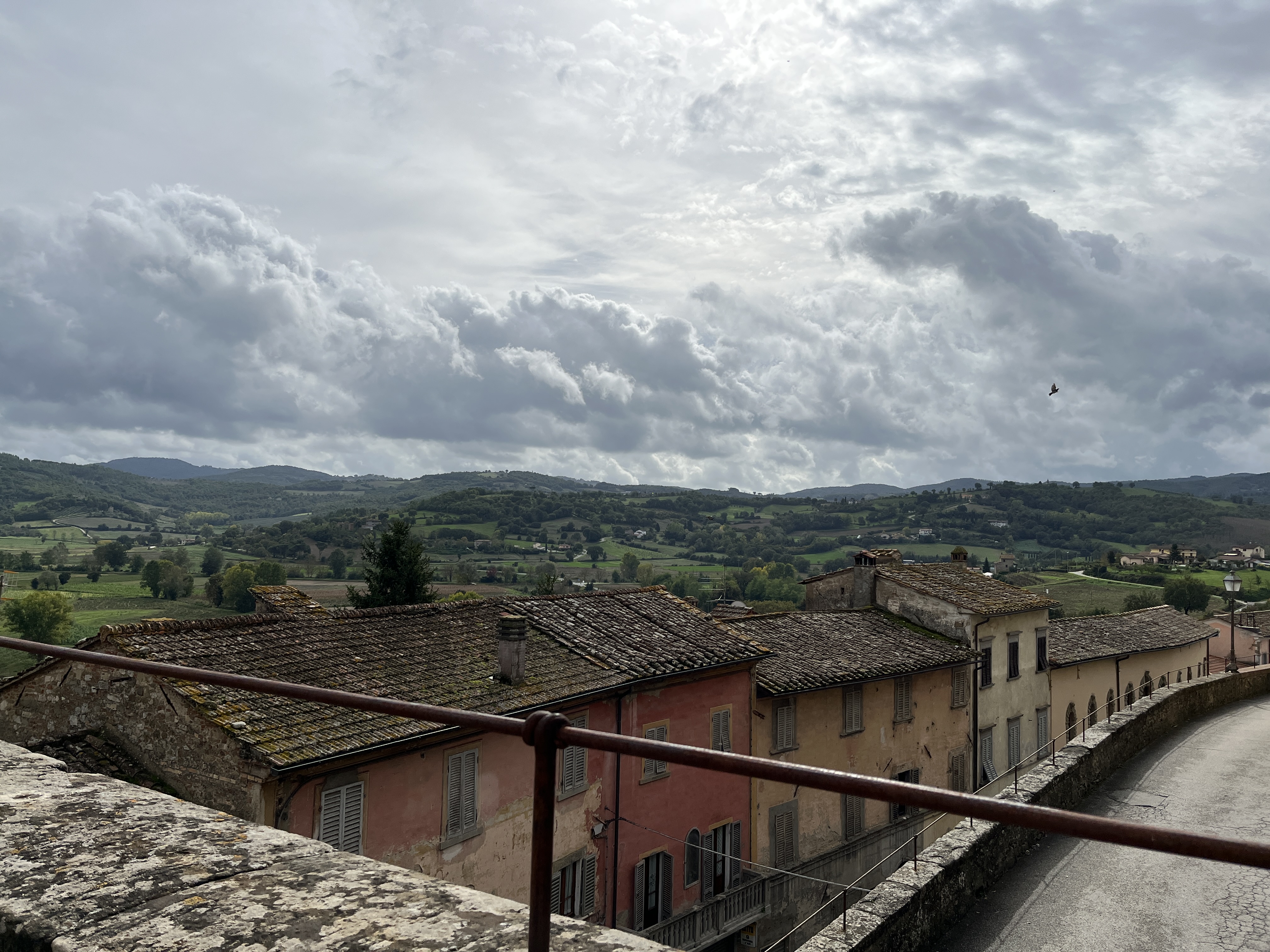


We had lunch nearby.

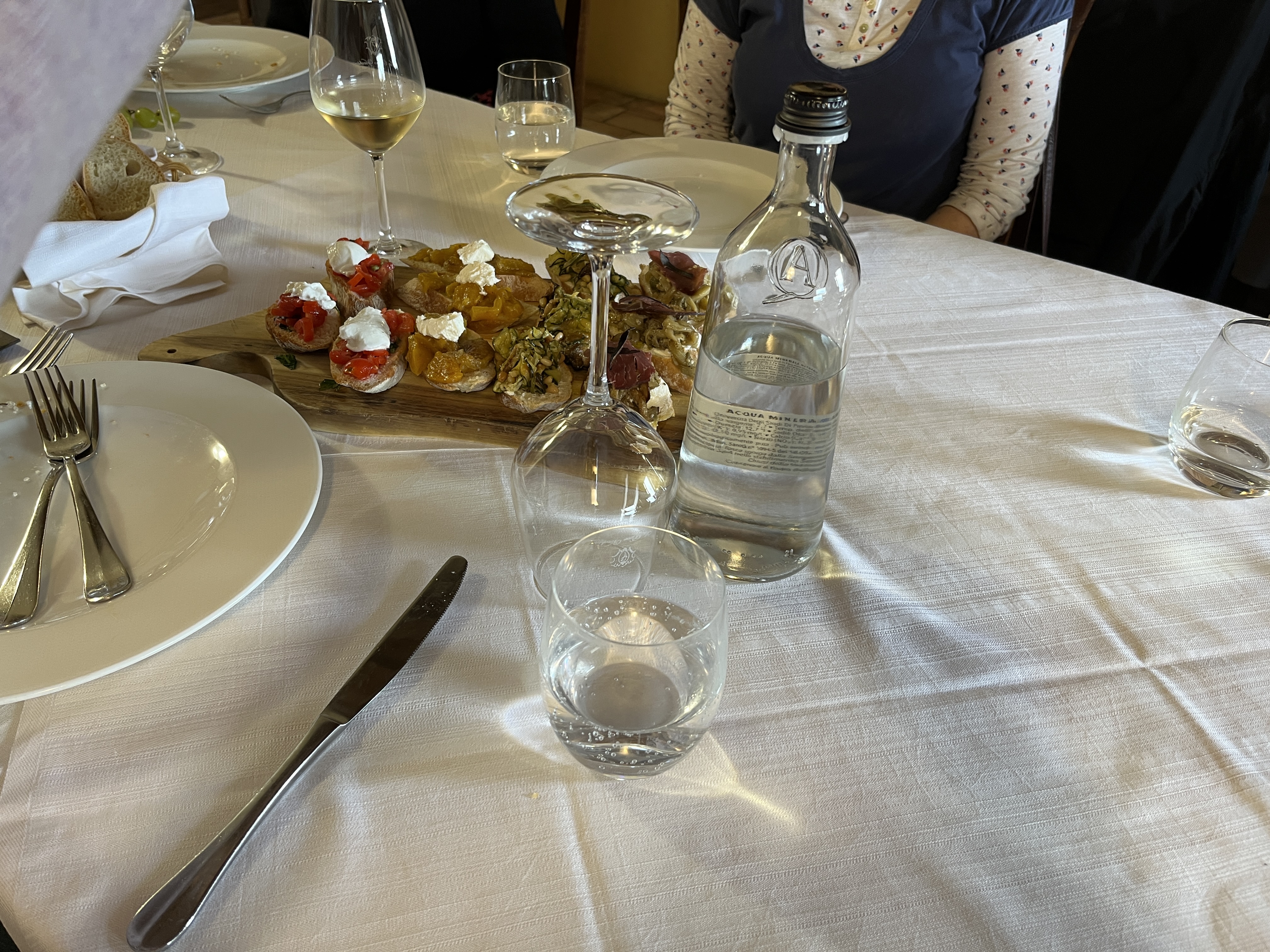
Above, bruschette followed by a ravioli and beef stew with patate frite (fries).
An hour’s drive got us to Perugia. Along the way we passed tobacco fields.

Perugia is the capital of Umbria, on Tiber river, population 160,000+. Its origins are from an Etruscan city, with a long history as a city state, until 1797 when captured by Napoleon (yet again). It’s famous for chocolate, mostly because of the company Perugina’s Baci (kisses) sadly, now owned by Nestlé. It’s also a university town with two big universities. After three and a half days of quiet, Perugia is noticeably busier.
We walked to the main square:

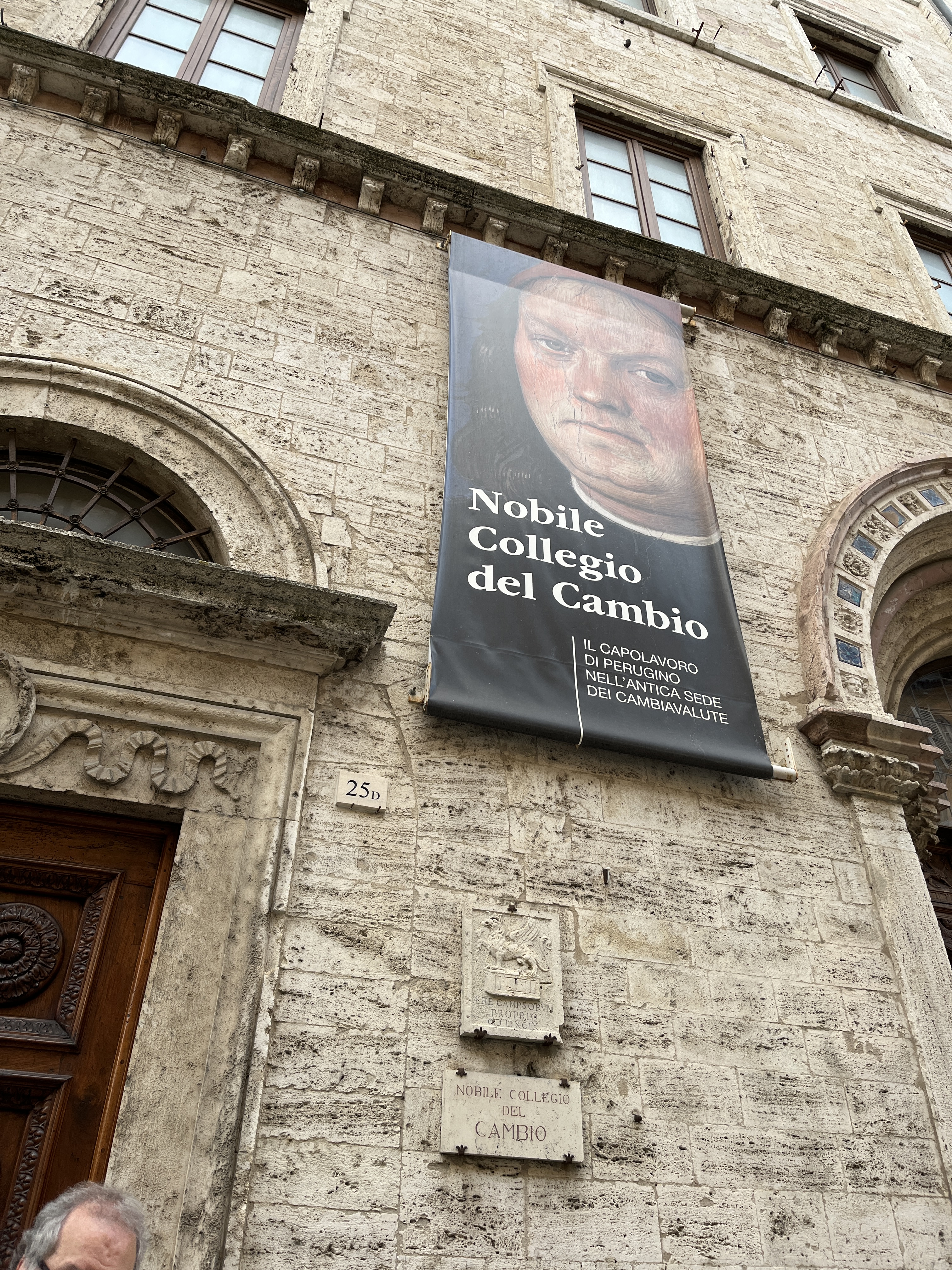
.We looked at Perugino’s fresco in the Collegio del Cambio, a bankers’ guild meeting rooms. No photos allowed inside.
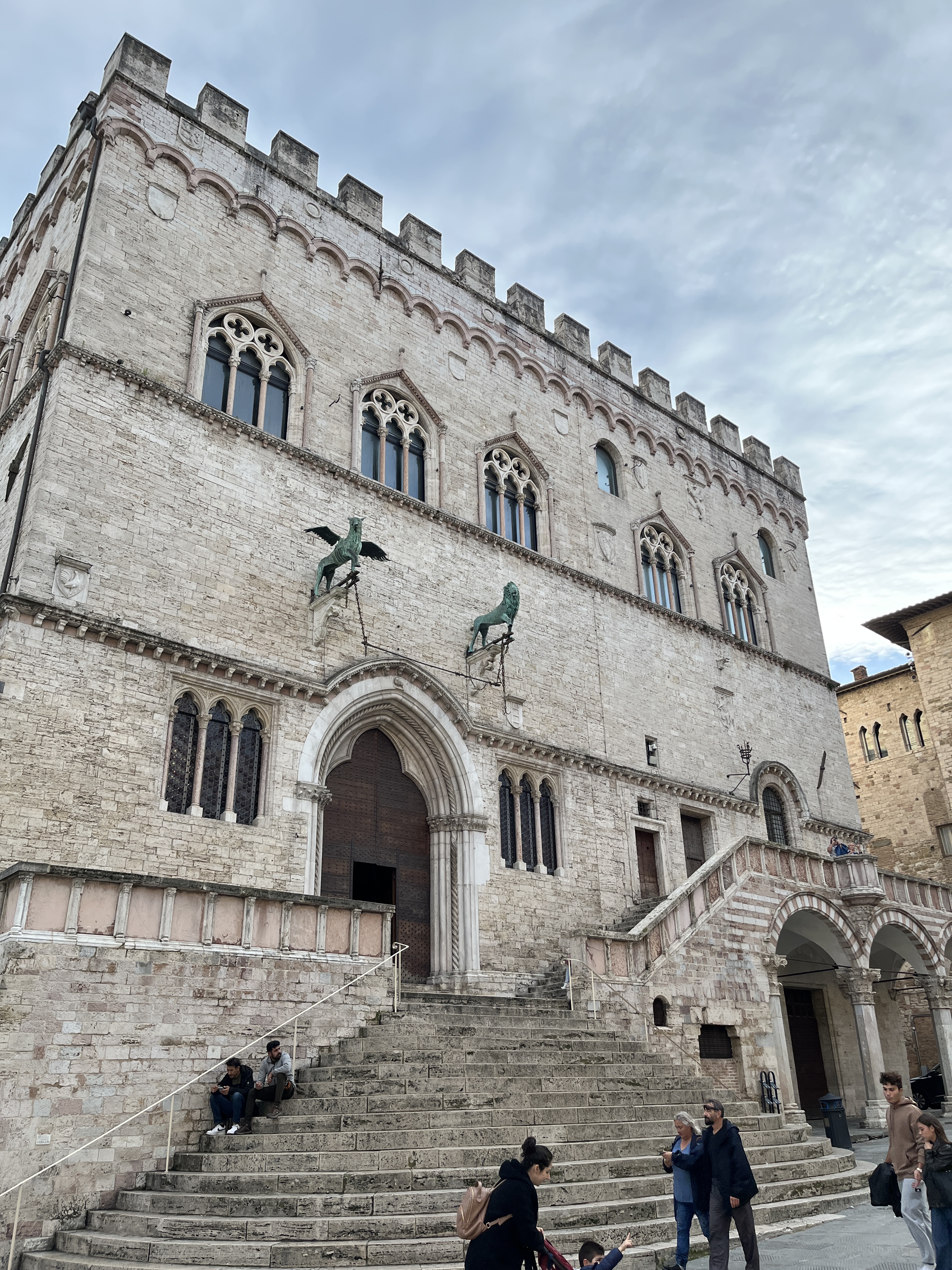
We then looked at the Fontana Maggiore in the main square Piazza IV Novembre (November 4 was the day WW I ended in Italy). The statues and reliefs were carved by Nicolo and Giovanni Pisano, the sculptors of the Siena Duomo.

The fountain is flanked by the cathedral and civic buildings.

 LHWatson's Travel Blog