I spent a lazy morning to finish reading the book I bought two days ago. I needed another one. I should have added the frequent buyer card for the Feltrinelli bookstore to my Apple wallet as this is my second visit in three days.
Pleasant weather and looking around while watching out for dog poop on the streets meant I failed to make a necessary turn to get to the bookstore. When I left the historic centre I realized I had wandered too far.
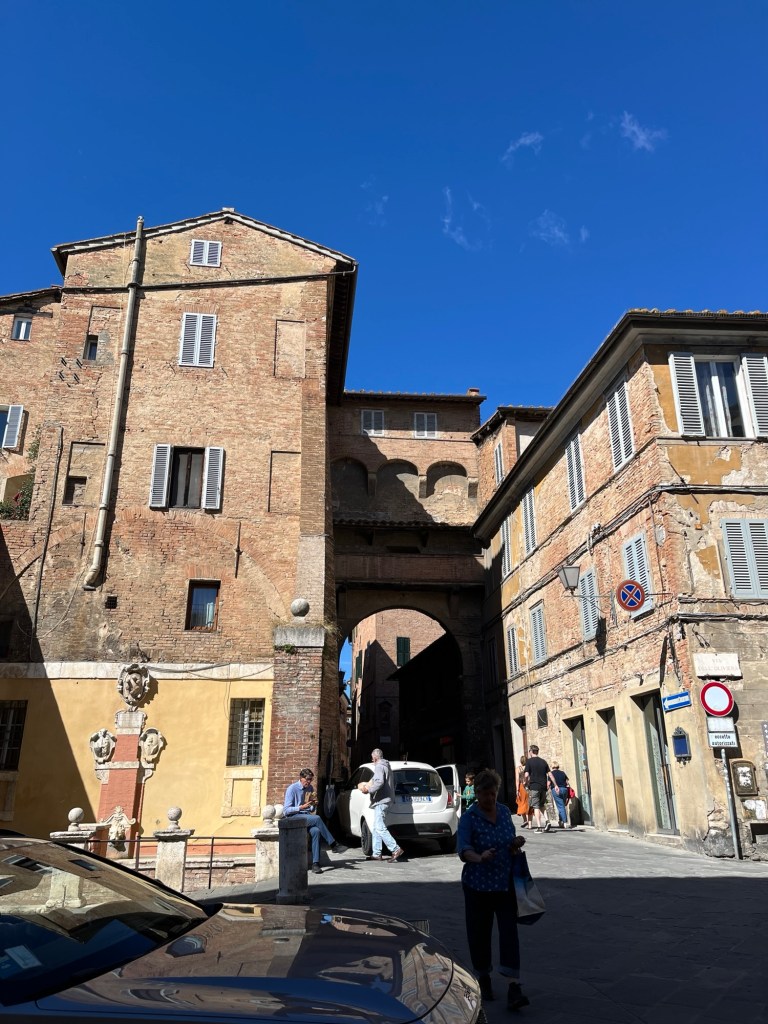
Luckily Siena is not very big so I could not get too far off my intended route.
In my wandering, I saw at least four columns with the she-wolf and babies Romulus and Remus.

Siena’s foundation myth is a follow up story from Rome’s foundation myth. Rome was founded by Romulus, who killed his twin brother Remus. In Siena’s myth, Remus’ sons, Aschio and Senio, fled Rome to avoid also being killed by their uncle. They took the she-wolf who had suckled Romulus and Remus with them. Senio founded Siena and Aschio the village of Asciano.
The she-wolf features not only on top of columns in the centro storico but also in the Duomo.
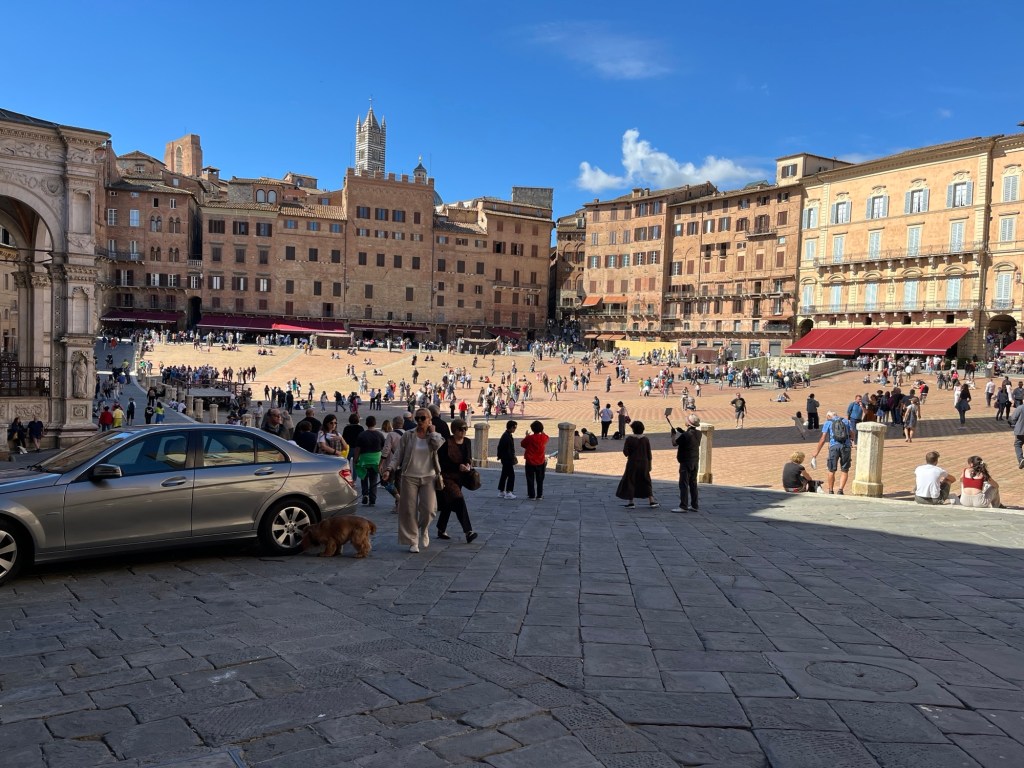
I encountered a lot of tourists here late in September. I hear so much English being spoken—not the Italian immersion experience I was hoping for. There’s some festival which involves photography (and maybe other cultural events) occurring this weekend. I wonder if it will get quieter on Monday.
The Piazza del Campo was busy. I saw four tourists with hiking boots and trekking poles. It sounded like they were speaking German.

I found the street where the Scuola is located, Via Tommaso Pendola. Tommaso Pendola was an early 19th century abbot and educator.

The address of the school is number 37. Walking along the street, I saw number 40 but no number 37. Retracing my steps I realized the even numbers were going up faster than the odd.
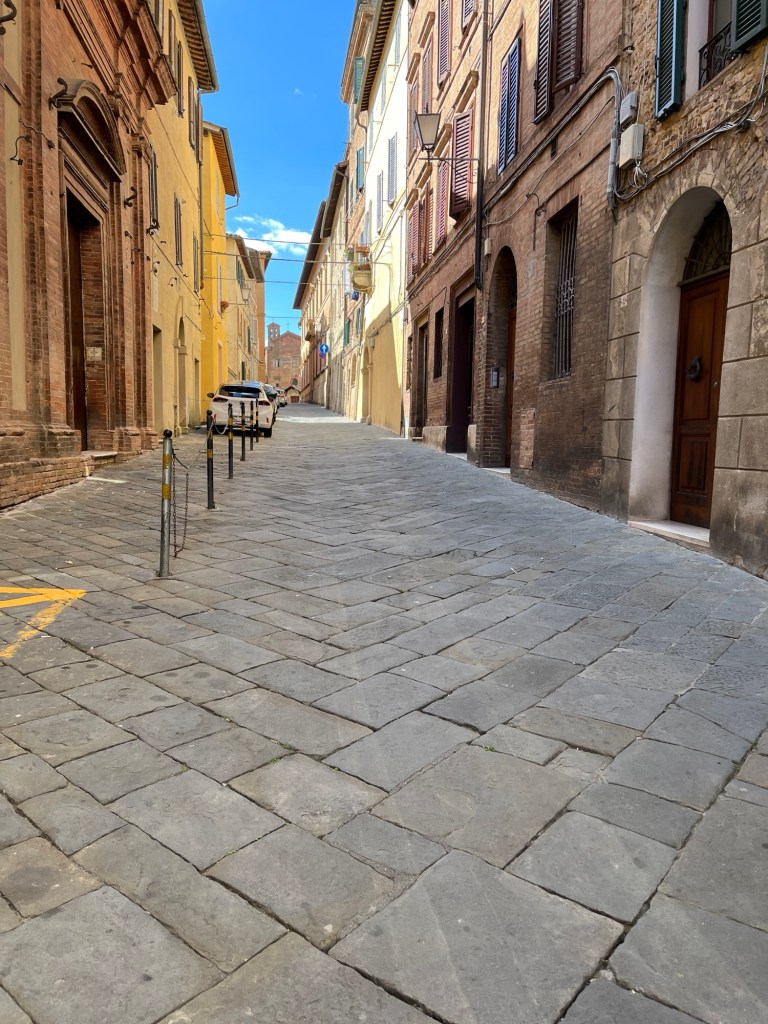
The above photo was taken where number 40 is on my right but 37 is the farthest building on the left.
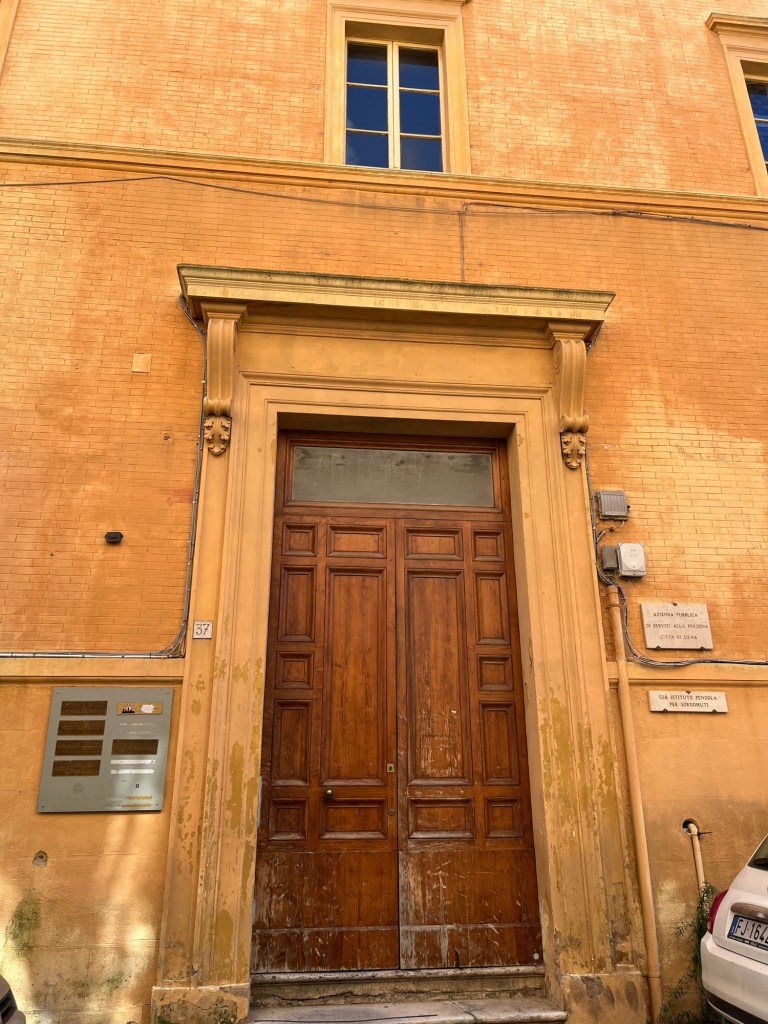
I am not sure which is the best way to get to the school to avoid the steepest climbs.

The most famous event in Siena is il Palio, a horse race run once in July and again in August in the Piazza del Campo. The 17 horses and their riders are sponsored by the 17 different neighbourhoods of Siena, contrada (contrade, plural). Each contrada has a flag and symbol. The Scuola appears to be in the tortoise or tartaruga or tartuca in Sienese contrada, I’m guessing, based on the symbols and sign on the same street.
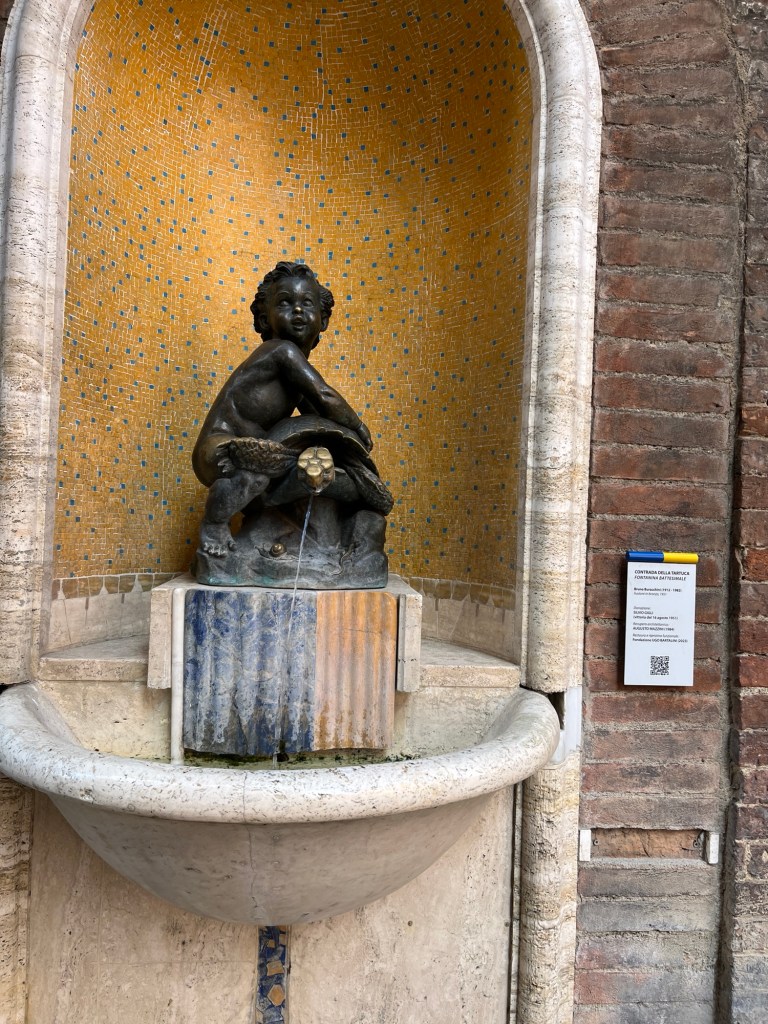
Across the street is the flag of the onda (wave) contrada:
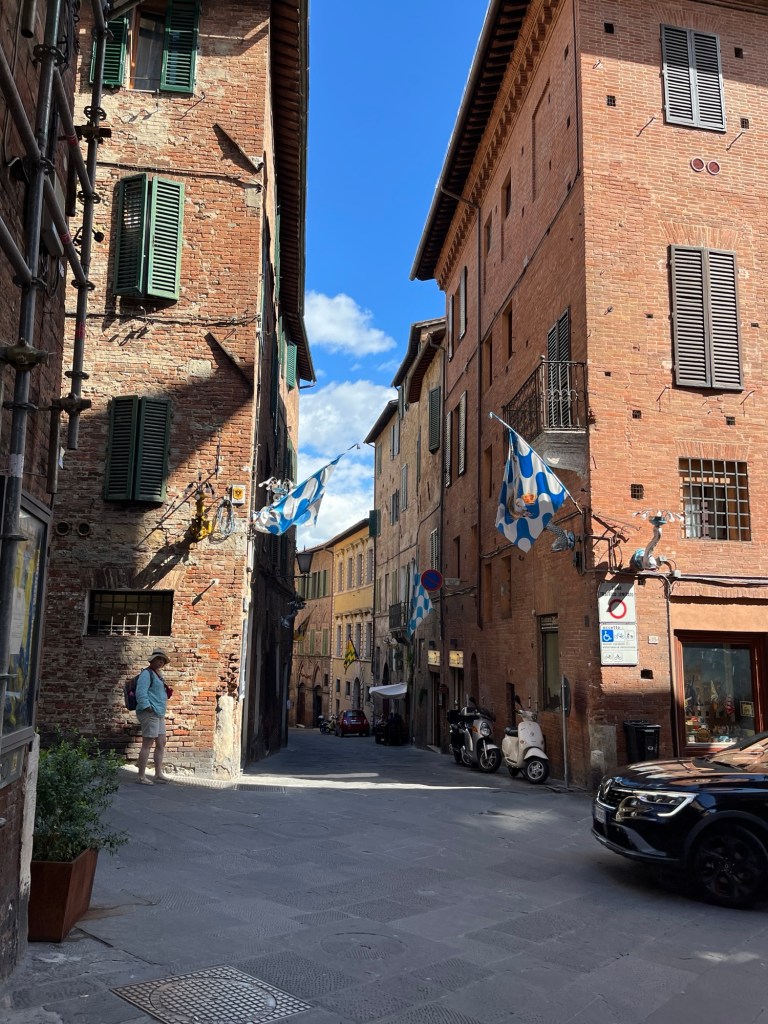
A few blocks away is the panther, pantera, contrada

I missed going to the Pinacoteca. At 1:45 pm I saw it was open from 9-1:30 on Sundays. It’s open from 9am-7pm Tuesday to Saturday. I should be able to visit before I leave.
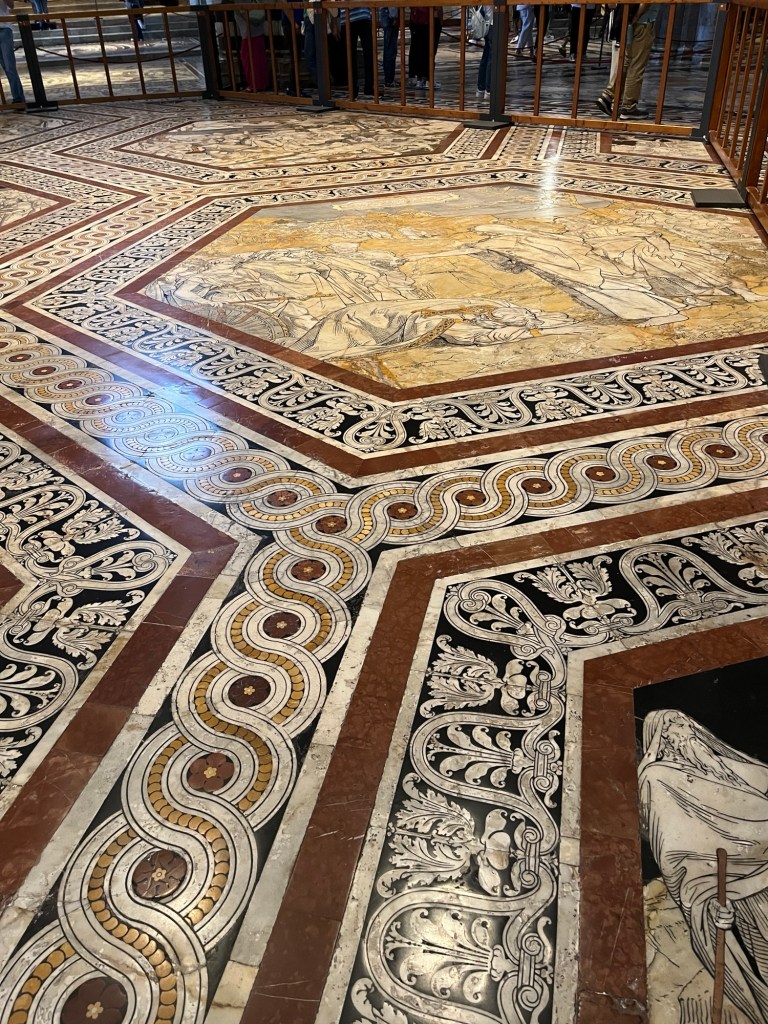
The Duomo was open for visiting. The floor mosaics are currently uncovered so mass is not being held inside. I don’t recall needing to buy tickets when we visited in 2009. Definitely need tickets now. There’s difference prices depending on what you want to visit.
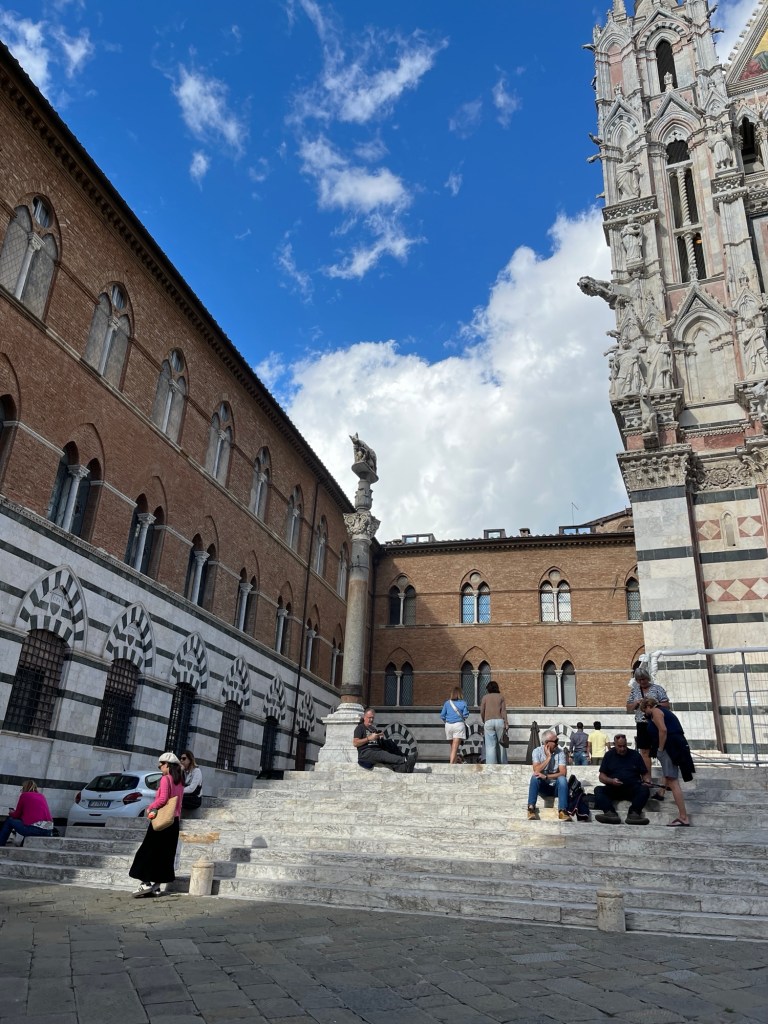
Siena’s Cathedral is Italian Gothic which seems to follow the decoration principle of more is never enough. Every surface needs to be covered.

Including the floors

The masterpiece in the interior is Nicolas Pisano’s carved pulpit which shows how close his late Gothic work came to reflecting classical and therefore Renaissance elements by showing more realistic, natural depictions.


There is also a chapel by Bernini
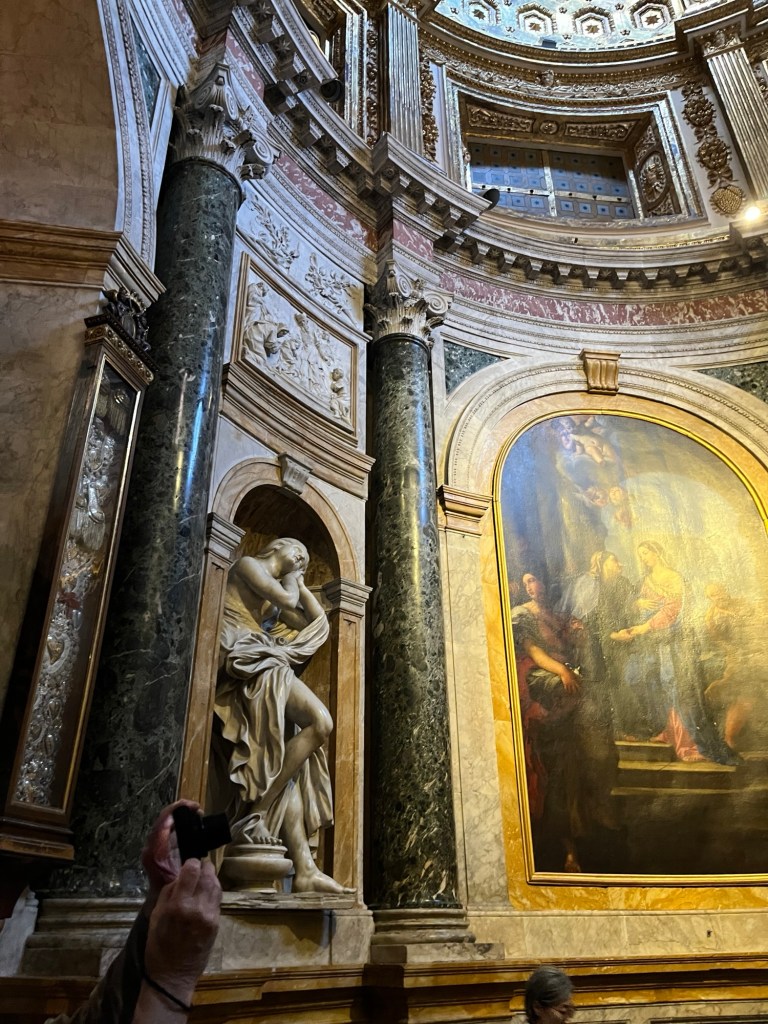
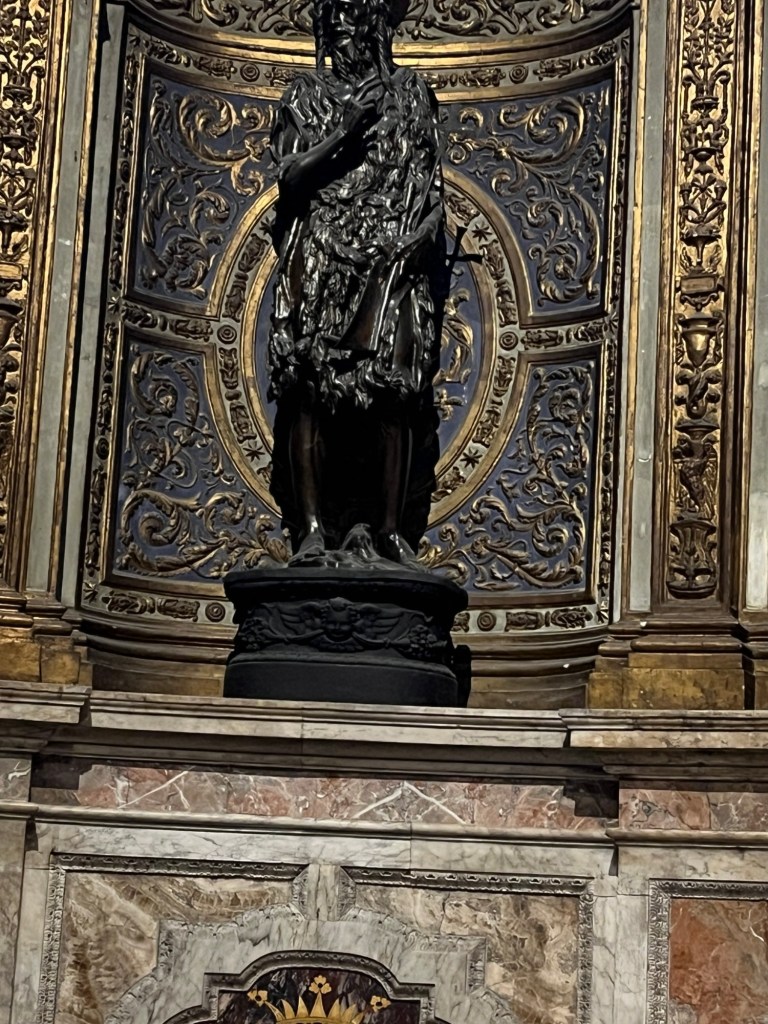
And Donatello’s St John the Baptist sculpture (which I chopped part of his head in this photo because it was so hard to see)
The Piccolomini library especially shows that more was never enough

Outside there is a strange looking area that doesn’t connect to the church interior


This was the start of the expansion which intended to make Siena’s cathedral the largest church in the world. But like so many building projects, they ran out of money and it was never finished. One portion is now the Museo delle Opere. I hope to get there later this trip.
In most medieval church complexes the baptistery is located in front of the church main doors. You need to be baptised before you can enter the church to participate in communion. In Siena, because it’s so hilly, there was no room to build the baptistery in front. Instead it’s down the hill behind the cathedral.

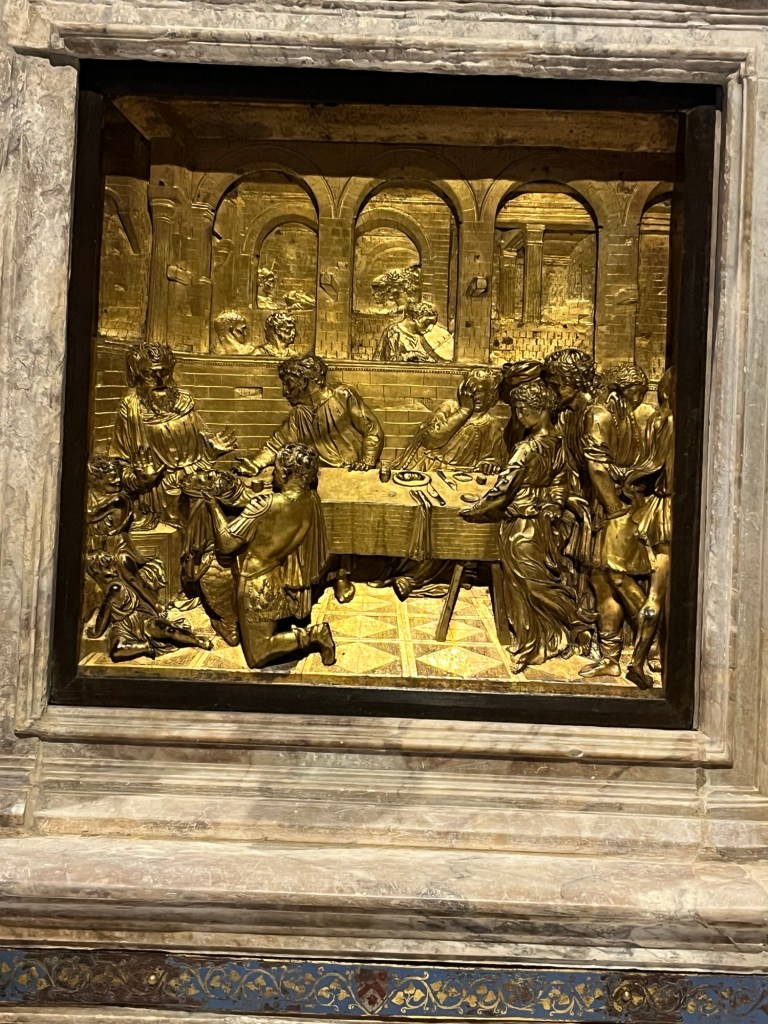
In 2009 we looked at the exterior of the Baptistery but never went inside. We missed seeing a small Donatello masterpiece on the baptismal font.

The Italian title is translated as the Banquet of Herod but that hardly describes it. It shows the moment that Herod is horrified as he is presented with the beheaded head of John the Baptist, a favour he granted to Salome after she danced for him. It’s relief sculpture, very flat, but Donatello makes it look so full of depth that you believably see two more rooms in the background. And full of emotion and movement. On the right Salome looks like she is still dancing.
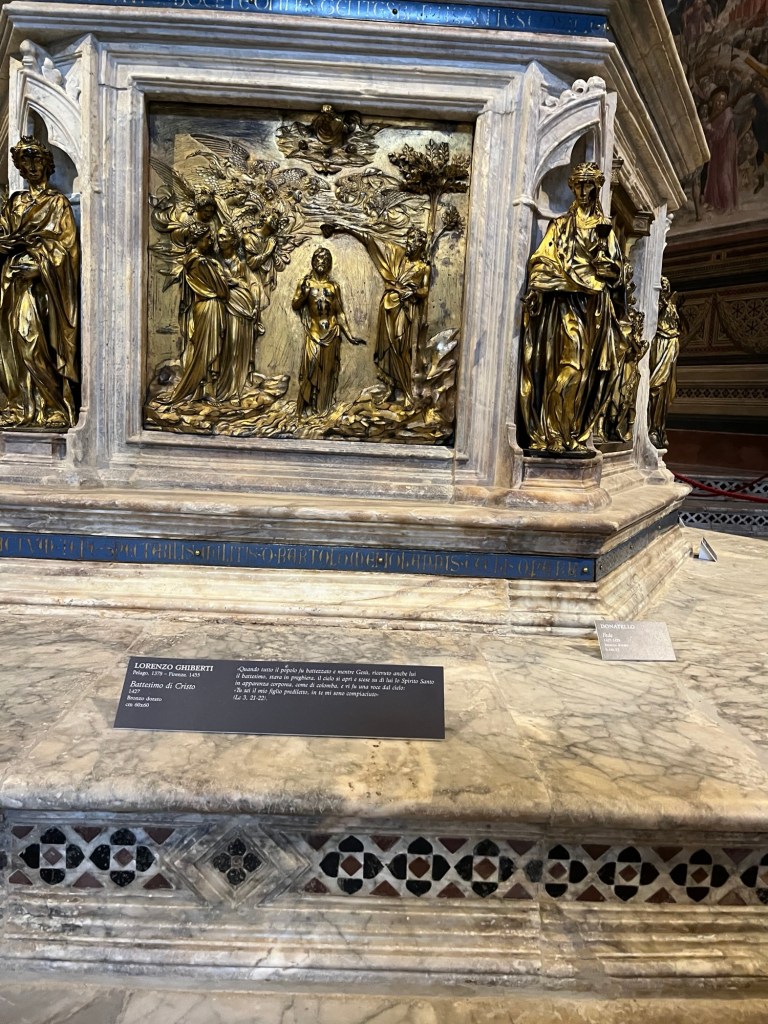
Lorenzo Ghiberti, the sculptor of the Florence baptistery doors also did a panel:
As did Jacopo della Quercia, whose work is on Bologna’s cathedral

Siena is in the region of Tuscany, not far from Florence with its specialty of bistecca Fiorentina. The smell of grilled beef was too irresistible to ignore. I could not manage a proper bistecca Fiorentina which is huge but I had a small “slice of beef” or tagliata di manzo for dinner served in the usual doneness of rare.

 LHWatson's Travel Blog